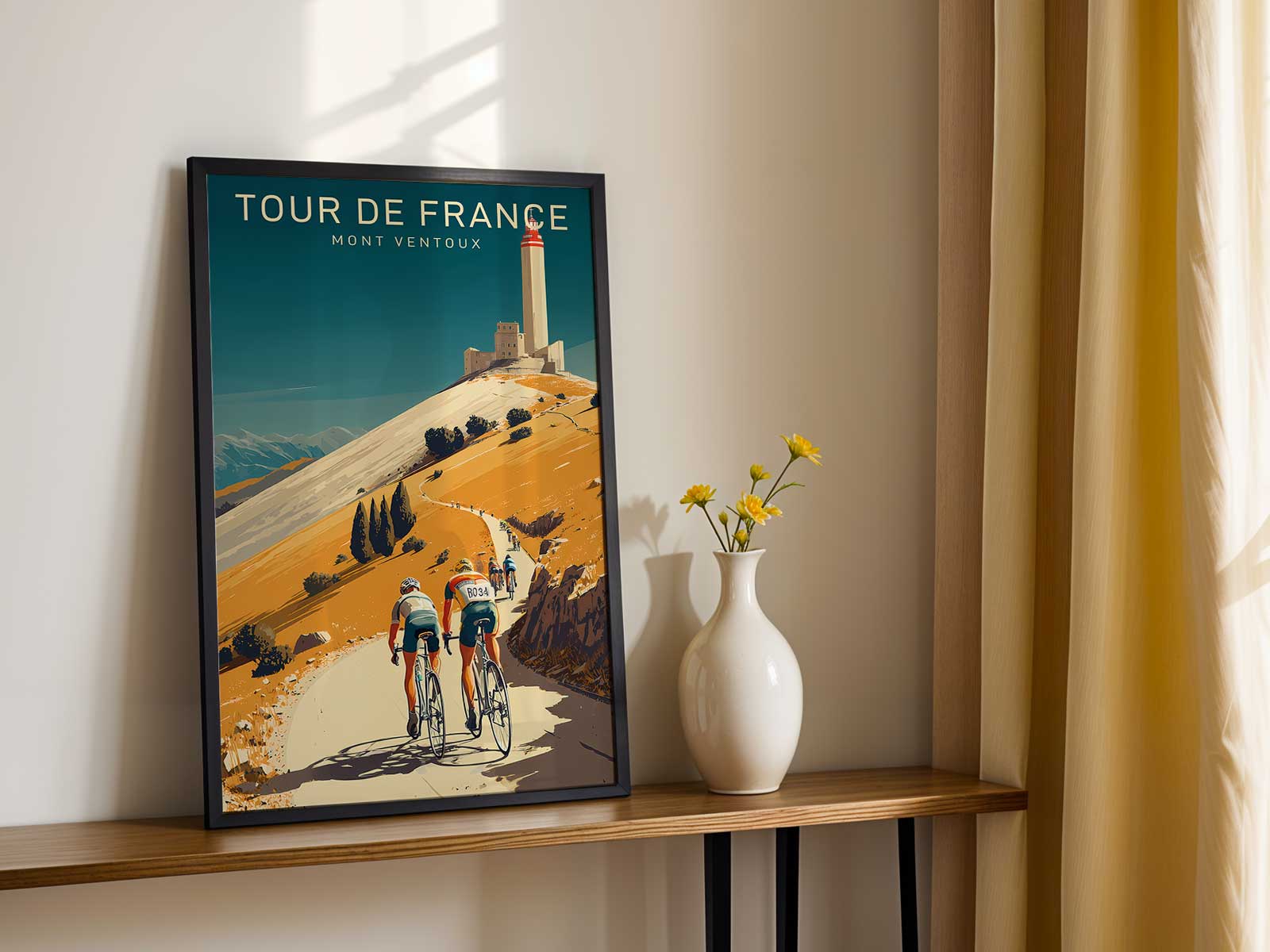
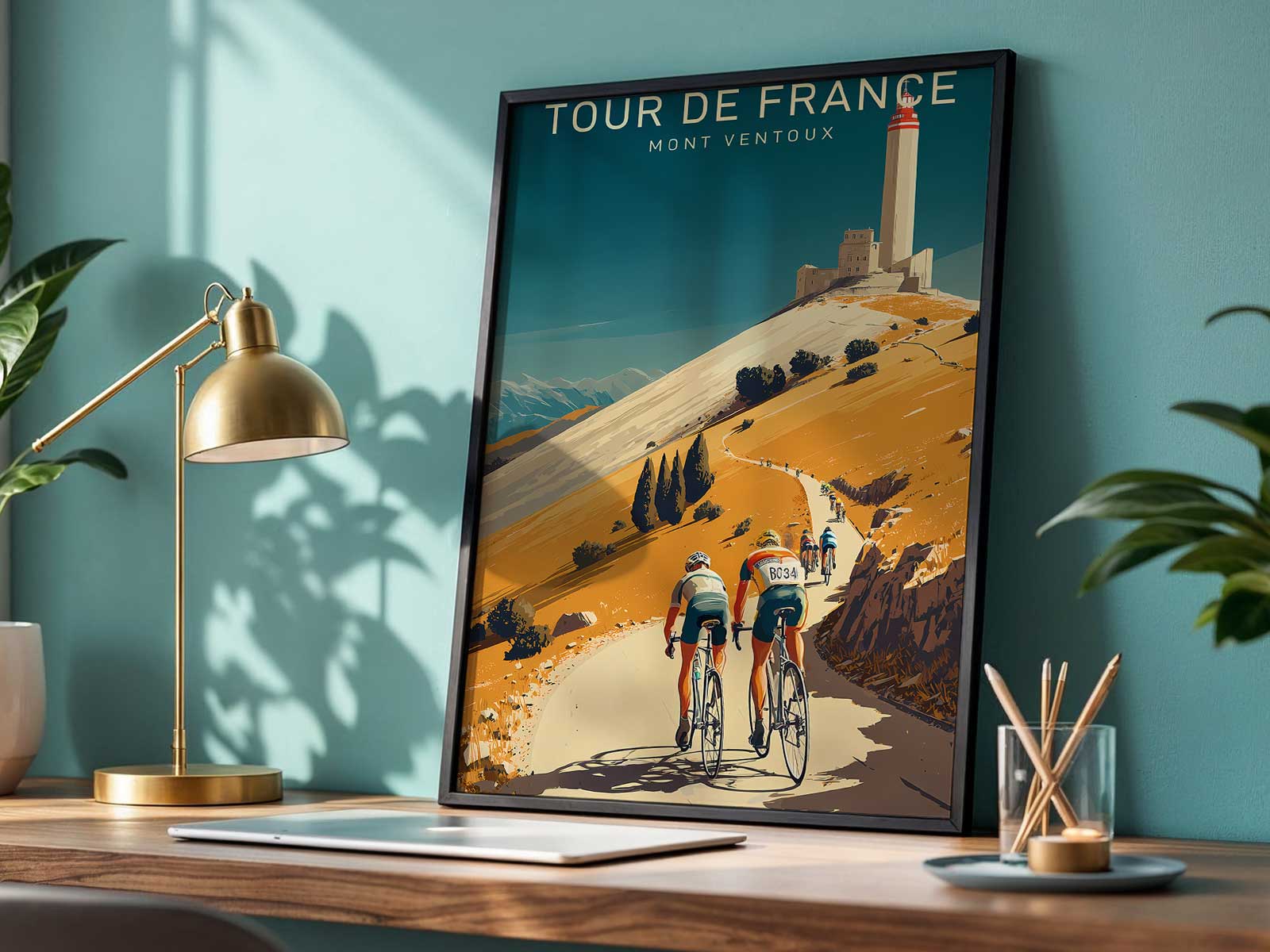
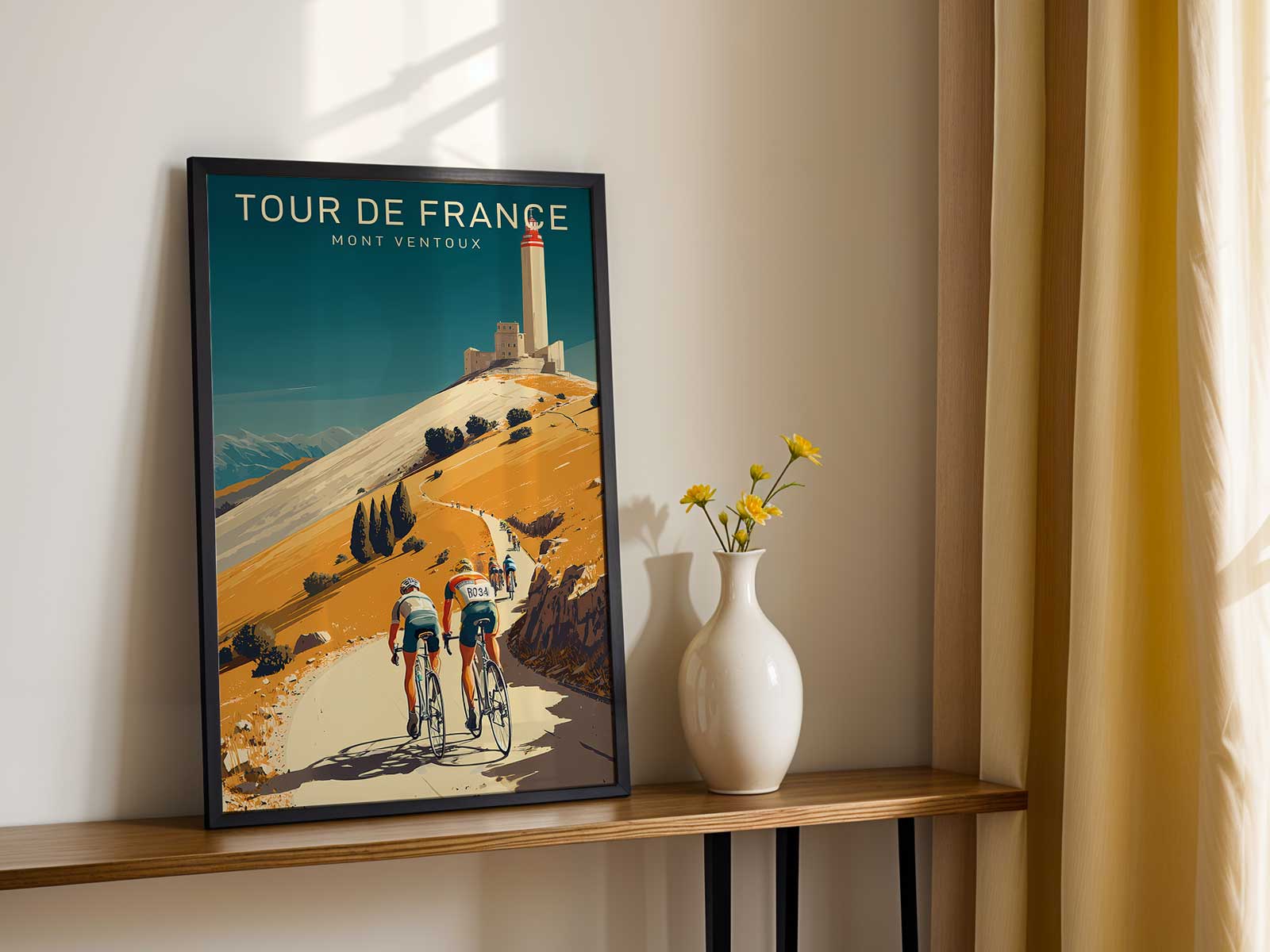
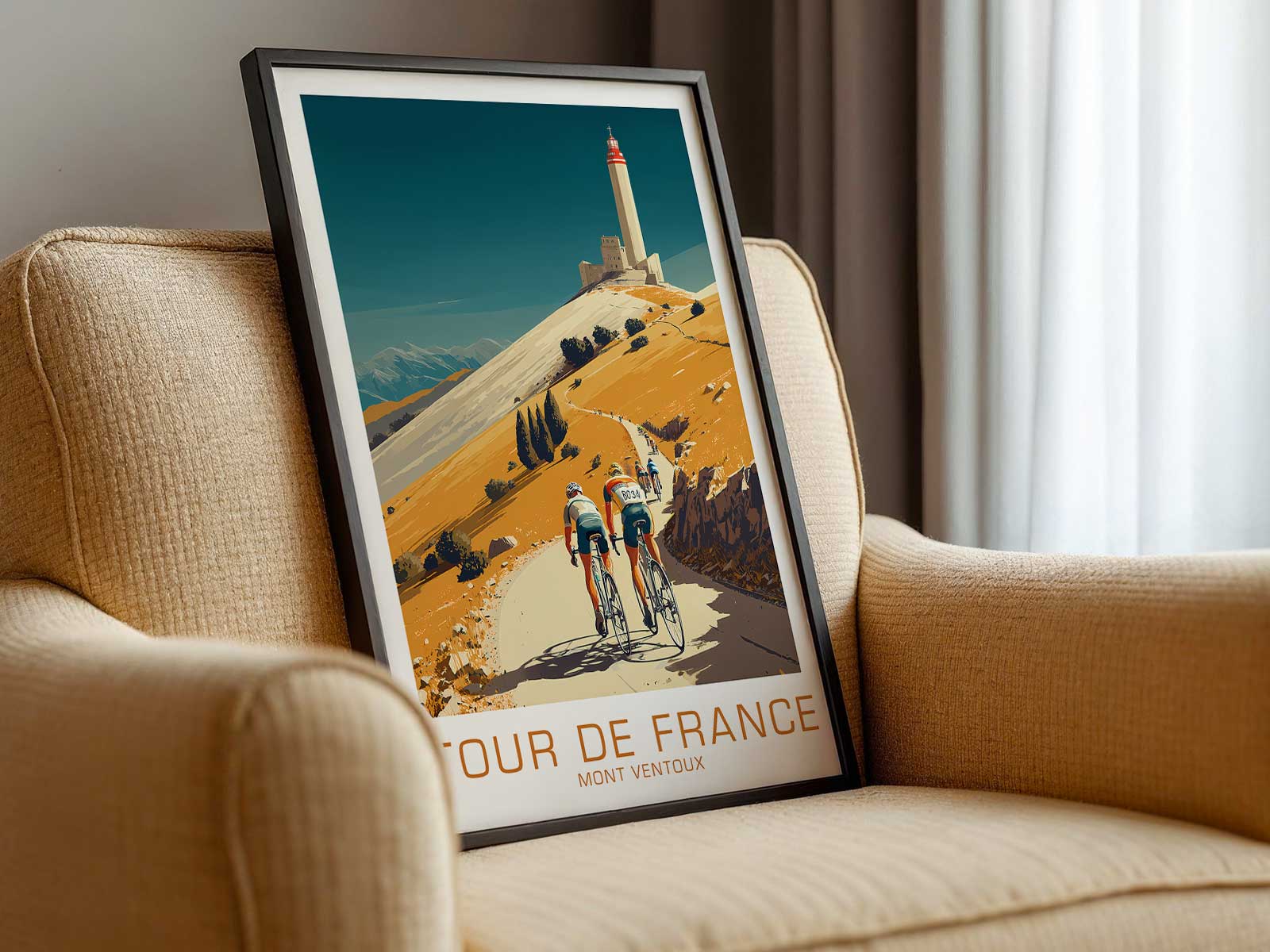
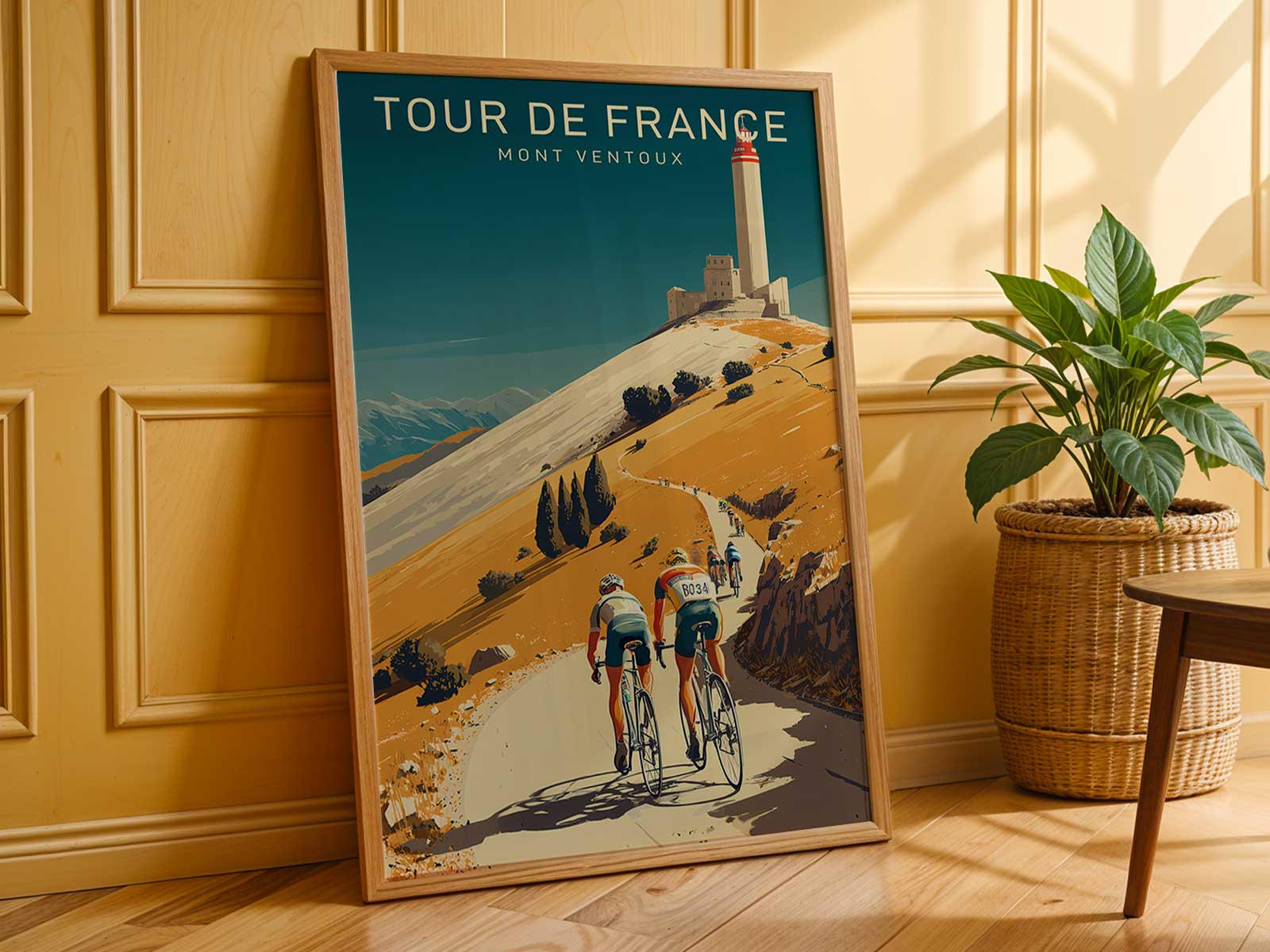
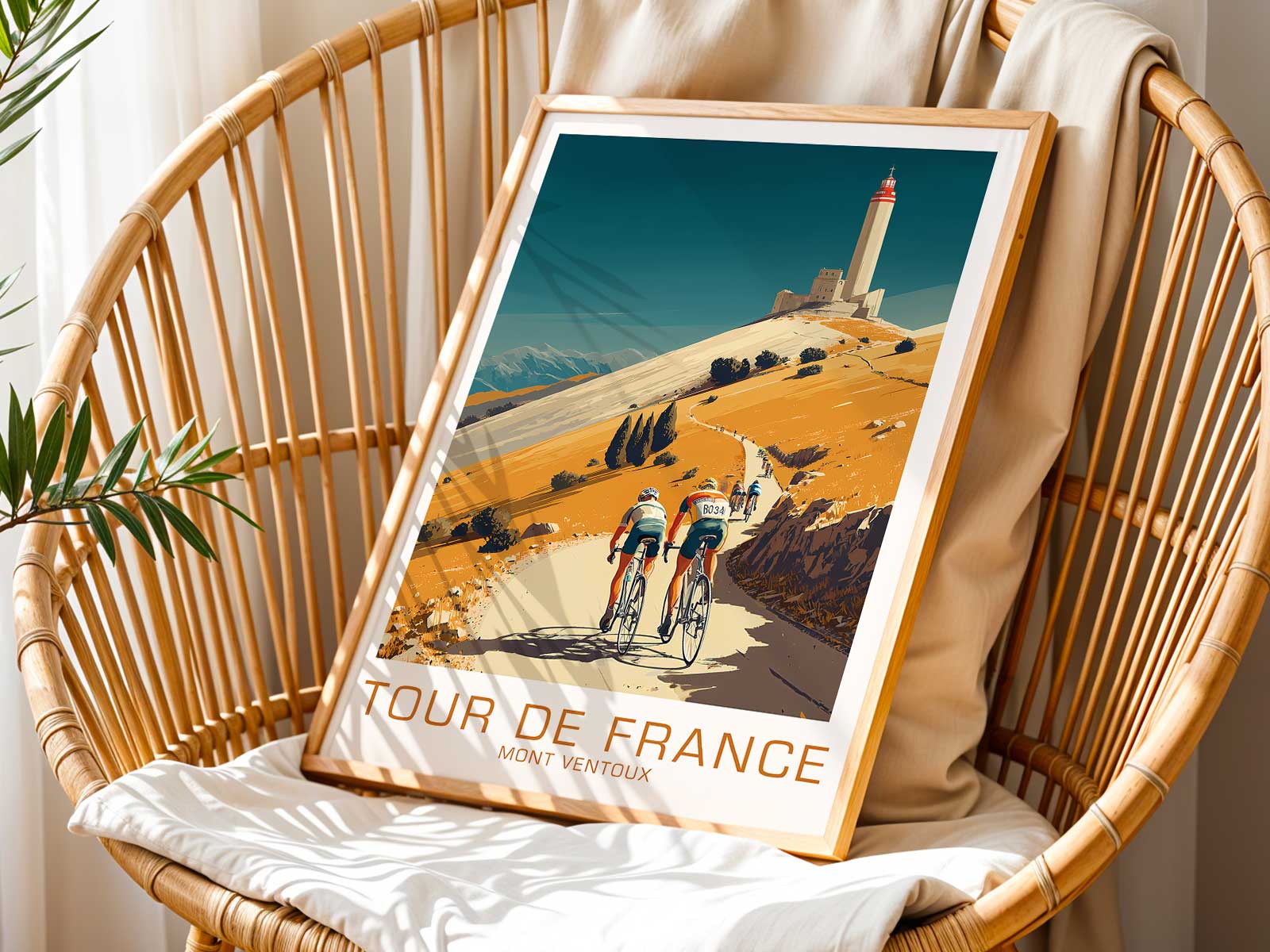
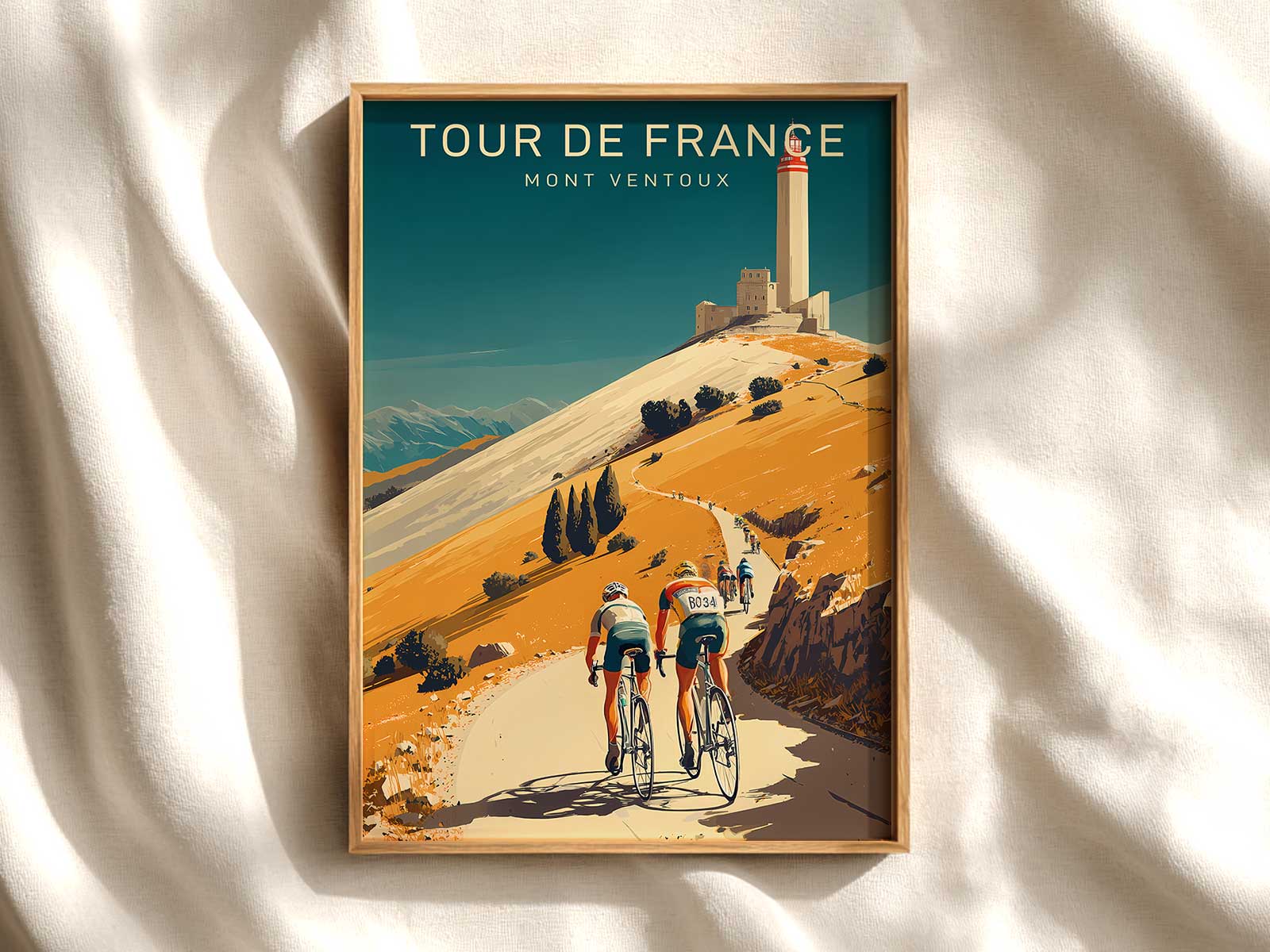
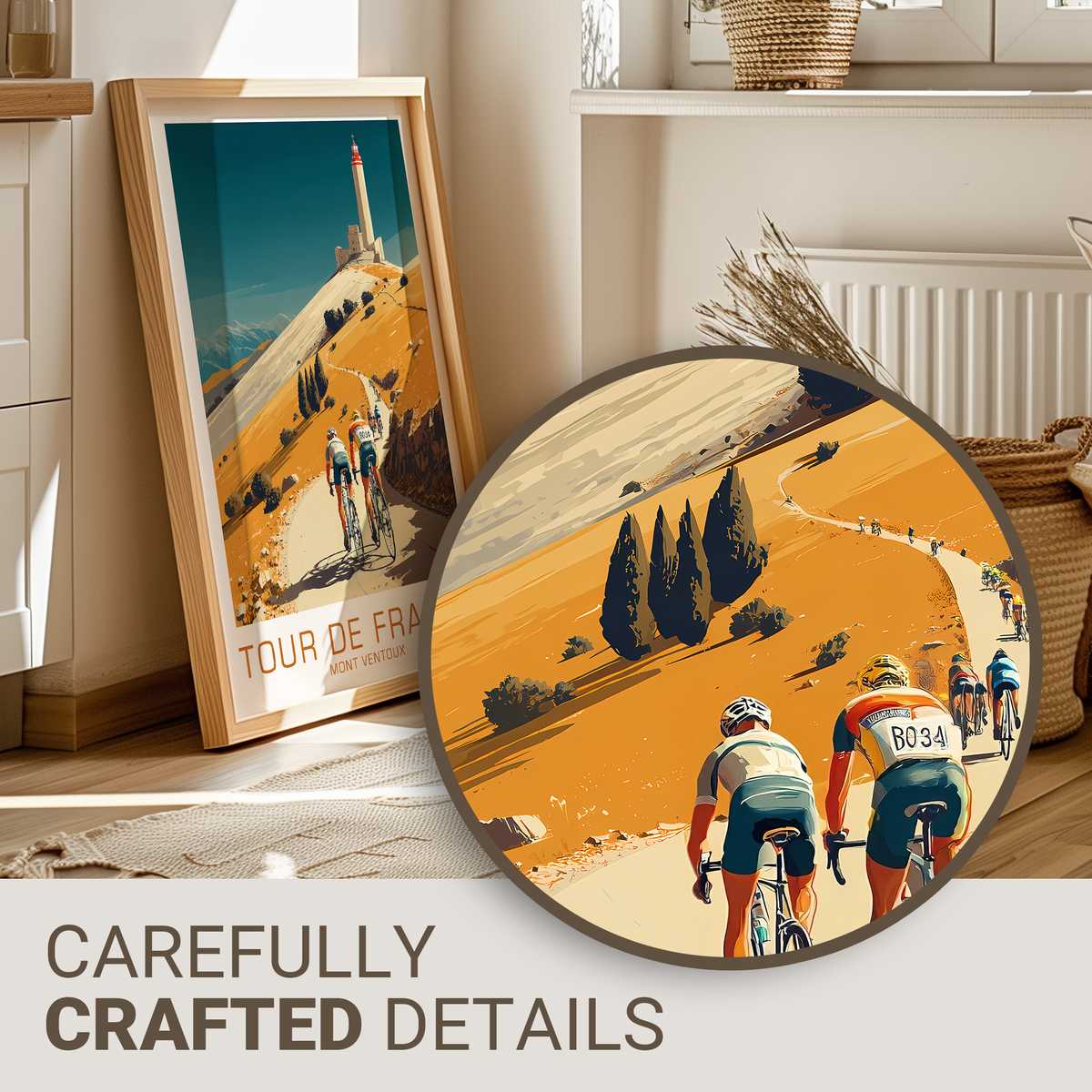
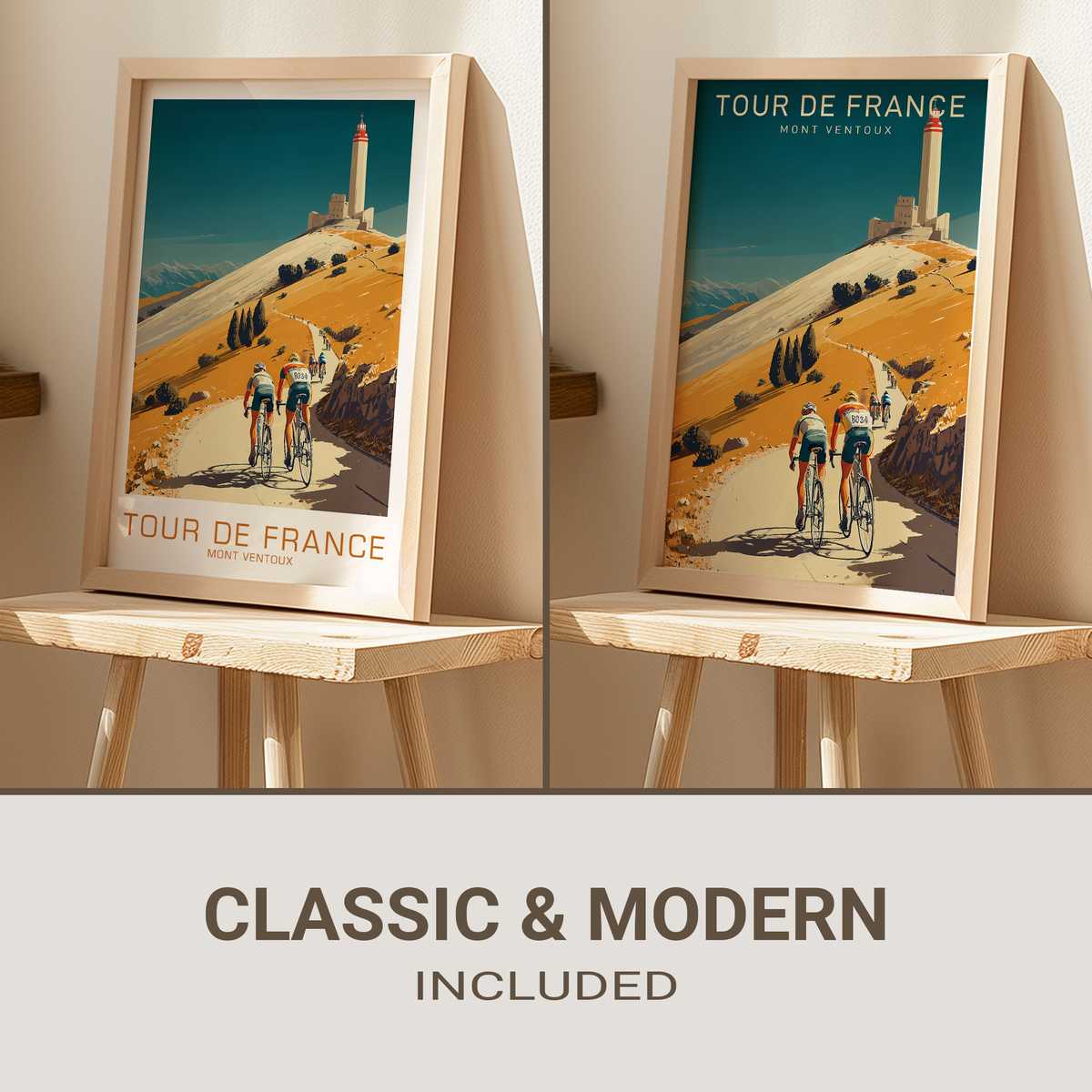
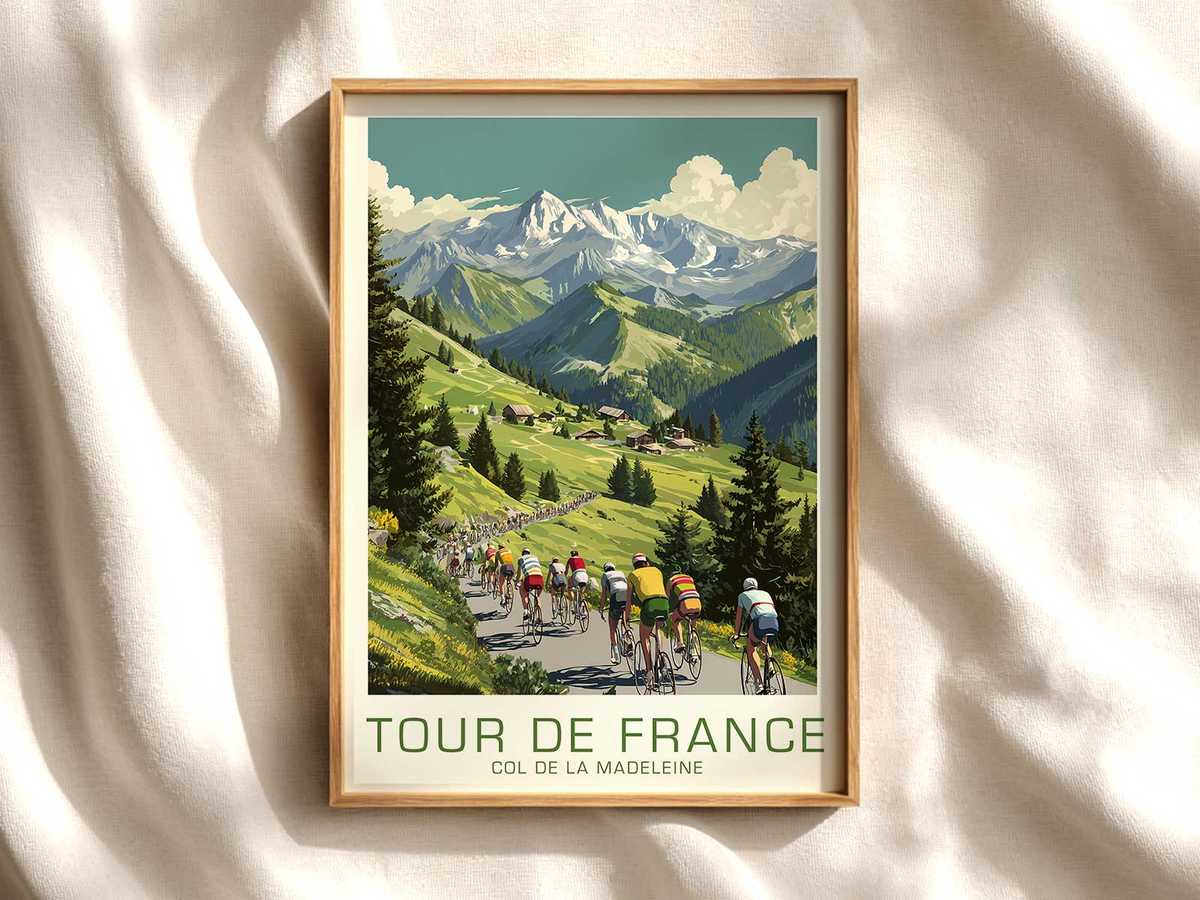
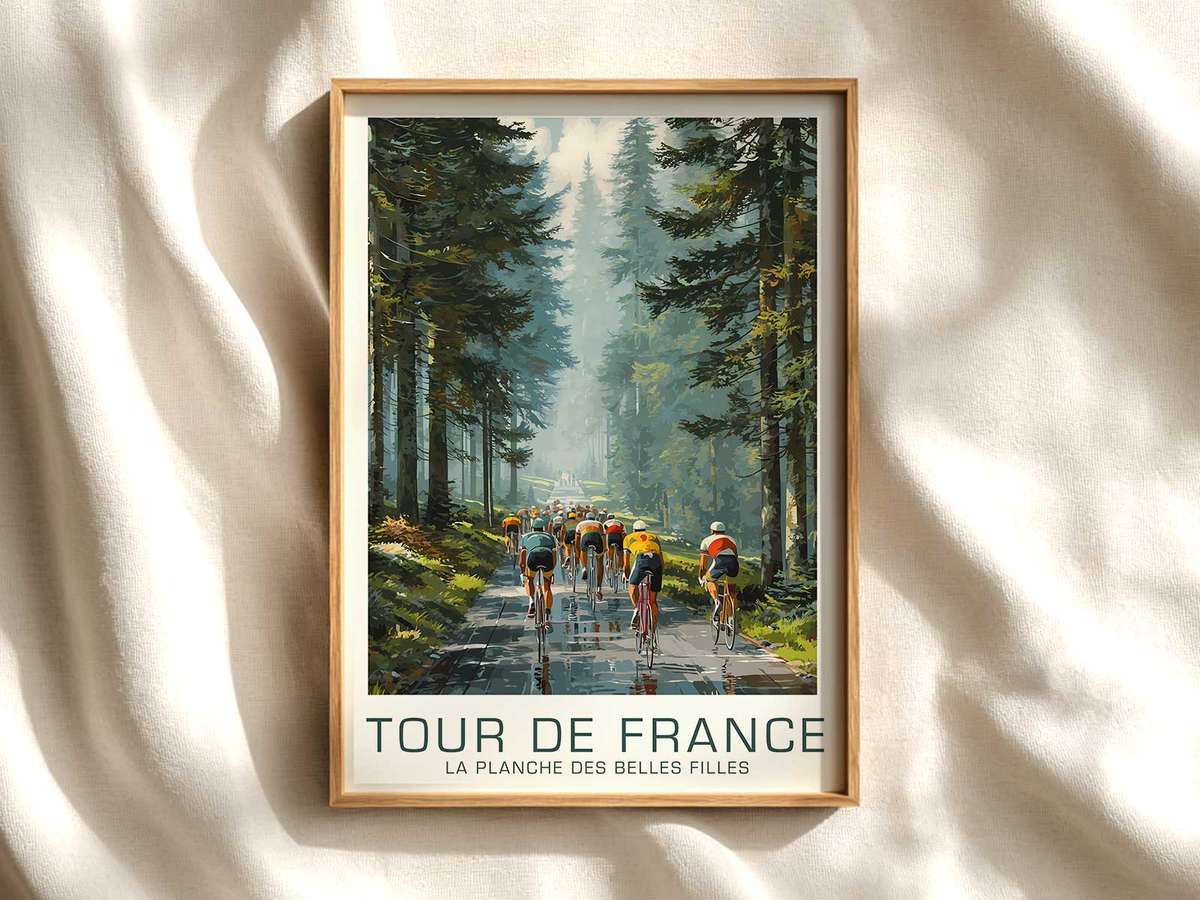
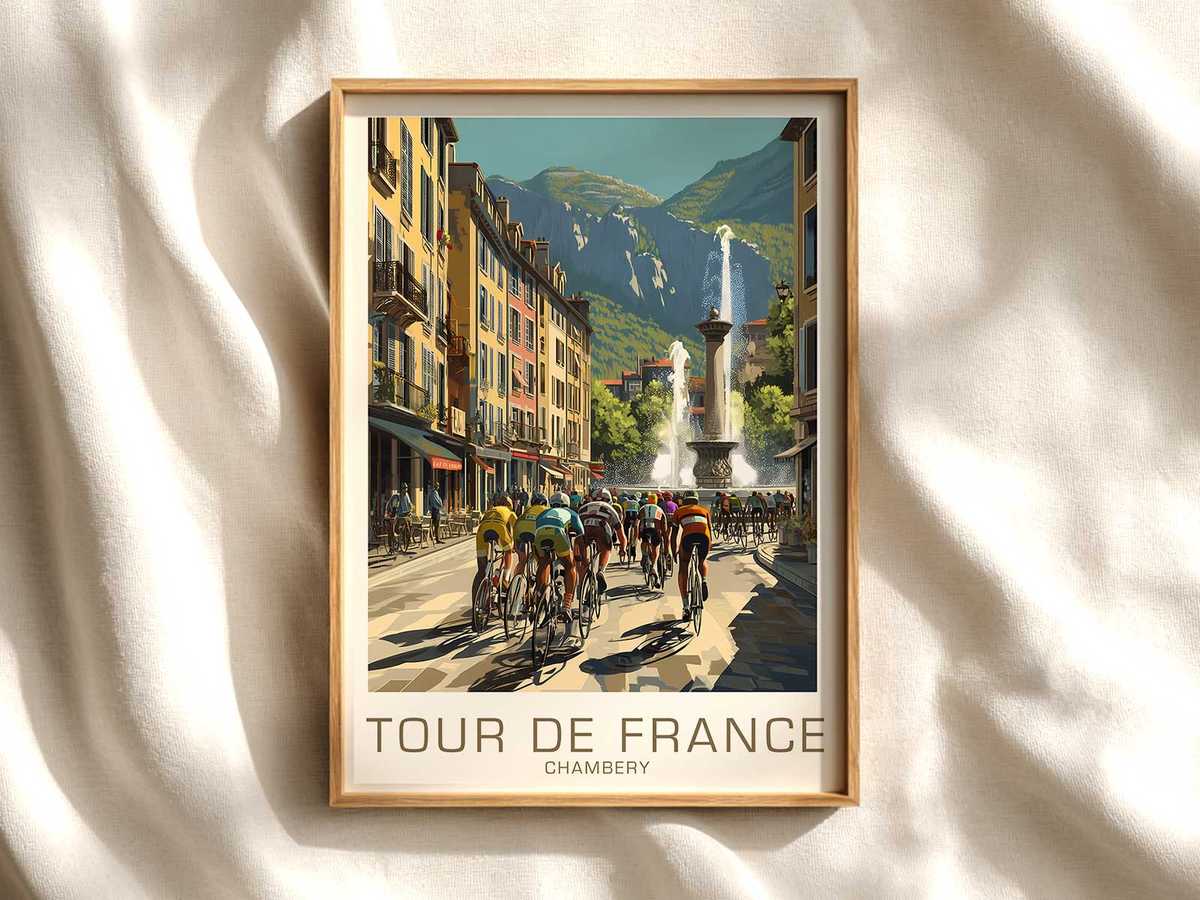
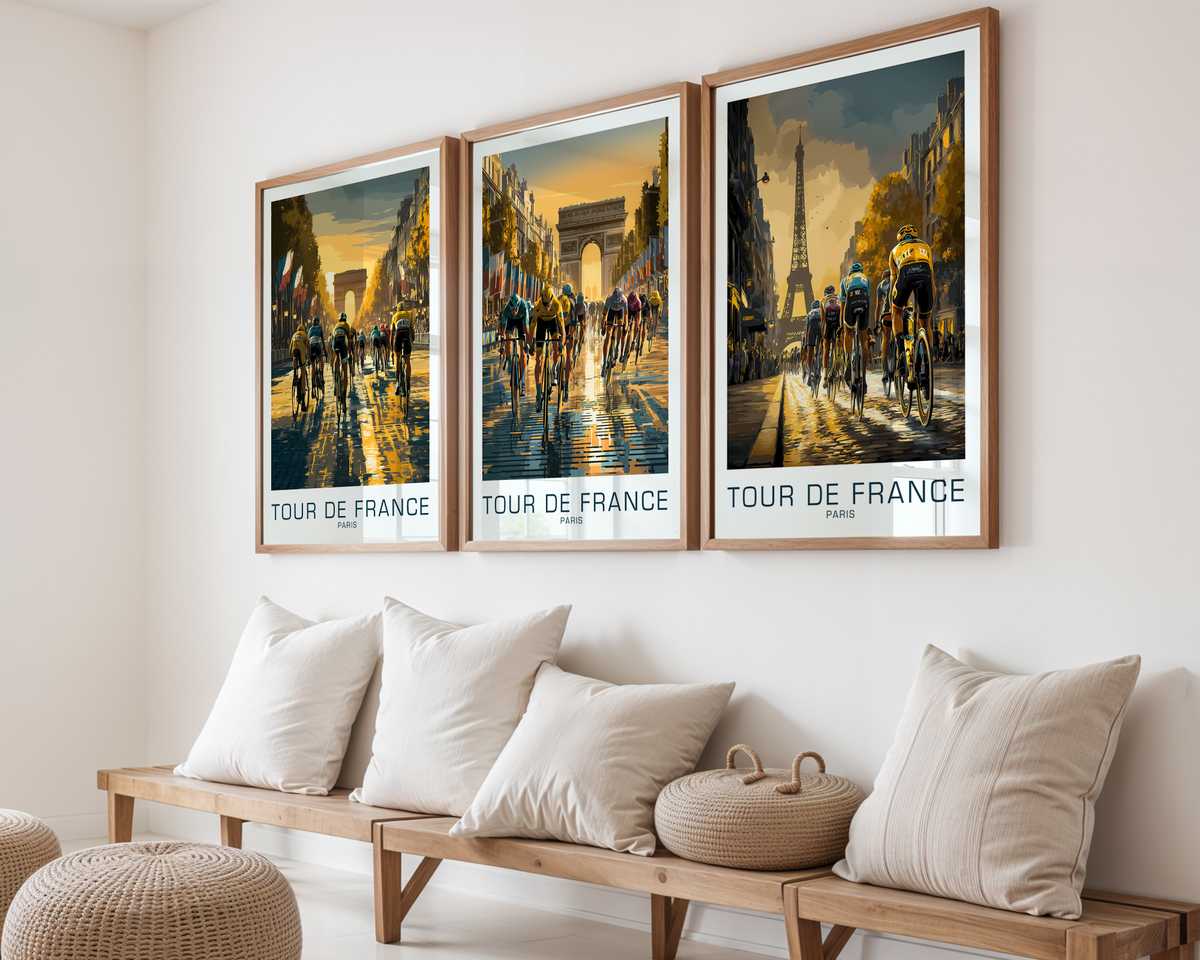
Mont Ventoux has long been one of the Tour de France’s most iconic climbs: the barren crest that looms on the horizon, the steep relief that tests every rider, and the mythic weight that scenes from its slopes carry. A poster that freezes a single instant on Ventoux does more than reproduce a landscape; it arrests a moment of pure racing uncertainty where effort, terrain and the closeness of rivals create a near‑cinematic composition.
In that frozen second you can read timing and tactic: a rider’s shoulders hunched, pedals at a precise arc, the gap to the nearest rival measured in bike lengths and glances. The climb’s exposed, almost lunar profile strips away distractions so the eye stays on movement and strain. Wind and gradient are implied by body language—open mouths, pinned jerseys, the tilt of heads—and by the negative space of rock and sky. This economy of detail is why a Ventoux poster carries such emotional force.
The visual drama of an attack or a desperate chase on Ventoux translates perfectly to wall art because it foregrounds conflict. A single still can show the moment an assault is launched, the instant a rival hesitates, or the point where endurance overtakes speed. That suspended tension—will the attacker hold? will the chase close?—is what makes the image cinematic: narrative compressed into one decisive frame.
[IMAGE_INSERT_ARTICLE_01]
There is also history woven into any Ventoux depiction. The climb’s reputation as a defining and feared stage of the Tour lends resonance to the poster. Viewers familiar with that history bring a layer of meaning to the visual: courage under harsh conditions, the climb’s capacity to create unforgettable scenes, and the whisper of past tragedies and triumphs that have shaped the mountain’s legend. Commercial and artistic reproductions of Mont Ventoux attest to the public appetite for these charged images and explain why posters of the Giant of Provence appear in many interiors.
On a practical level, a race‑moment Ventoux print suits a range of rooms because it functions both as a sporting statement and as an emotional focal point. In an office it can signal quiet determination; in a studio or reading room it adds drama and scale without overwhelming the space; in a game room or cycling corner it becomes an emblem of risk and reward. The image’s vertical drama—the long climb, the distant summit, the riders compressed in the lower plane—works with frames and wall heights to create movement across the wall the way the climb creates movement across a stage of the race.
Ultimately, the strength of a Mont Ventoux poster lies in how one instant can tell a whole story: the physical law of the slope, the tactical logic of an attack, the psychological pressure of rivals riding inches apart, and the viewer’s imagination finishing the sequence beyond the frame. That concentrated narrative is why such images remain compelling as art and why they feel so natural in spaces where the story of effort and endurance is welcome.