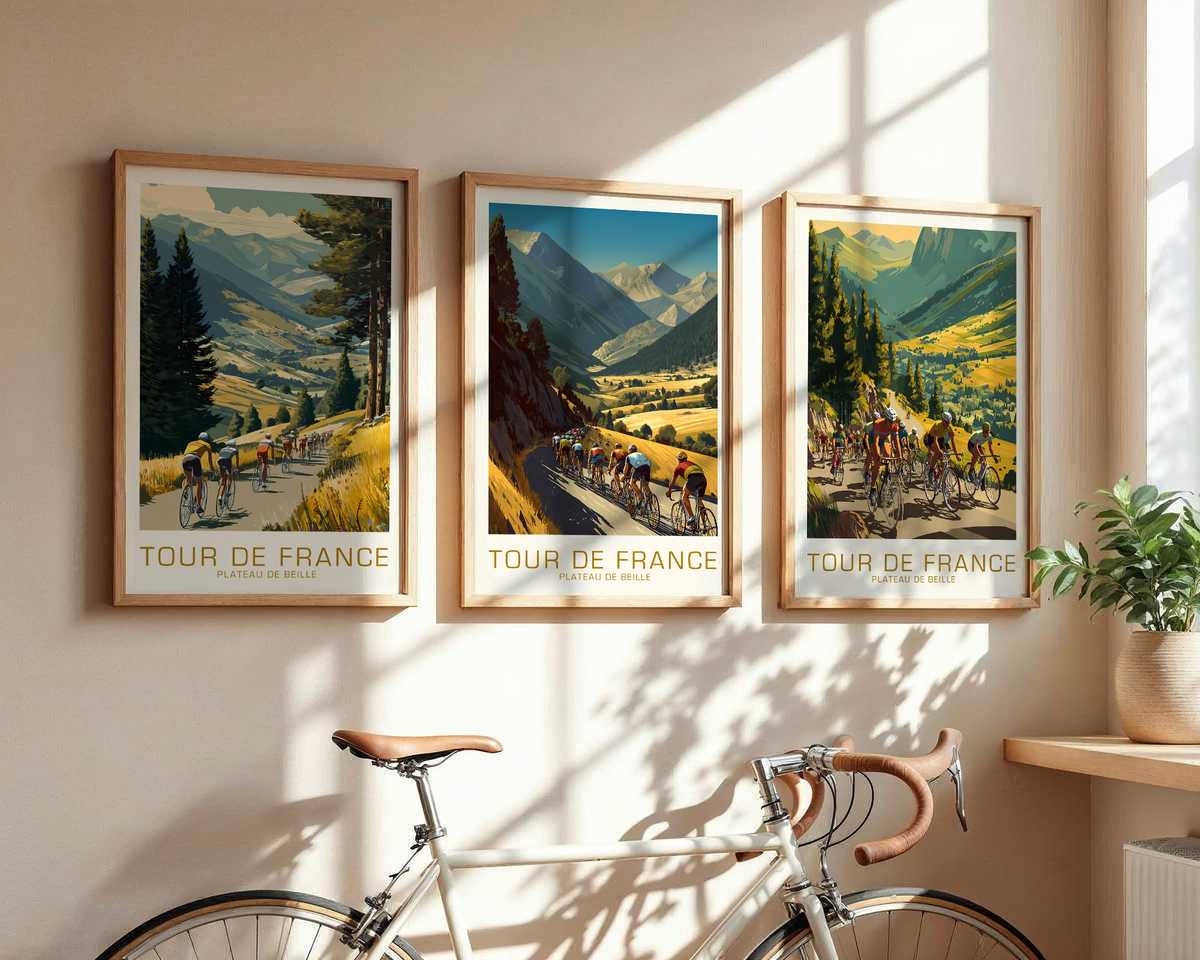
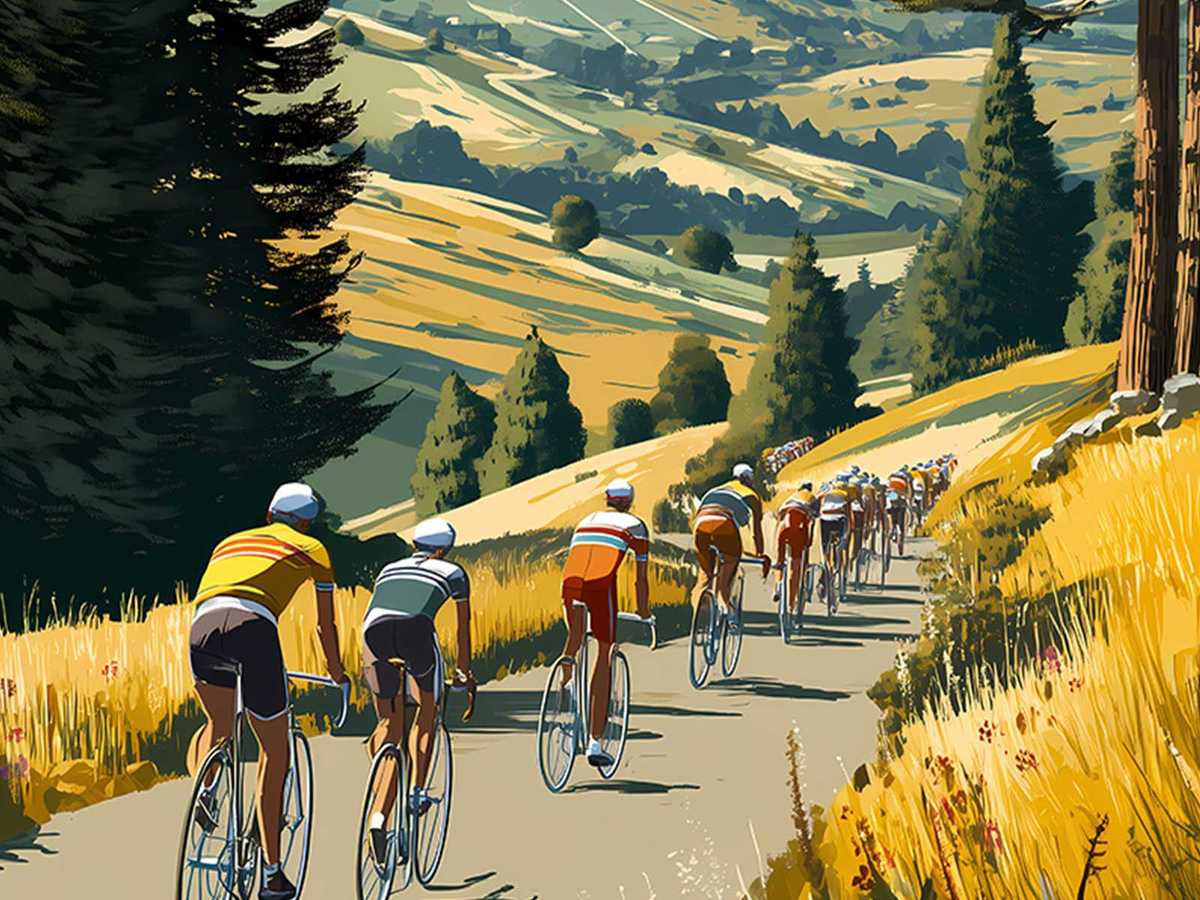
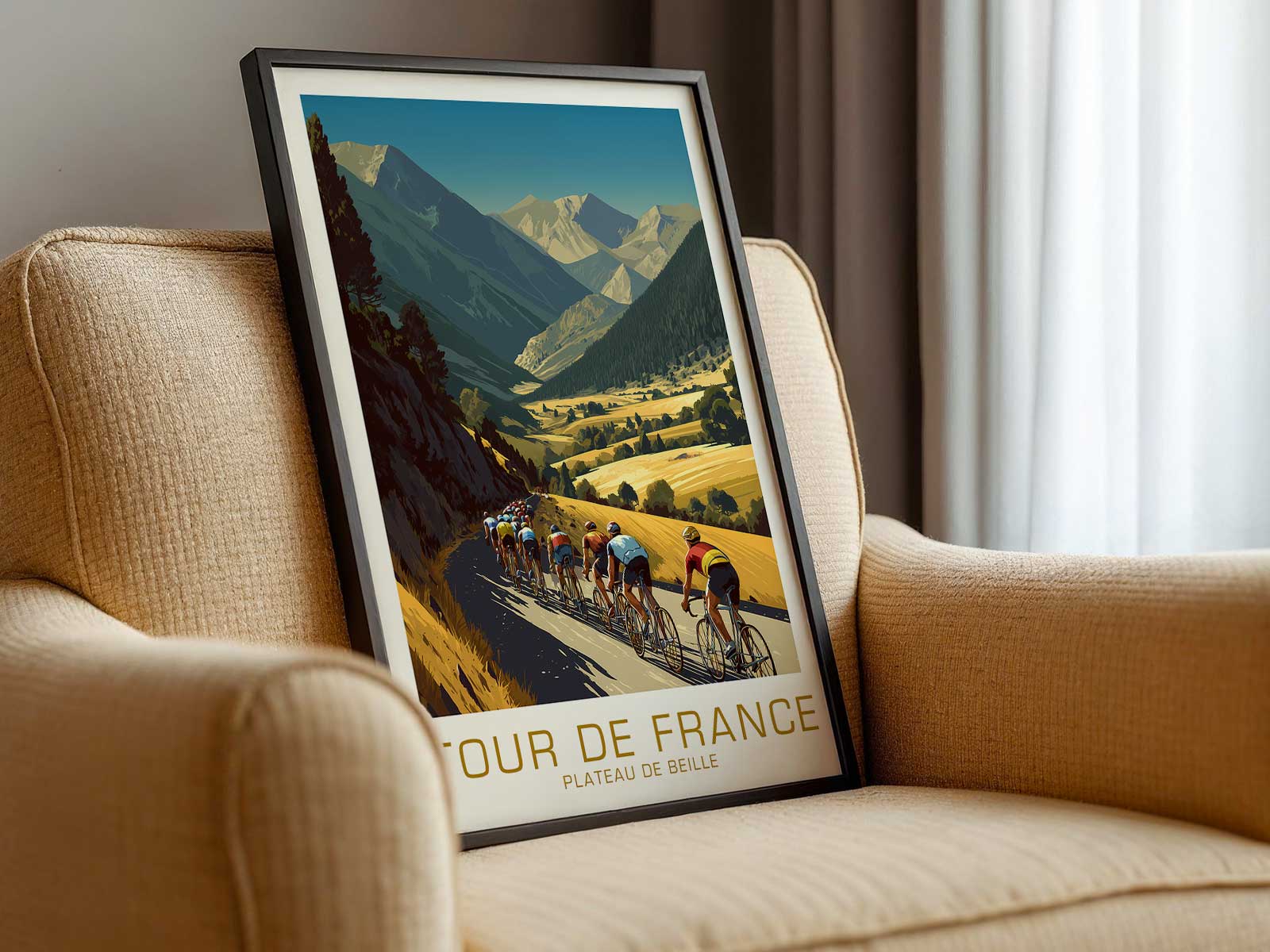
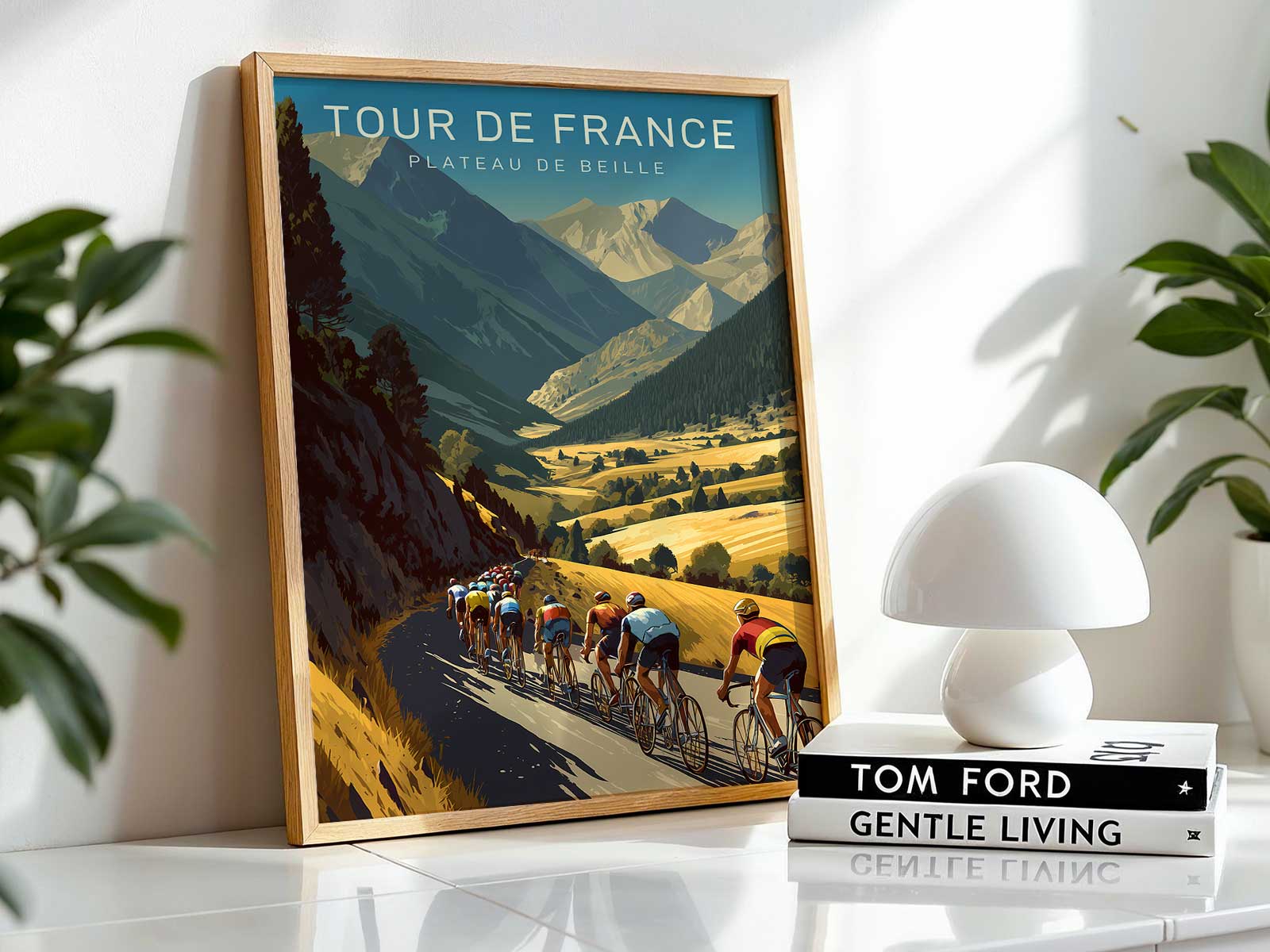
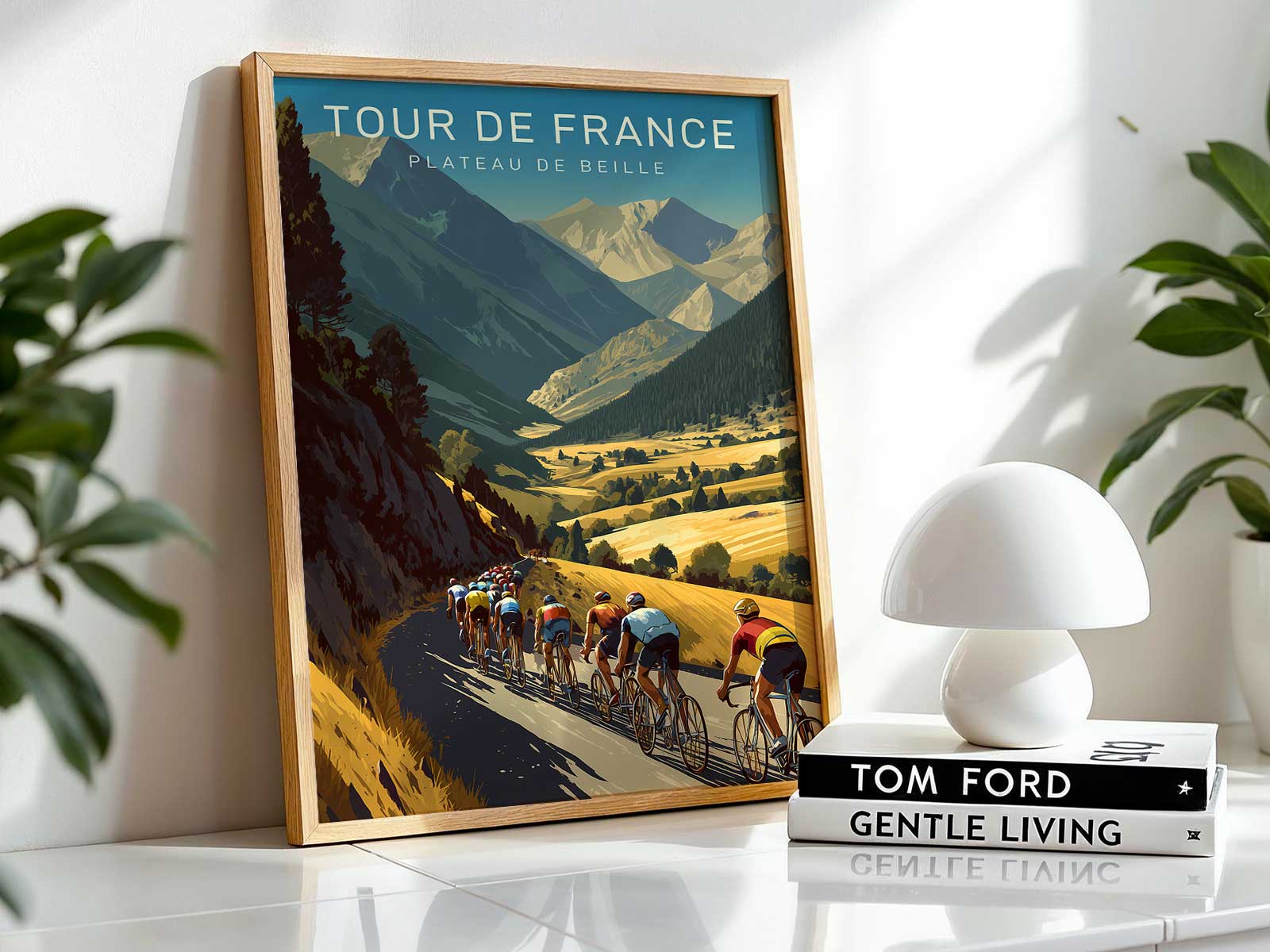
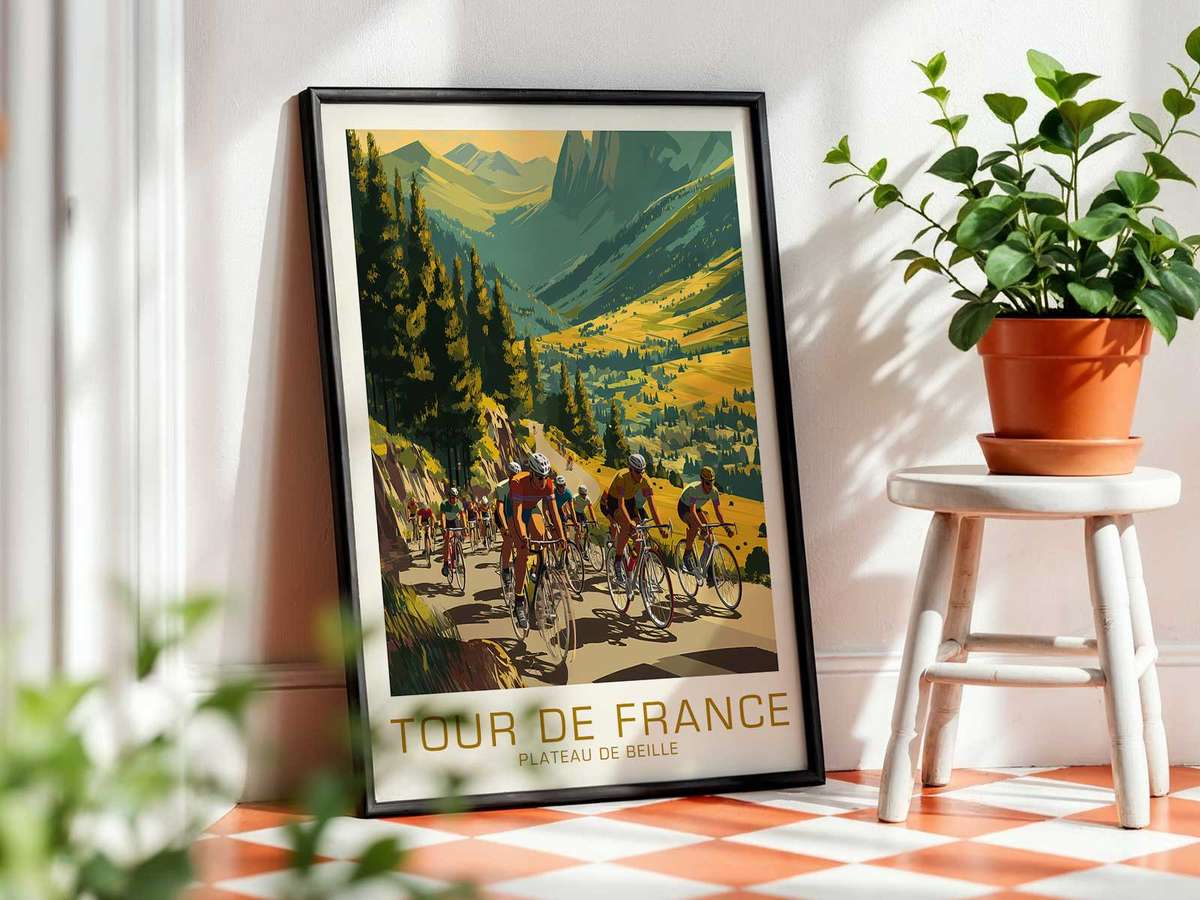
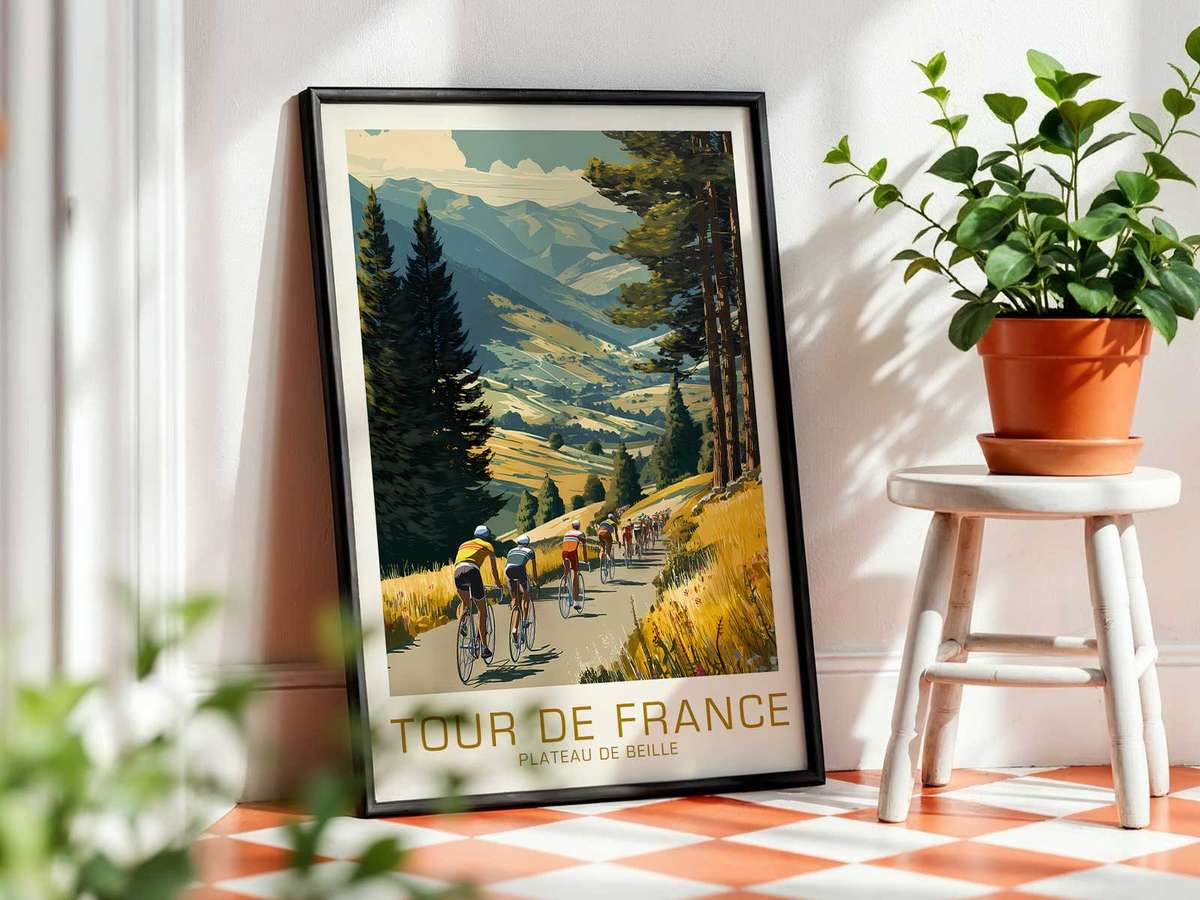
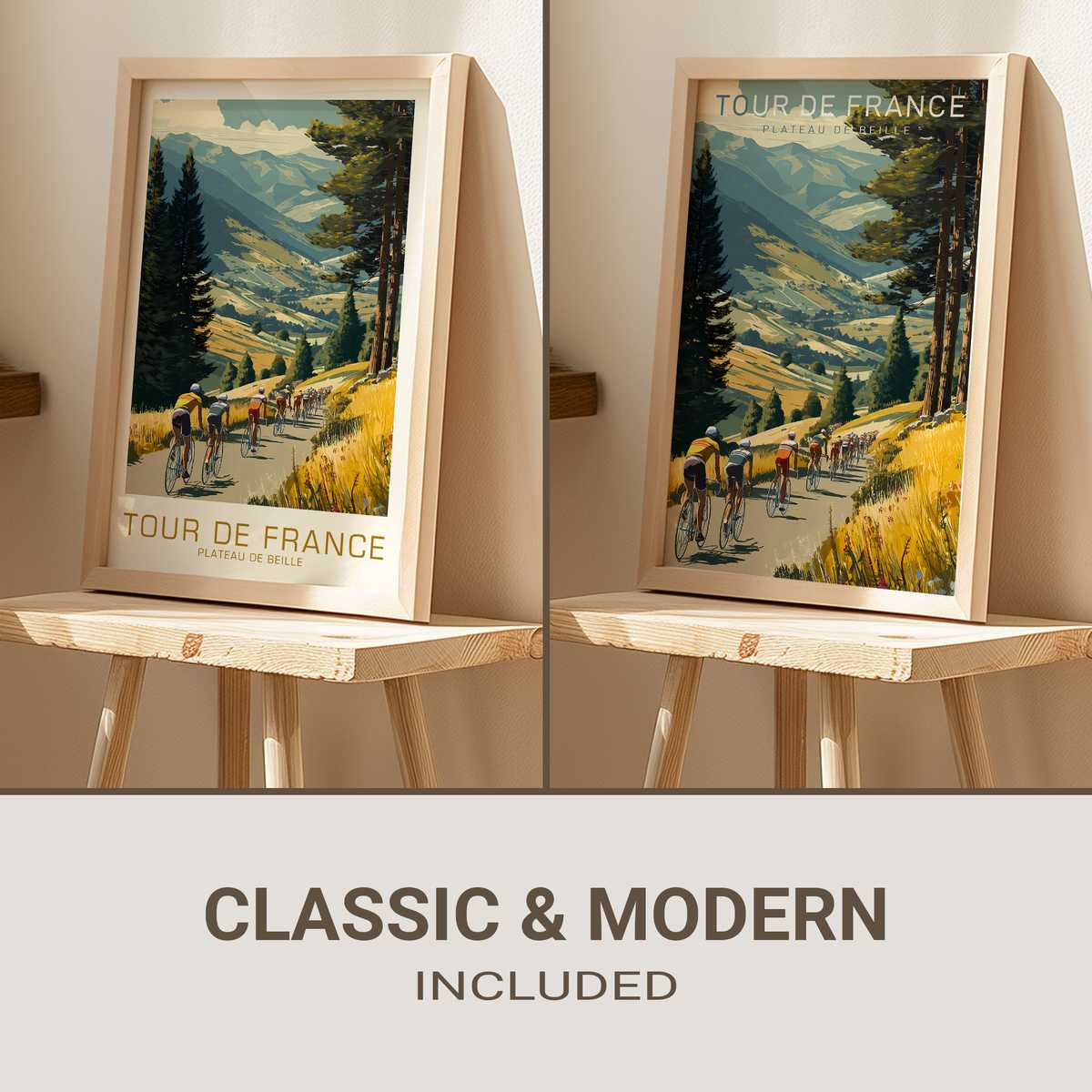
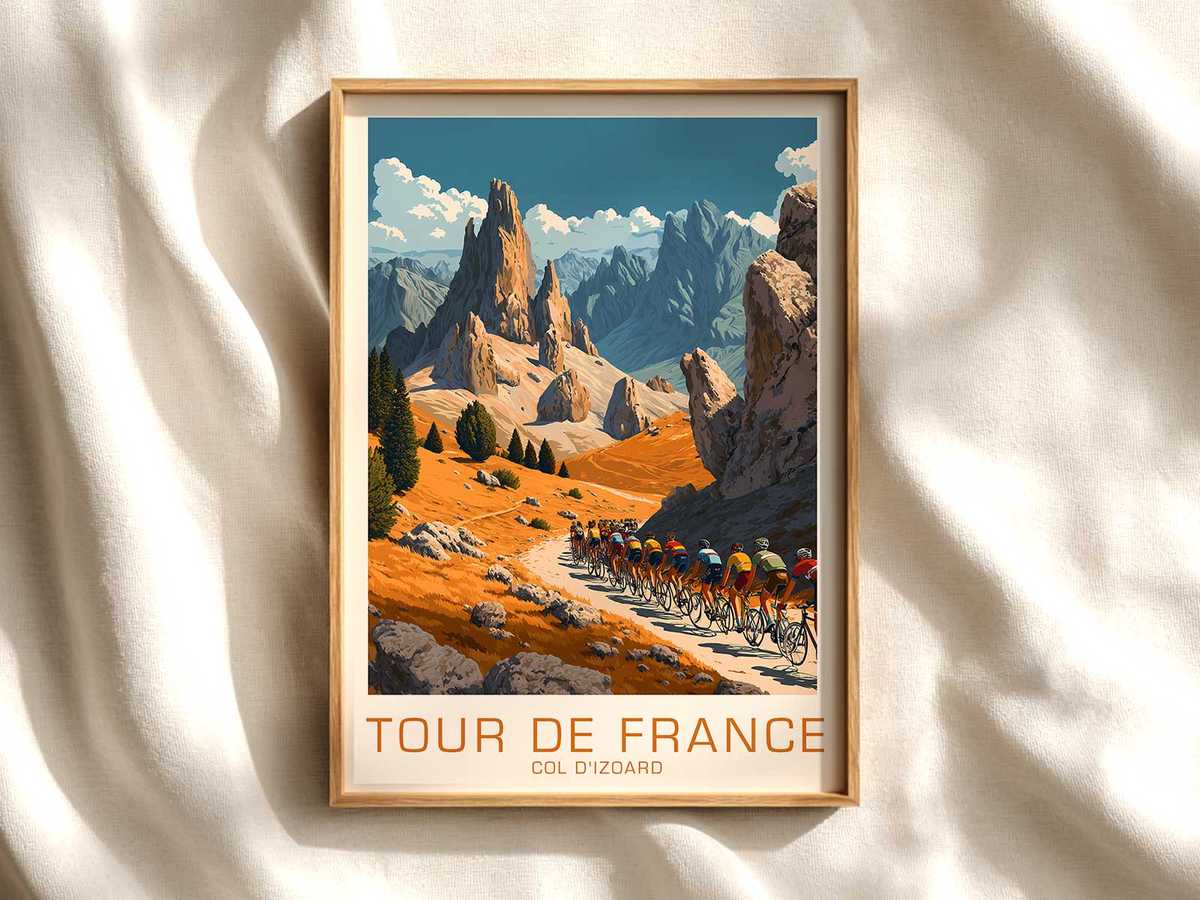
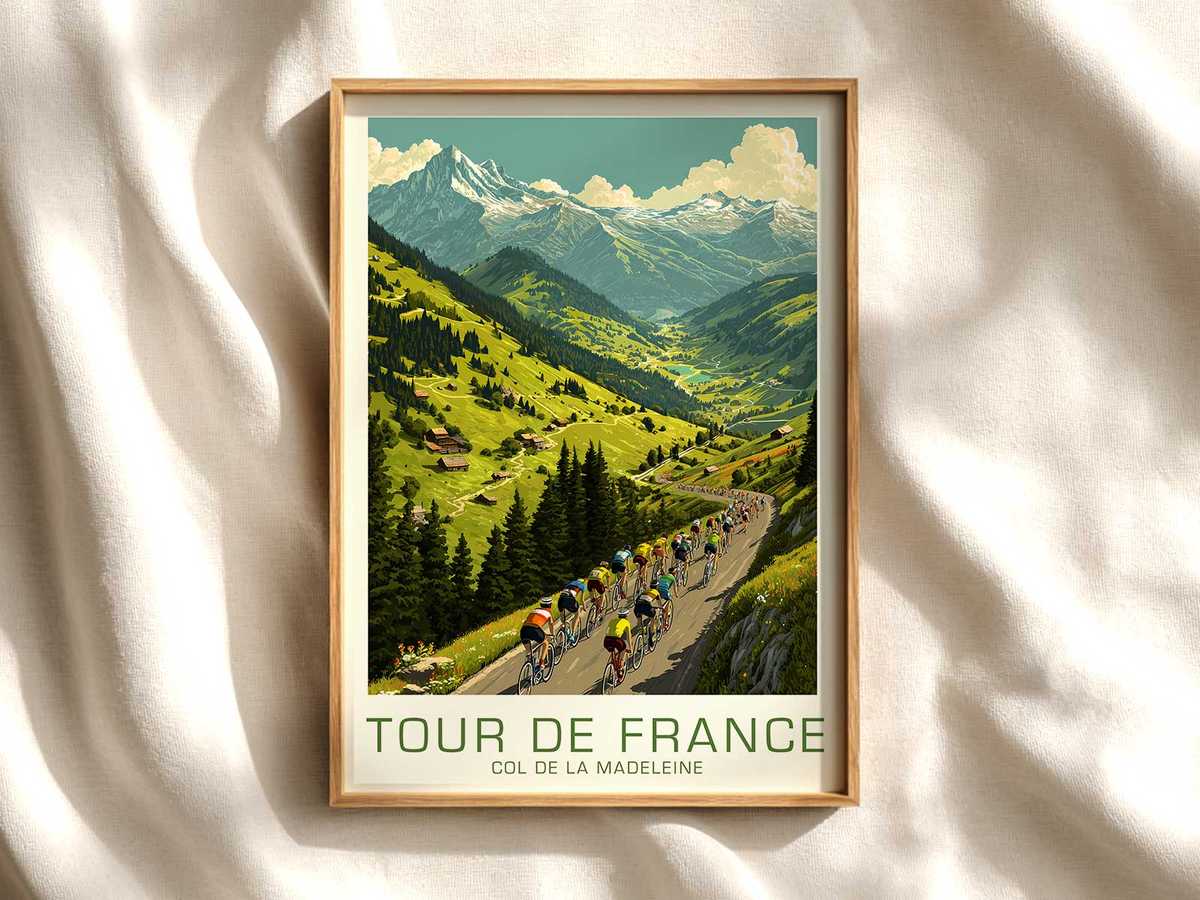
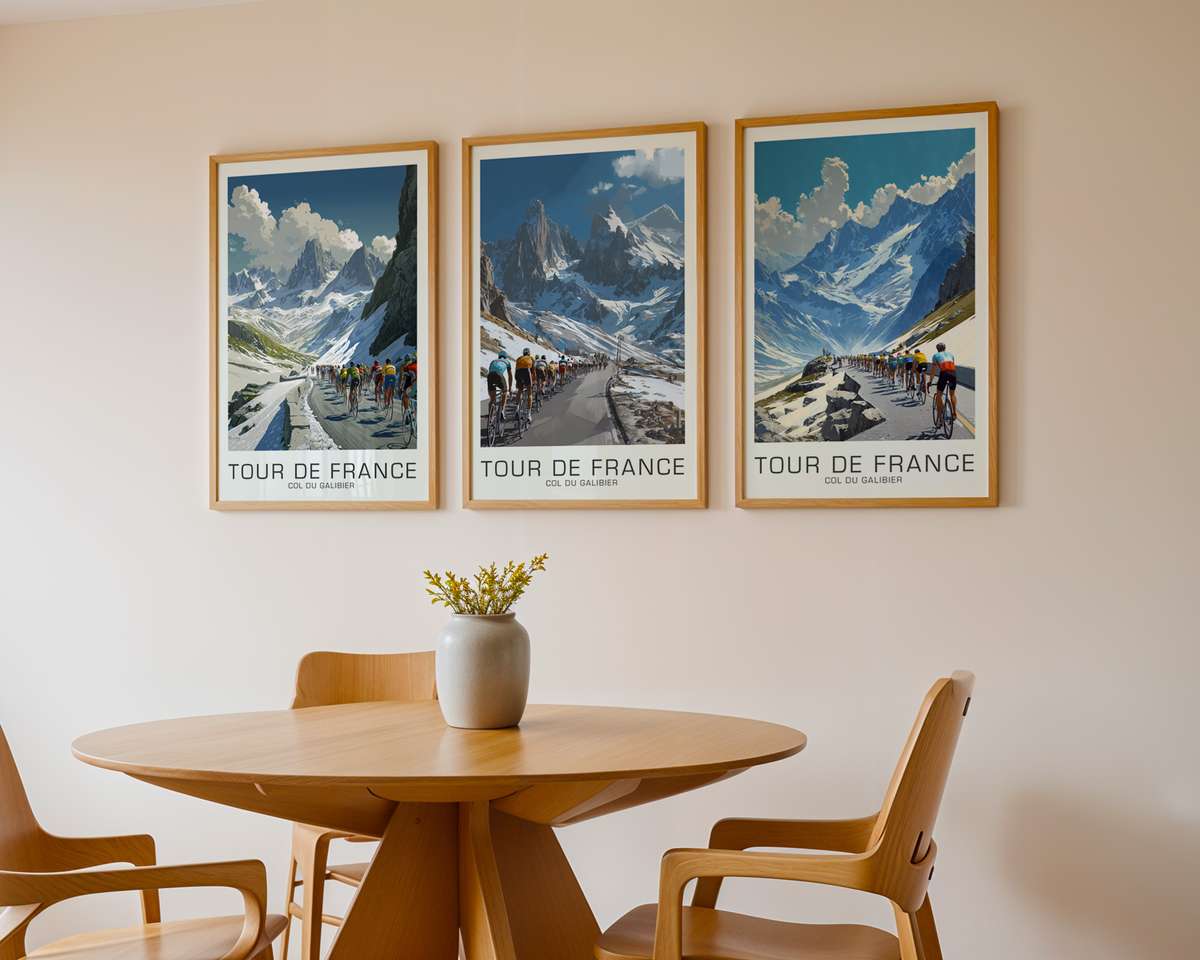
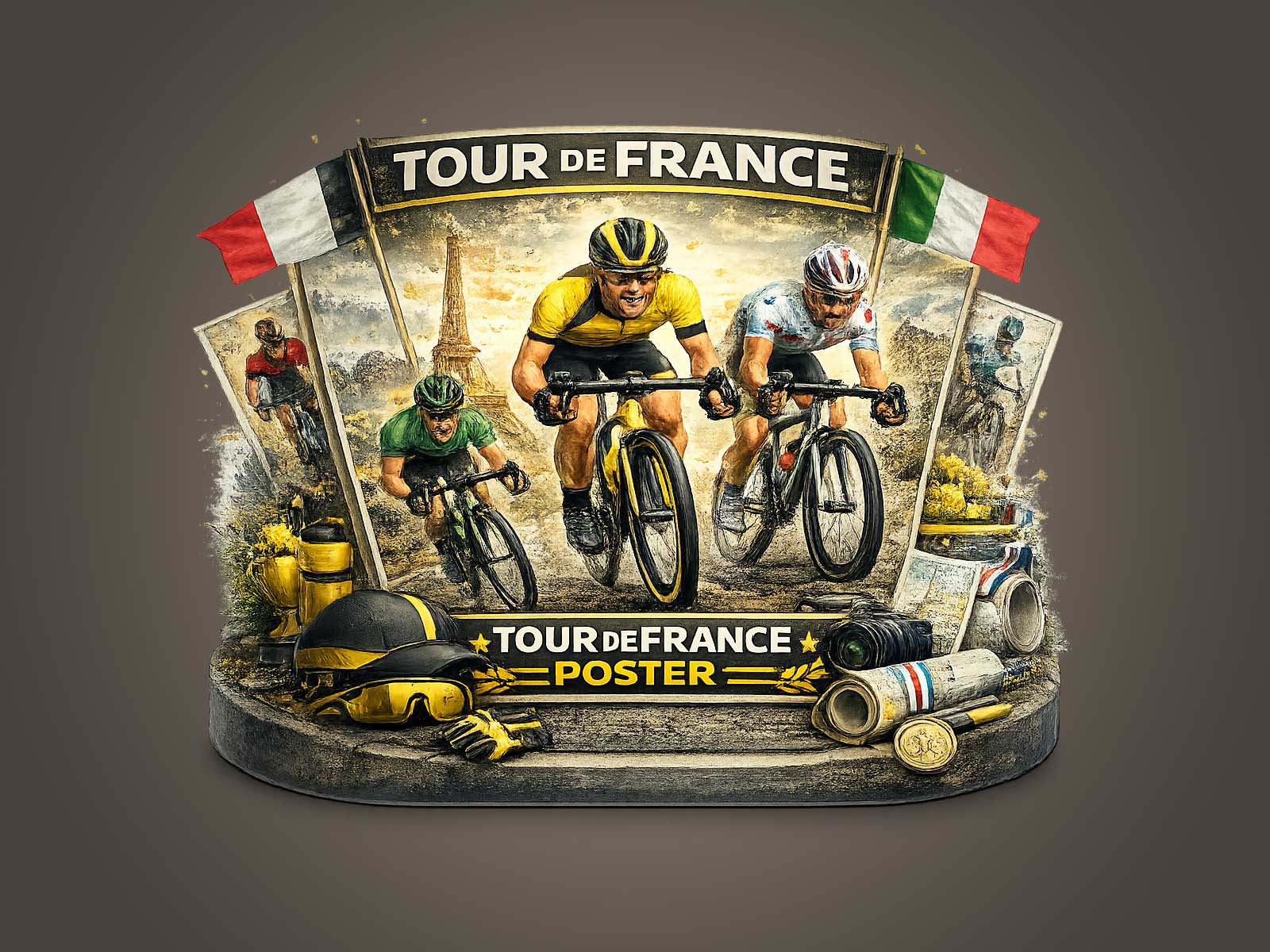
The Plateau de Beille held in a vintage Tour de France print reads like a condensed archive: not simply an image but a manufactured memory. Printed with the warmth of period inks, softened edges and the grain of an earlier press run, this kind of poster makes a mountain more than a climb. The ridge lines, the scree and the drawn-in gradient of the road become tangible relics — parts of a shared sporting story you can hang in a room and return to, again and again.
What gives such imagery its weight is not just an imitation of age but a set of visual cues that signal history. Muted palettes that have lost some saturation, paper texture that suggests handling, and the careful rendering of classic jerseys and older bicycle silhouettes work together to position the scene as a primary source rather than a throwback novelty. A rider’s wool jersey, a steel frame shown in plain profile, or a simple race number pinned to a back: these are small, readable details that locate the viewer in a lineage of the peloton, making the poster feel like a preserved page from cycling’s living archive.
There is an emotional architecture to these prints. The slope itself, drawn with a measured economy, becomes a spine for memory: each curve and exposed rock holds implied effort, team tactics and the hush of crowds. The effect is almost patrimonial — a landscape of sporting heritage where geology and human contest cohabit. On a wall, such a piece does more than decorate; it anchors a room with narrative. In a study or library it reads as a quiet testament to endurance. In a studio it suggests the craft of racing and the craft of printmaking combined.
[IMAGE_INSERT_ARTICLE_01]
Beyond surface nostalgia, the archival feel comes from purposeful restraint. Designers of authentic-seeming vintage prints avoid gimmicks: typography borrows from period signage without parody, line work respects the limits of historic repro techniques, and negative space is used to let the mountain breathe. This restraint communicates confidence — the image does not need to shout to be authoritative. Collectors respond to that tone because it promises substance: an aesthetic that has been curated rather than manufactured to trend.
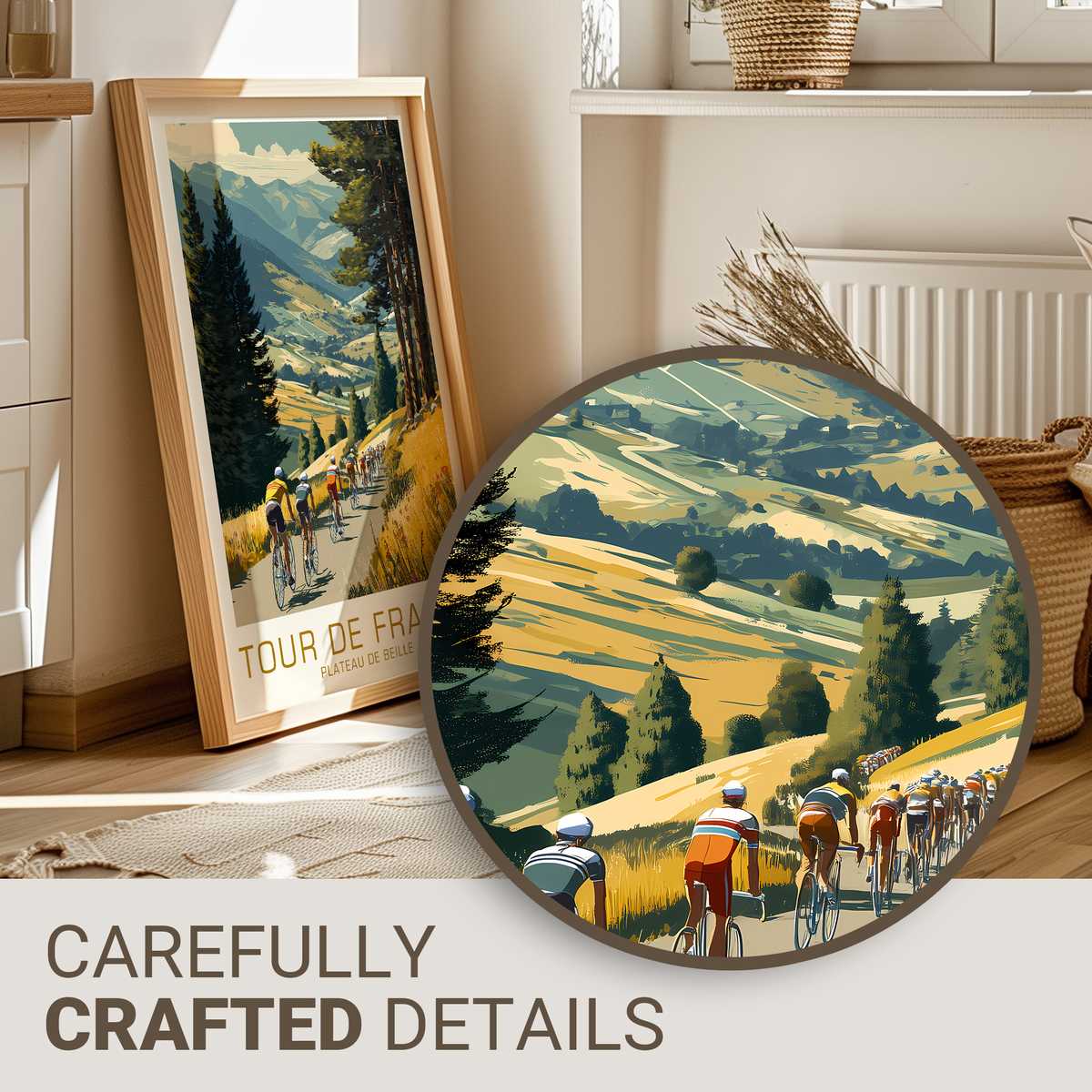
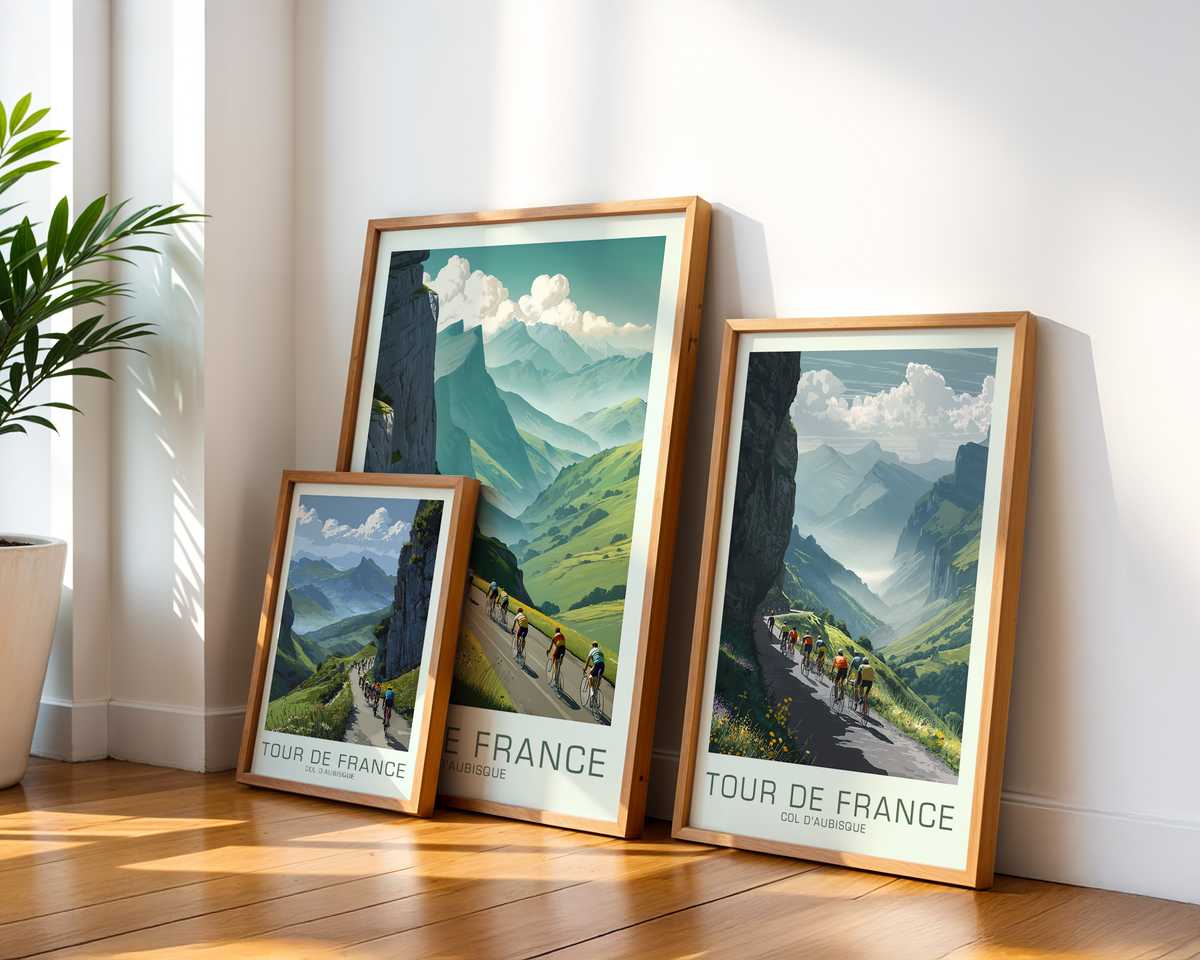
Finally, the collector appeal is both visual and tactile. Owners imagine the poster in varied interiors — framed in oak, rolled into a portfolio, or propped against a library shelf — and it blends into spaces where materiality matters. The sensory memory of printed ink and the cultural memory of the Tour converge, giving the piece a dual status as art and artifact. For anyone who values cycling heritage, a Plateau de Beille vintage print is not merely decorative; it is a doorway to the history of the race and a visible claim that those stories belong on the wall.
Author: