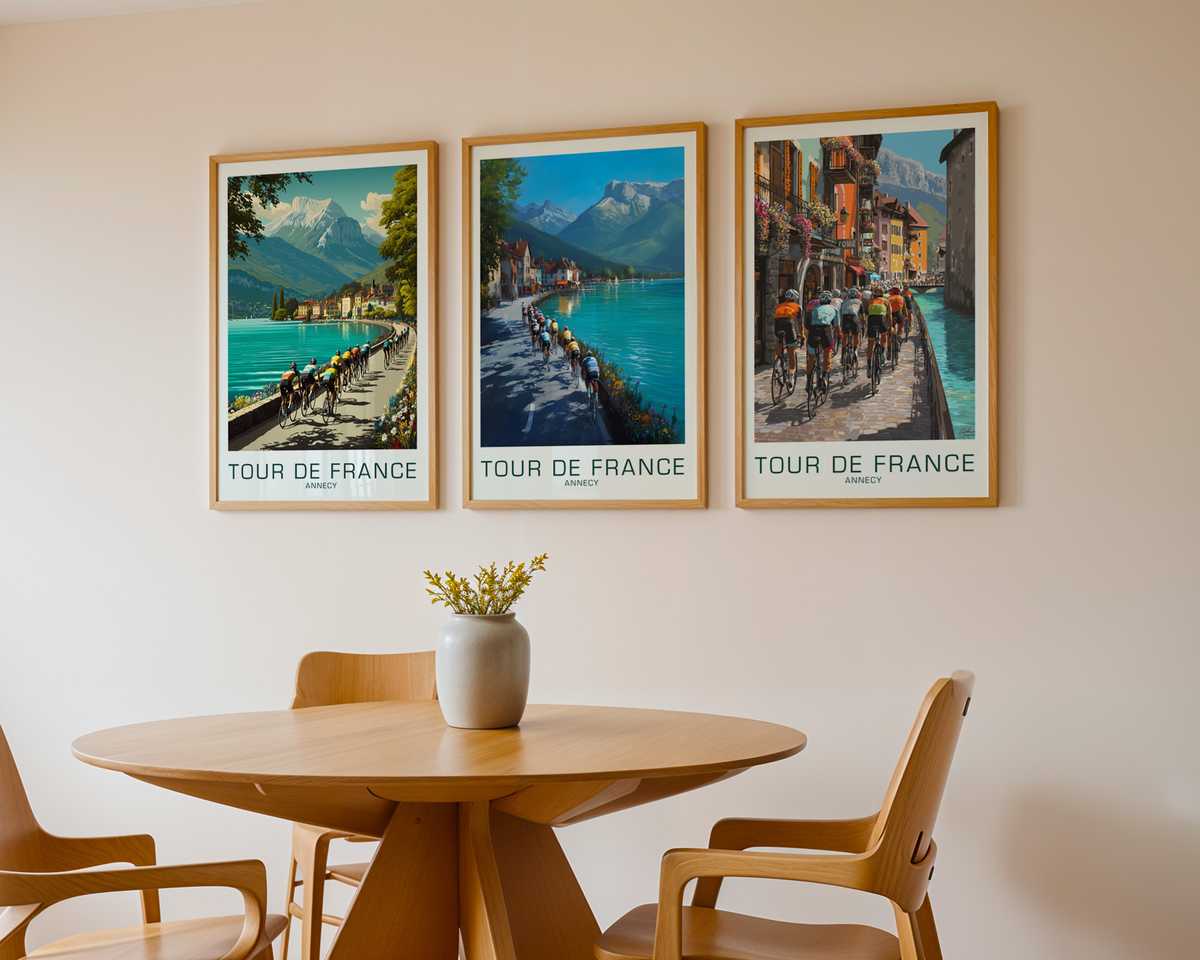
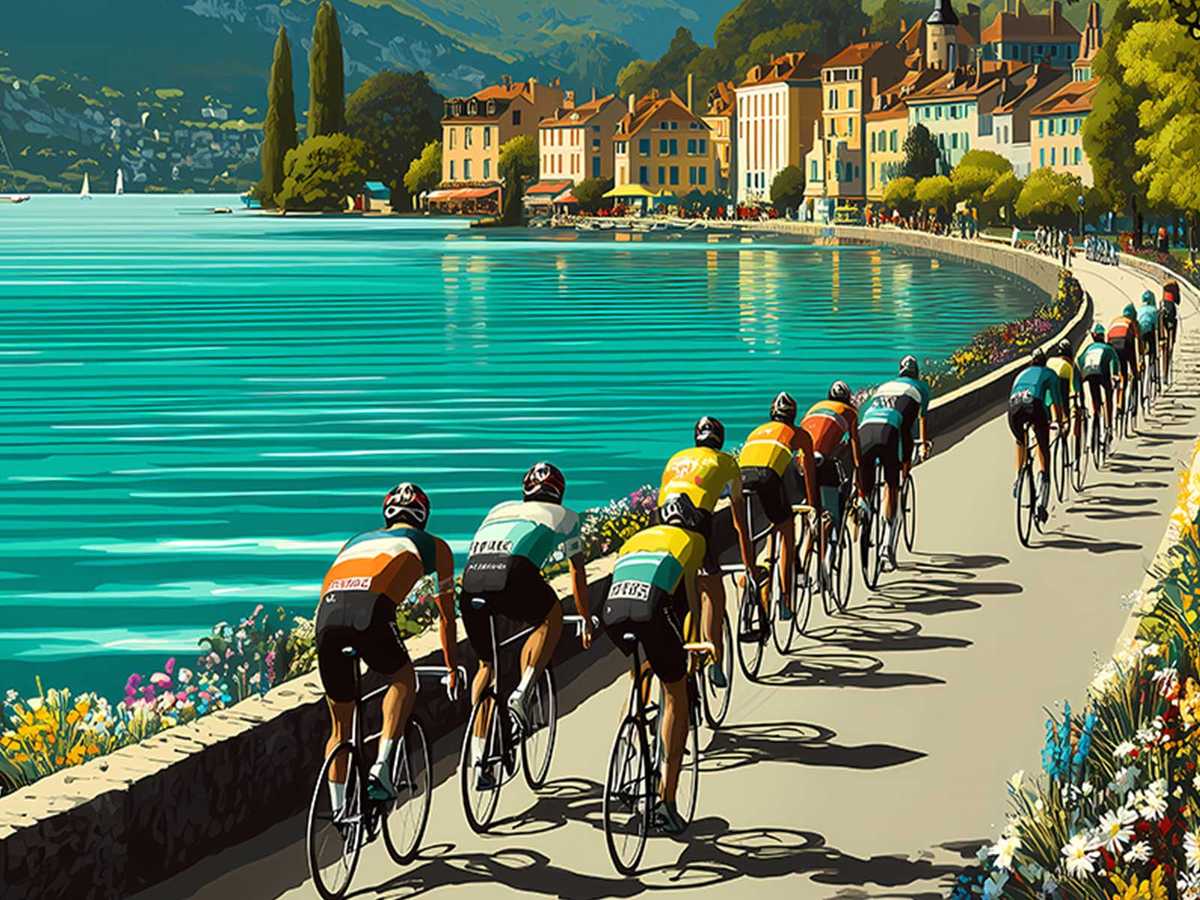
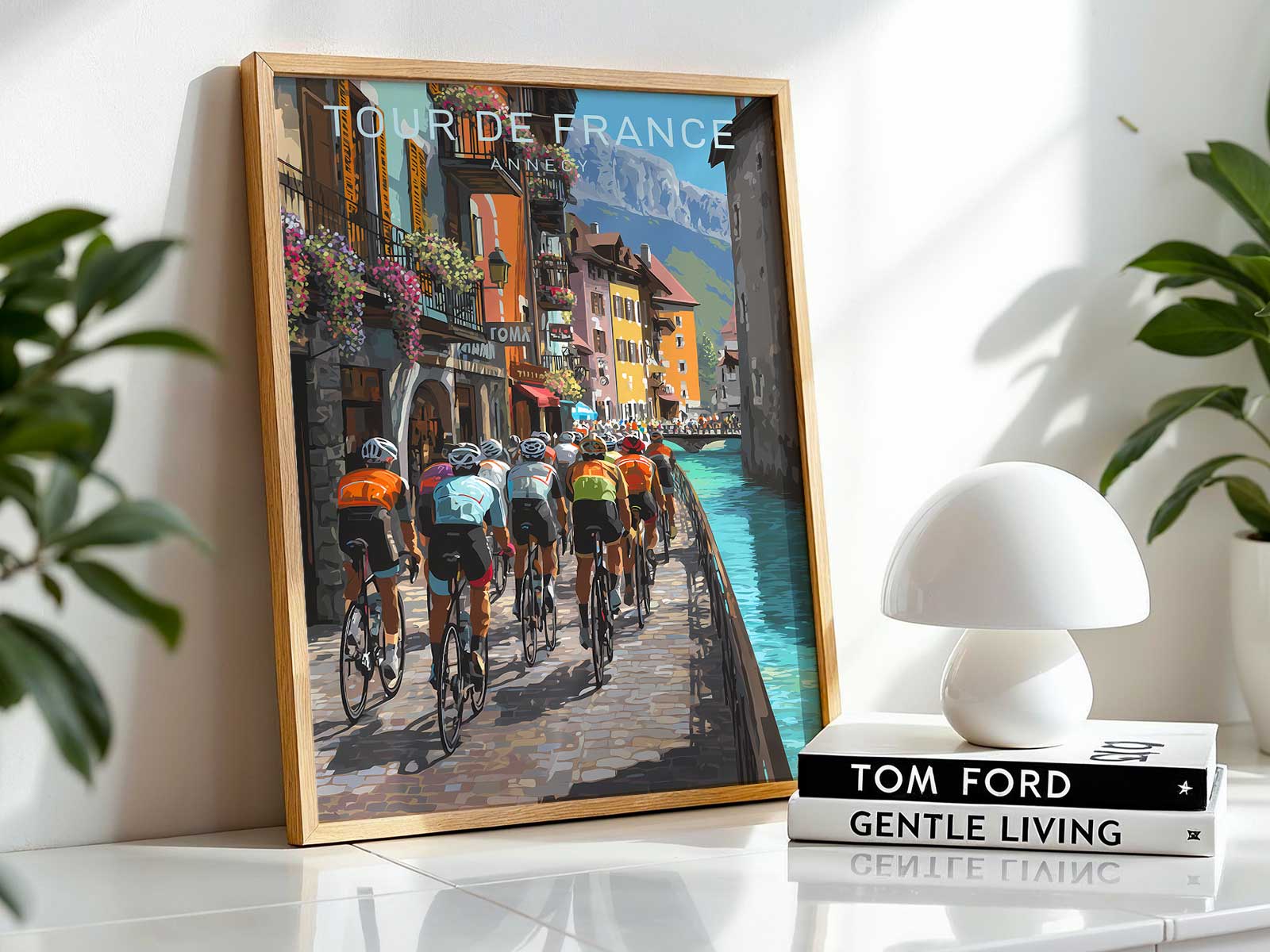
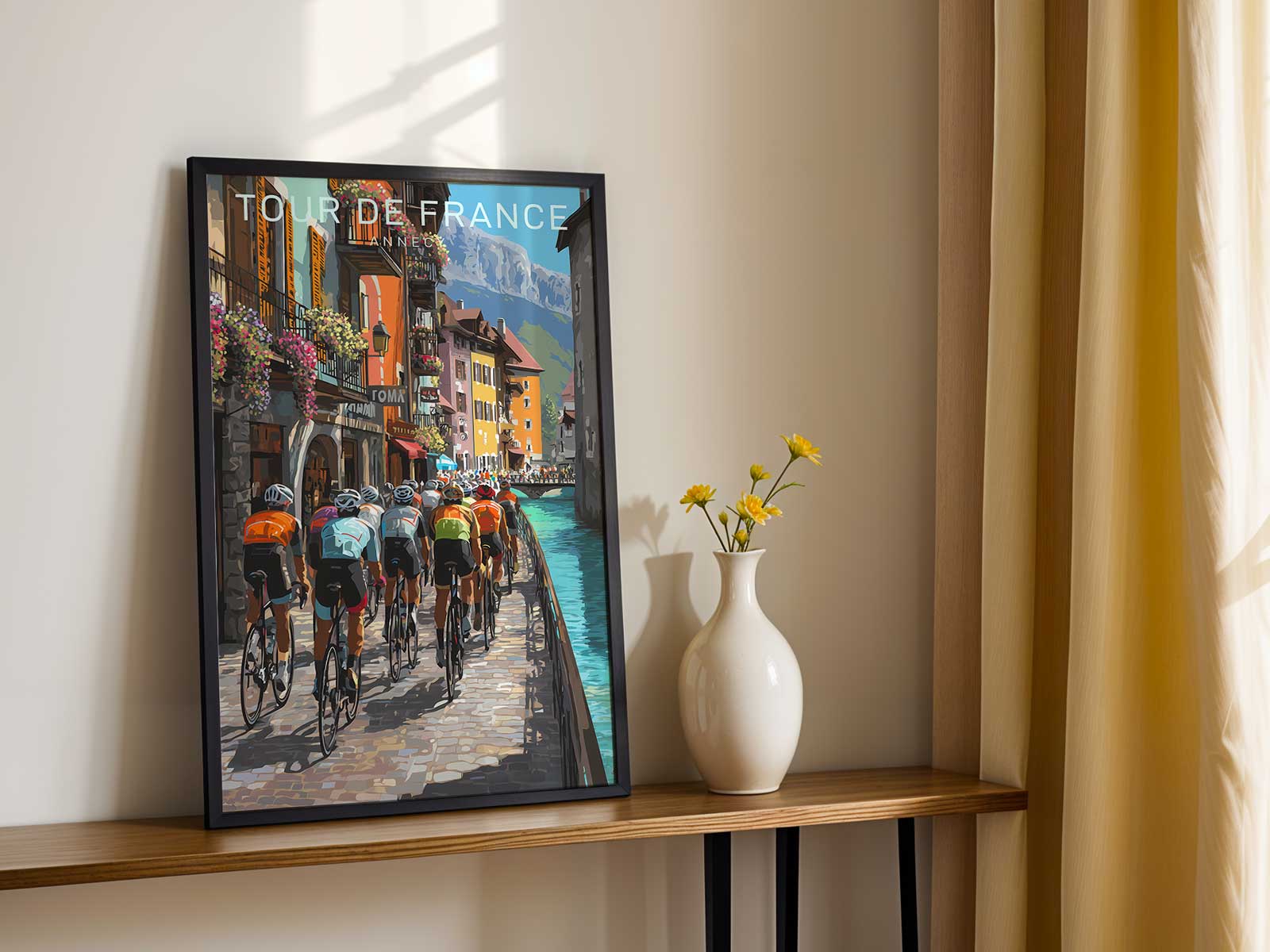
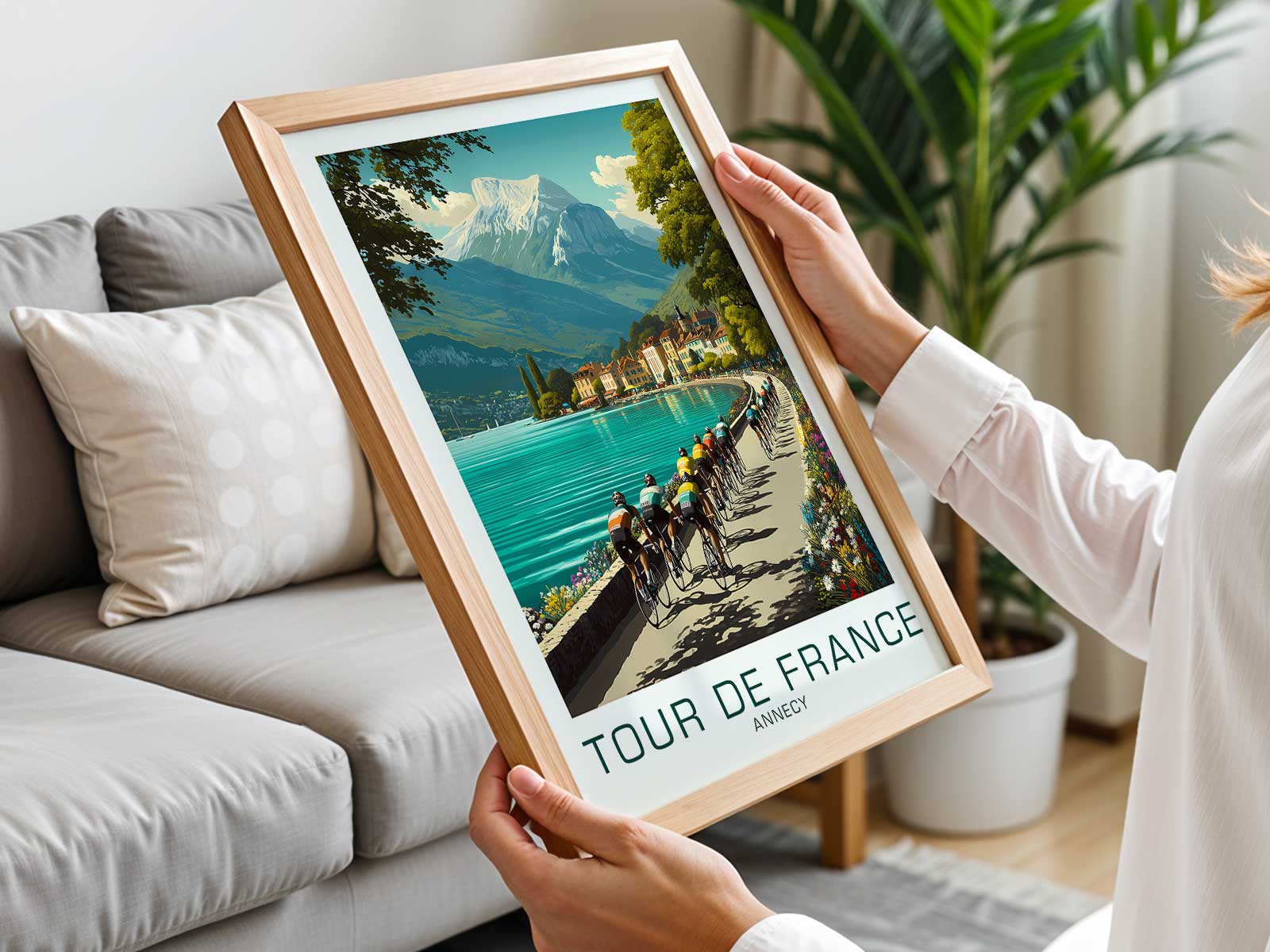
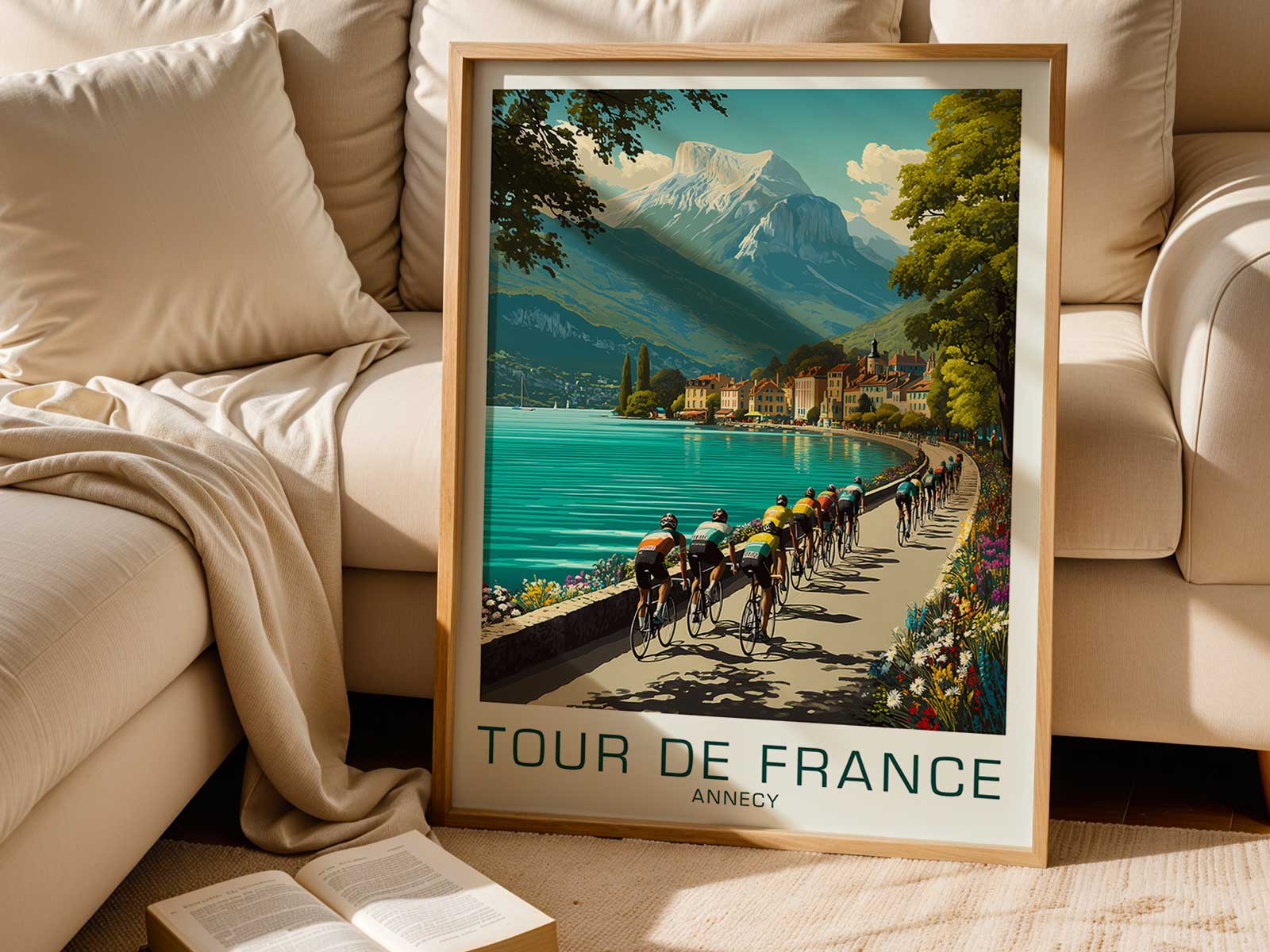
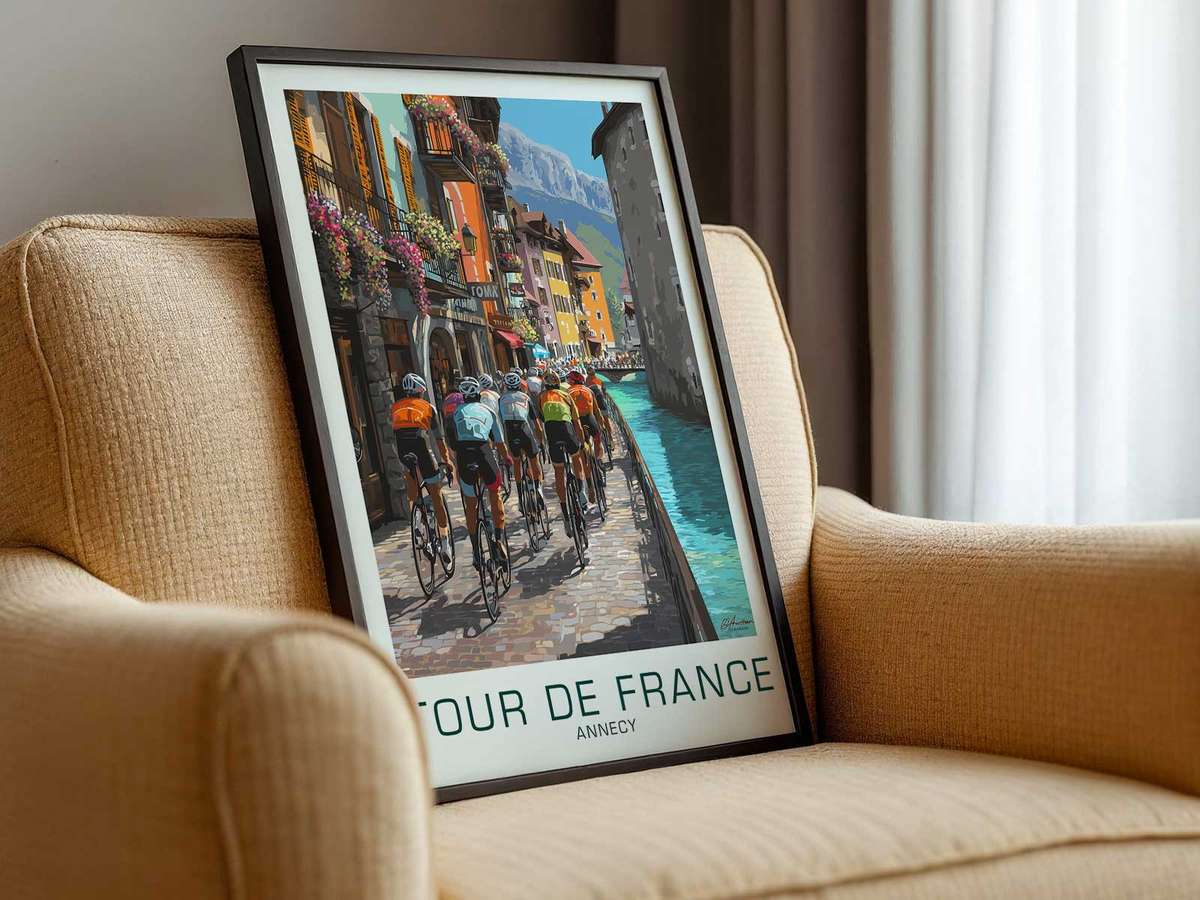
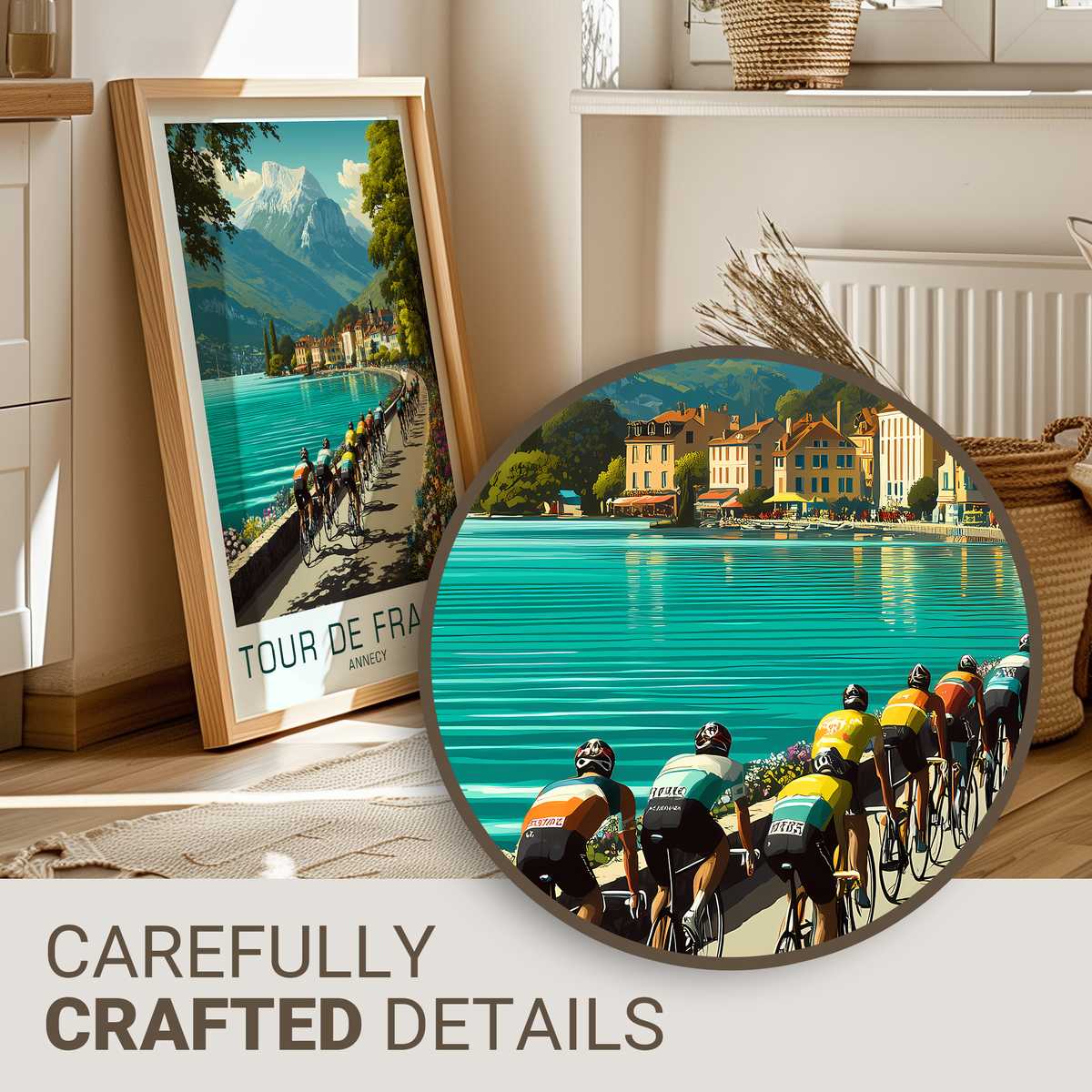
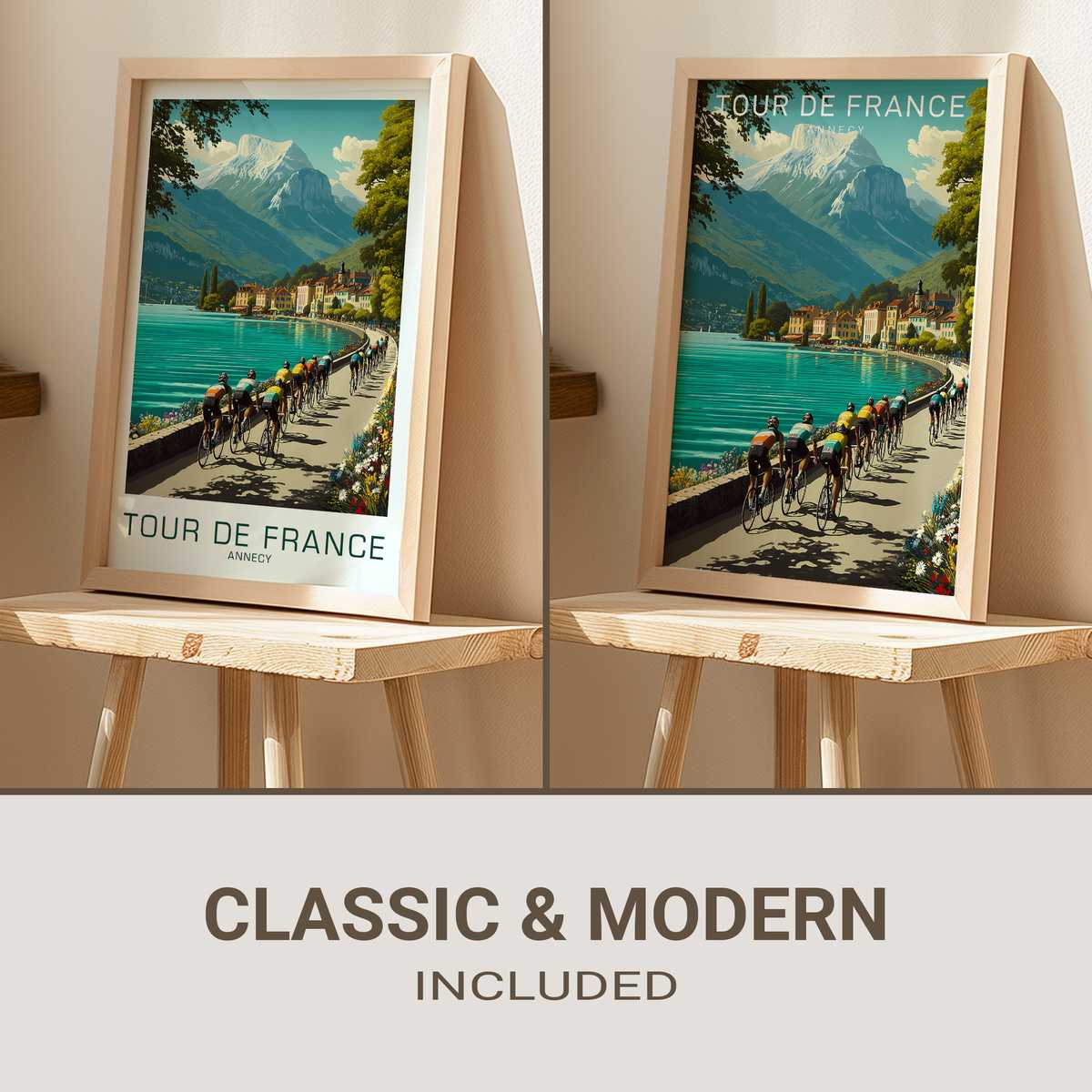
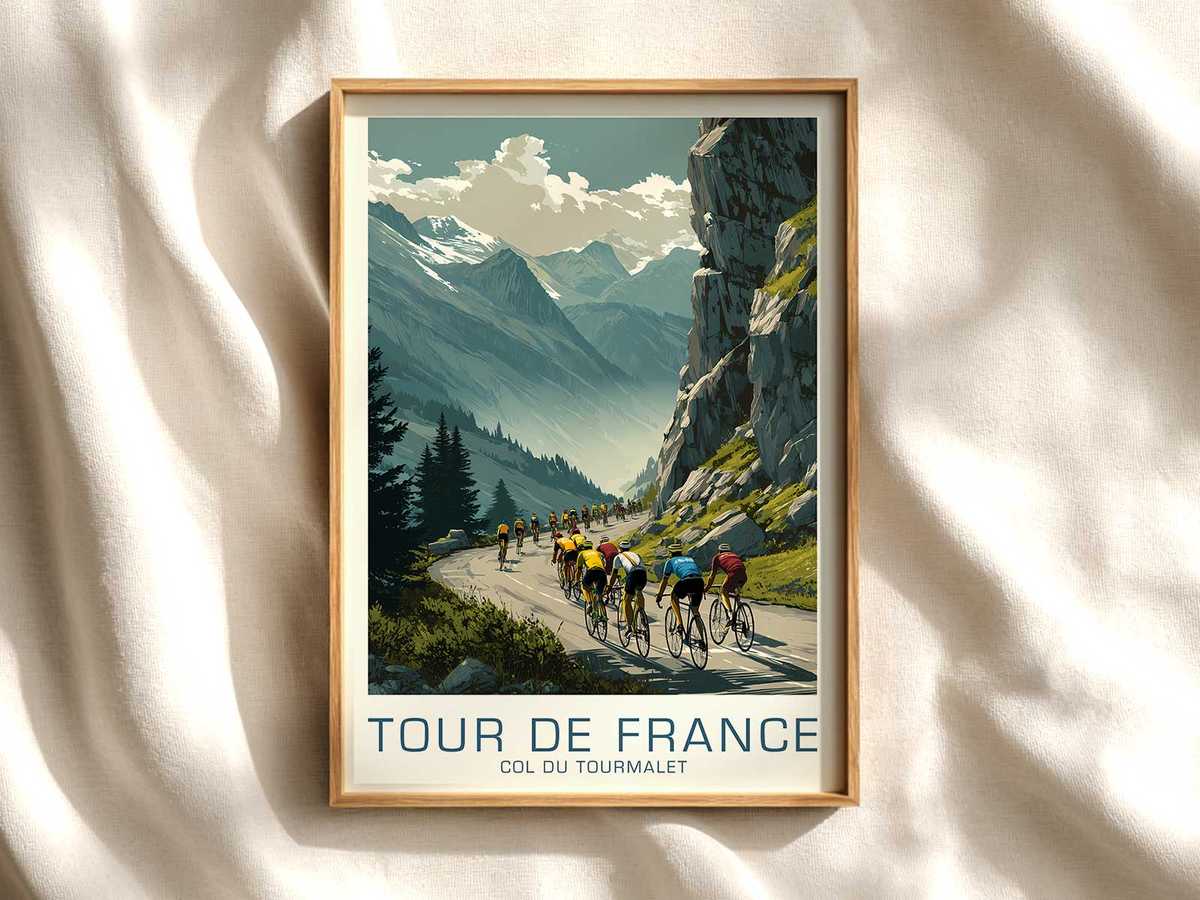
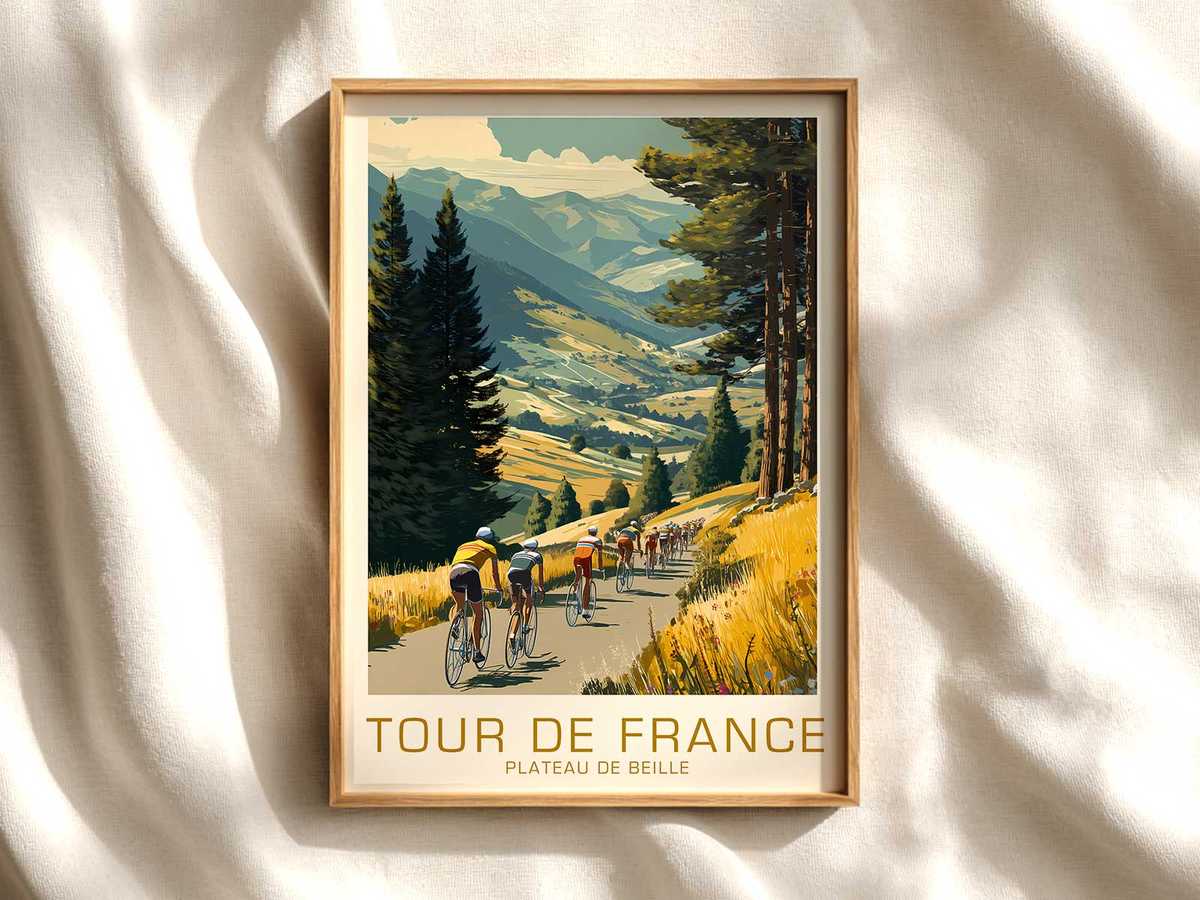
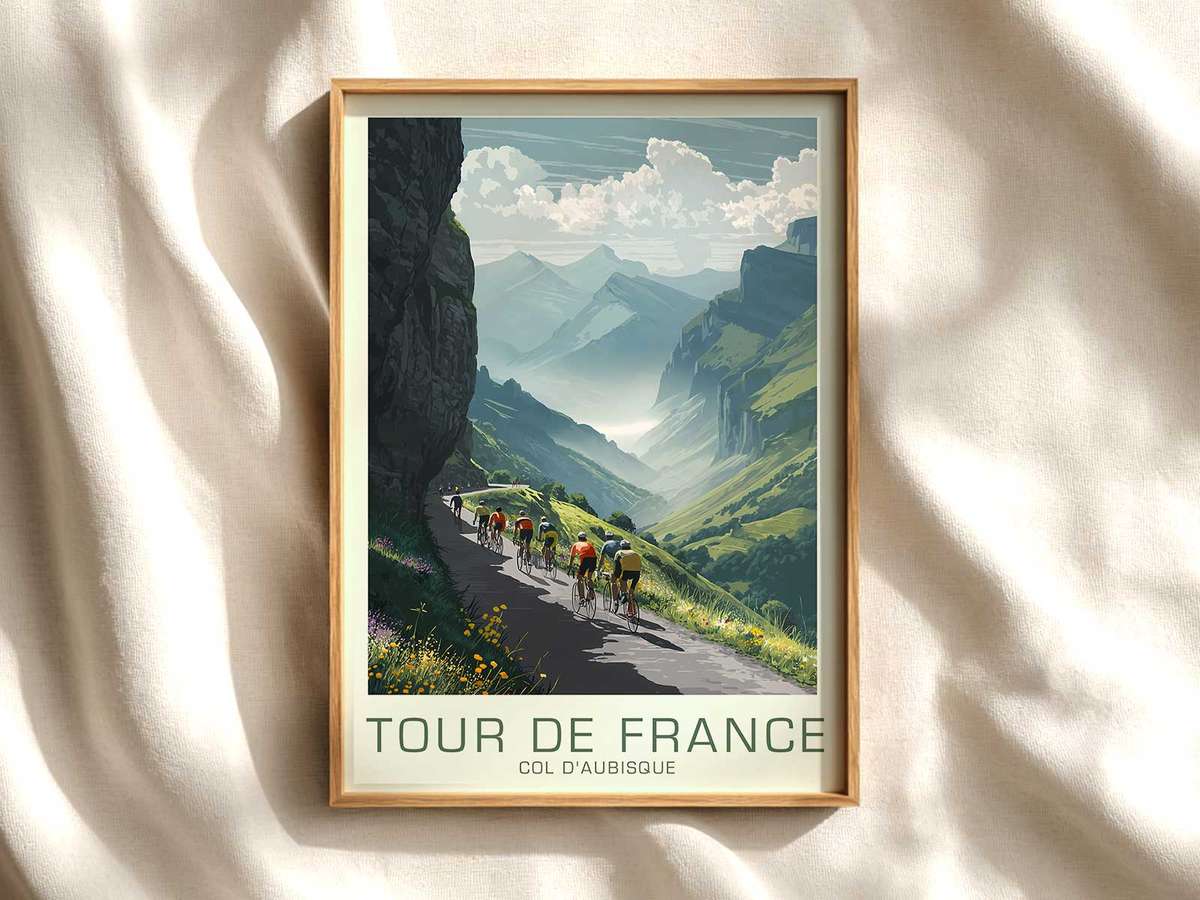
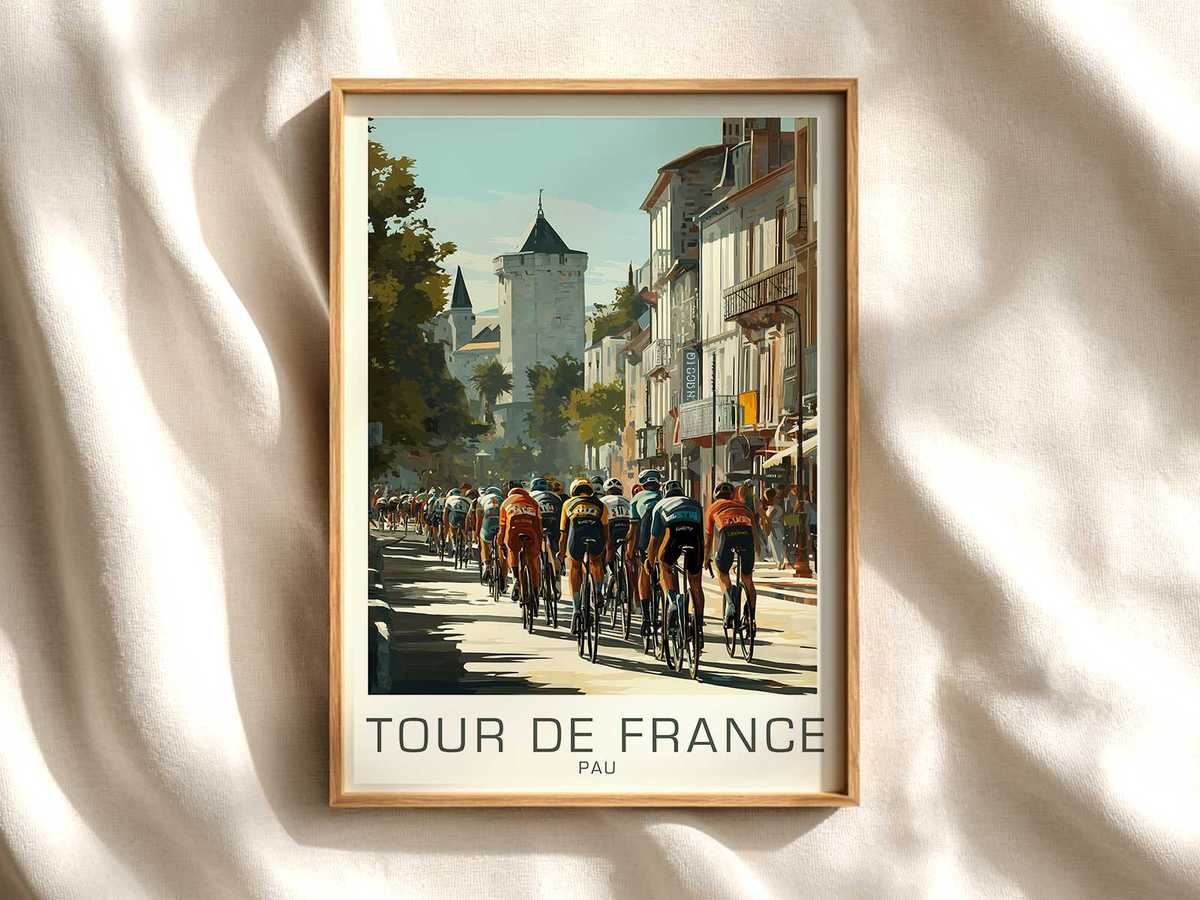
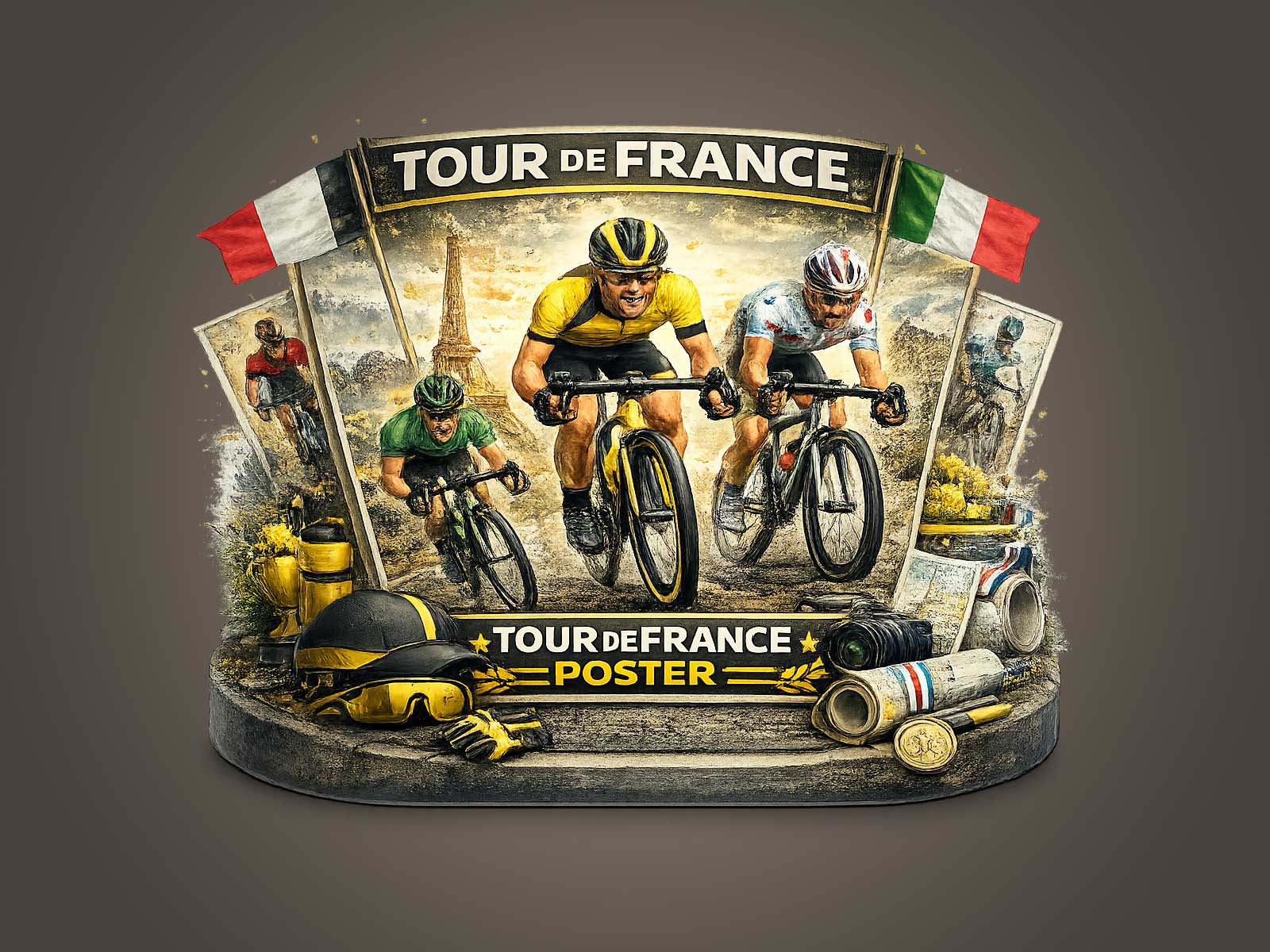
There is a distinct grace in a vintage poster that frames the Tour de France as a place of repose as much as a proving ground. An Annecy-inspired design does this with particular finesse: the placid lake, the soft Alpine haze and the languid posture of classic cyclists combine to produce an image that reads as both souvenir and relic. Rather than shouting spectacle, the scene suggests accumulated time — sun-warmed paint, slightly faded pigments and the whisper of old paper — which is precisely why it hangs so well in rooms that prize story and texture.
The visual language of such a print leans on archival cues. Classic jerseys are suggested rather than catalogued: muted bands of color, a collar detail glimpsed from three-quarters, the silhouette of a steel-frame bicycle with slender fork and chromed lugs. These hints work at a distance and close-up. Up close the ink dotting, the subtle grain of paper, and the gentle edge wear read as evidence — the proof that this image carries memory. The eye feels invited to trace a chronology: the rider’s line along the lakeshore, the hotel terraces above, the mountains holding their light. That sense of history is tactile and comforting in interior spaces where surfaces and stories matter.
Light in an Annecy poster is not bright high-summer glare but a softened Alpine luminosity. It falls like a filter across the composition, bathing pastel facades and the lake’s reflection in warm, contained tones. This restraint makes the artwork versatile for decoration: it complements wood grain, leather-bound books and the faded linen of a study’s upholstery without competing. The result is a decorative object that anchors a room with calm rather than dominating it — the art equivalent of a well-aged travel journal left open on a side table.
[IMAGE_INSERT_ARTICLE_01]
Beyond immediate aesthetics, there is a cultural depth to heritage cycling imagery that modern graphics often lack. Contemporary sports photography captures speed and spectacle; a heritage poster trades speed for continuity. It suggests generations — fans arriving by train, local cafés that served as meeting points, jerseys evolving from wool to synthetics — all implied through texture and composition. For collectors, this imputed lineage gives the print weight: it is not merely decorative, it is a conversation piece that connects the room to a broader story of place and practice.
When considering placement, think of spaces that benefit from quiet character: a home office where thoughtfulness is prized, a reading nook where memory fuels reflection, a gallery wall mixing maps and travel ephemera, or an elegant entrance that conveys taste without ostentation. The Annecy poster’s restrained palette and archival accents make it easy to pair with leather, brass and warm woods — materials that echo the poster’s own aged feel and amplify its narrative pull.
Finally, the collector’s pleasure is part visual and part curatorial. Owning a print that reads as an artifact — with worn edges suggested in the design, period-accurate bicycle lines, and that particular Alpine light — is to own a distilled fragment of Tour culture. It rewards repeated looking: small discoveries emerge over time, from a faded sponsor badge to the way the waterfront is composed. That slow reveal is the opposite of throwaway trendiness; it is why a heritage Tour print endures as wall art, offering a calm, memory-charged presence that feels both personal and universally resonant.