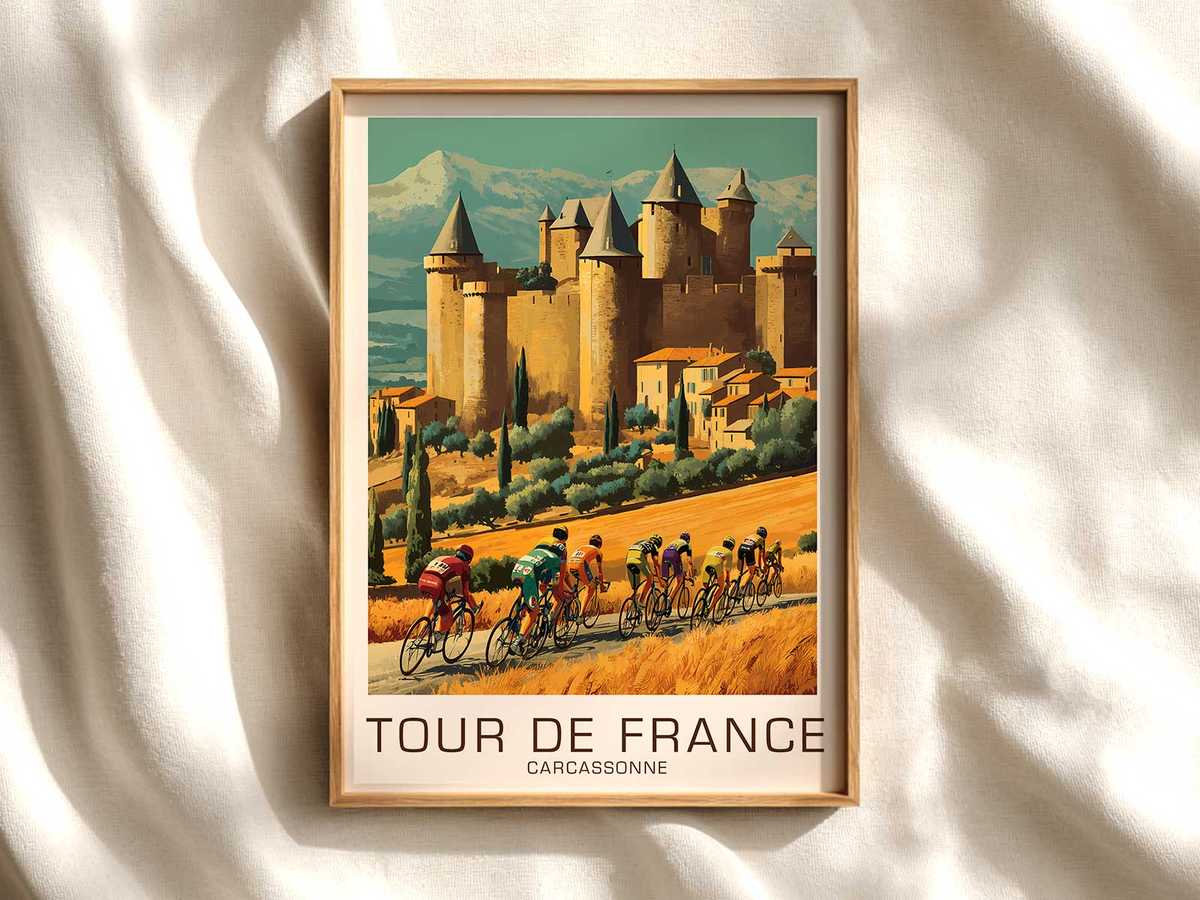
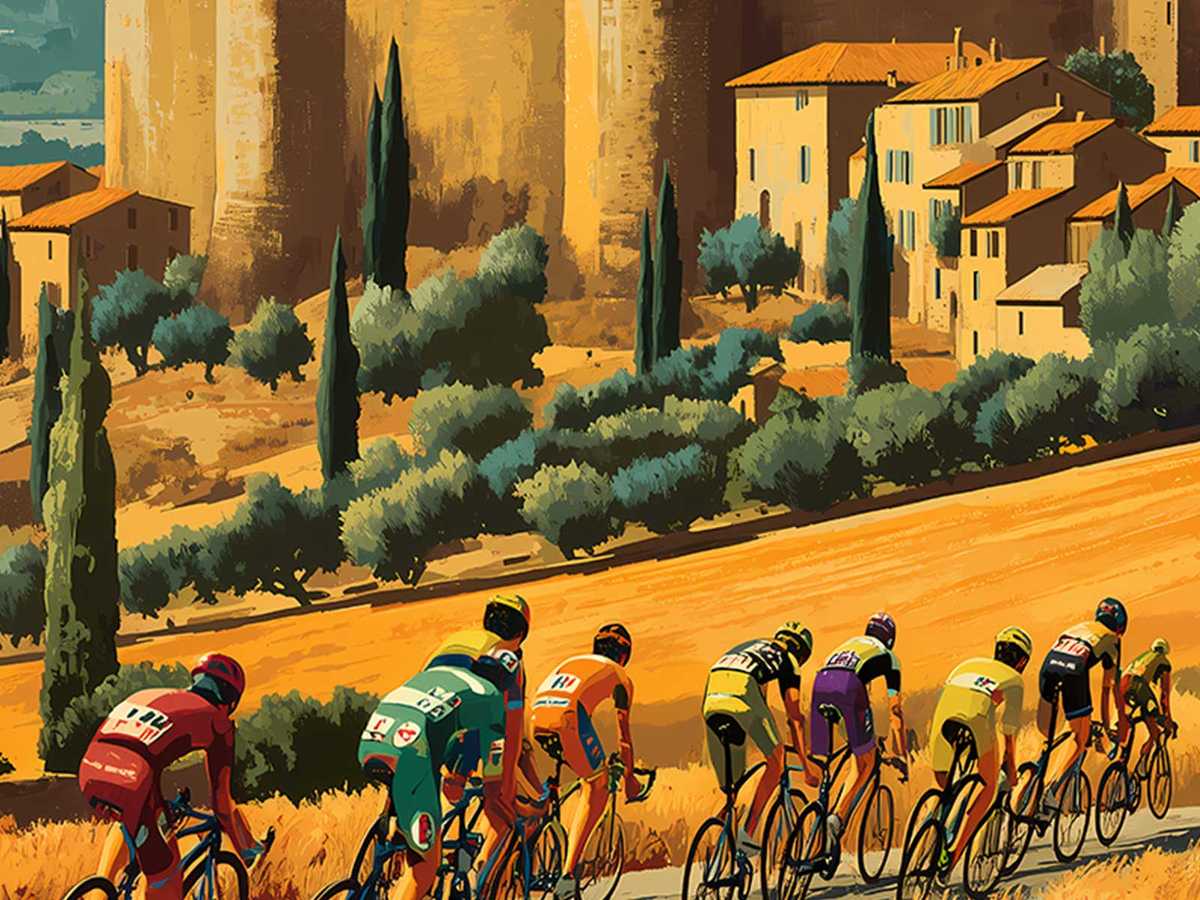
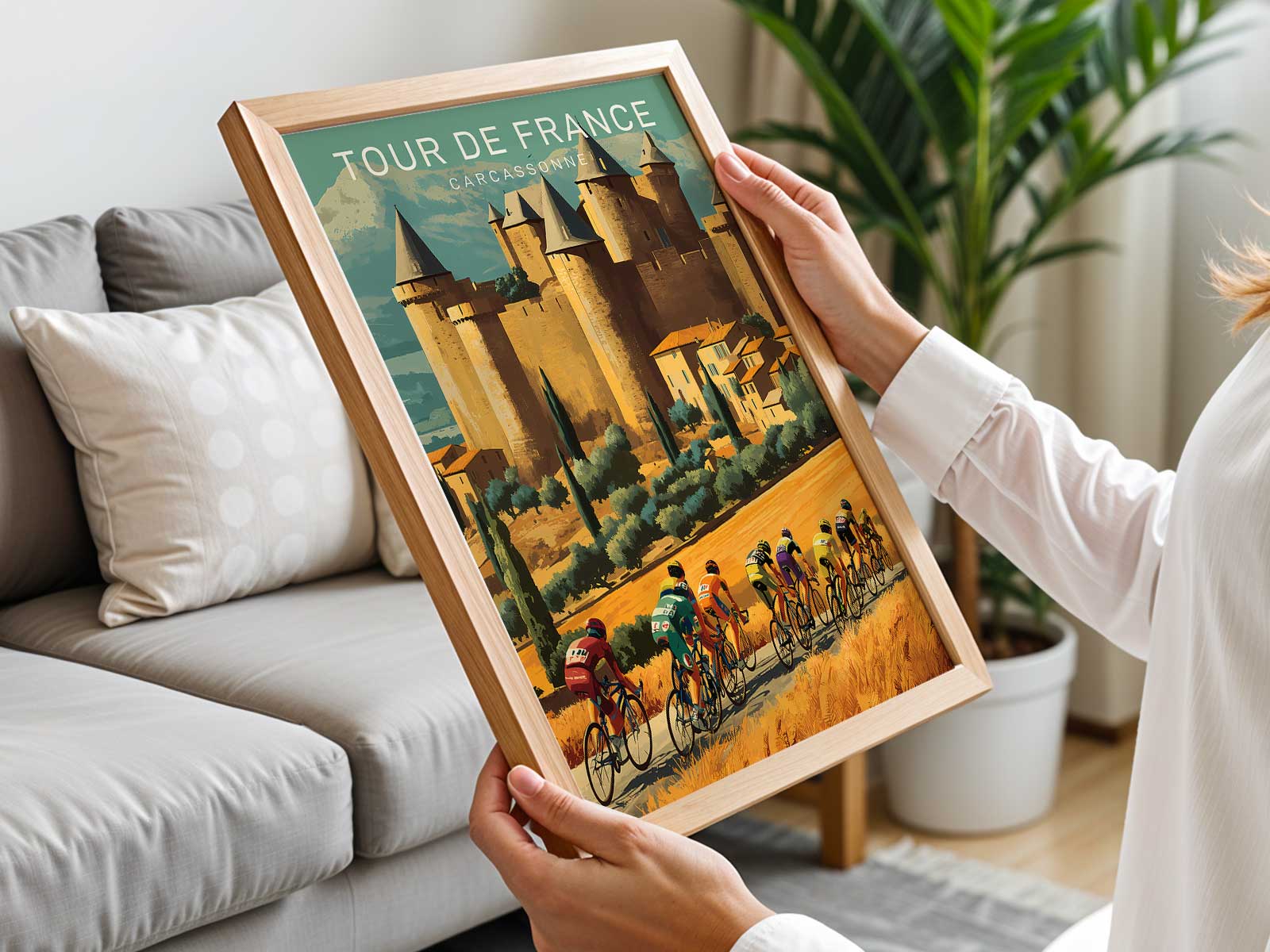
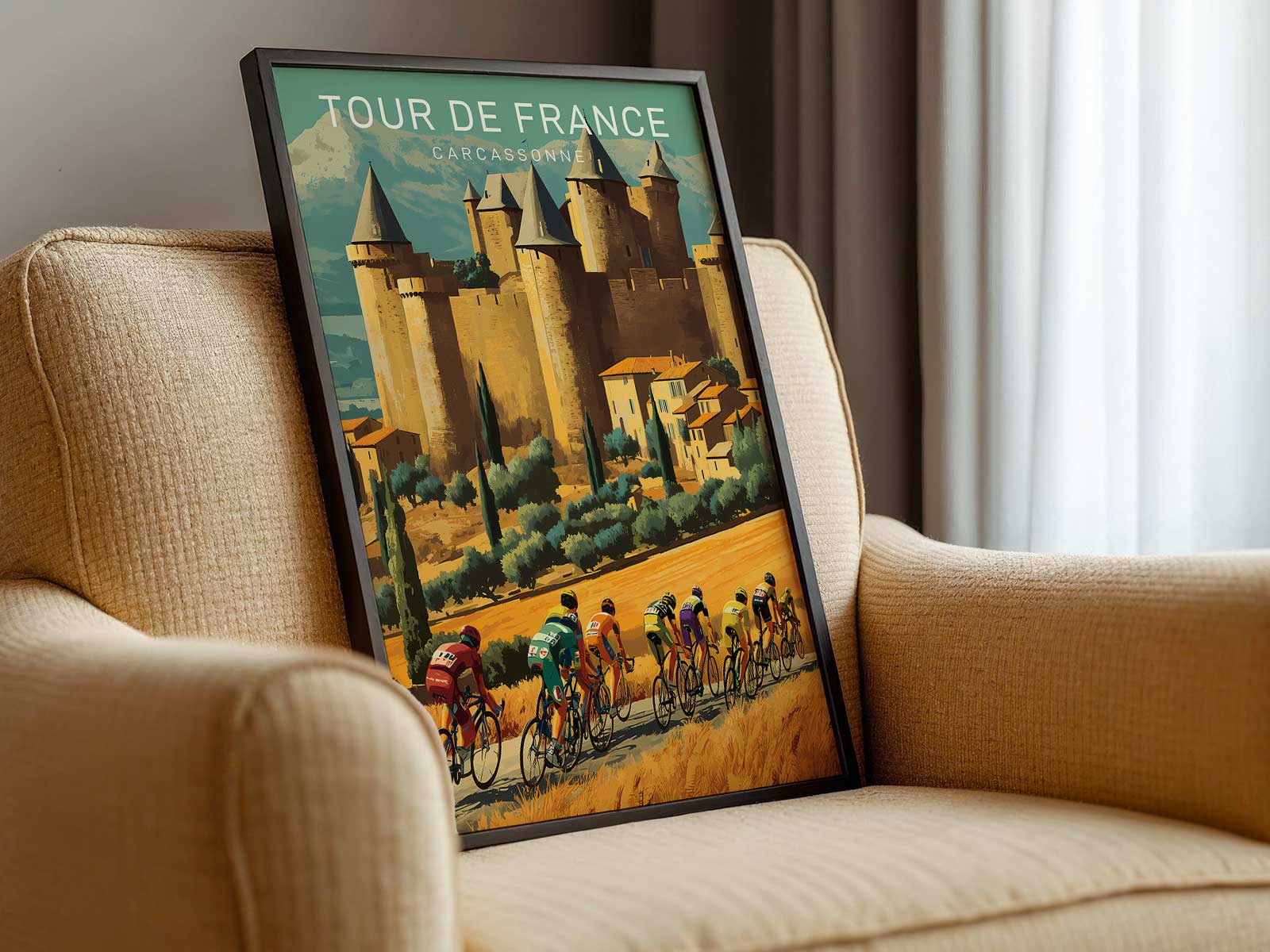
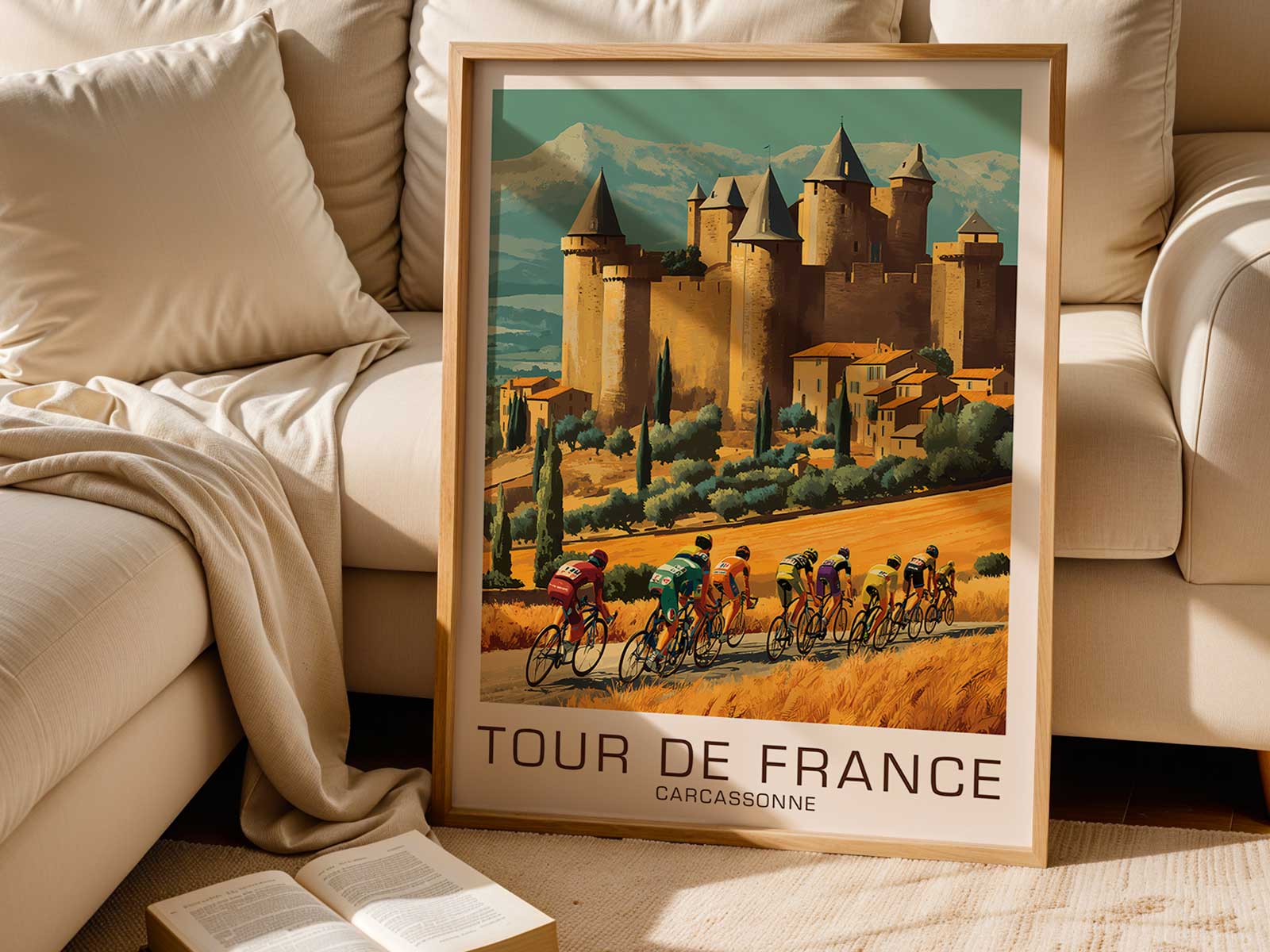
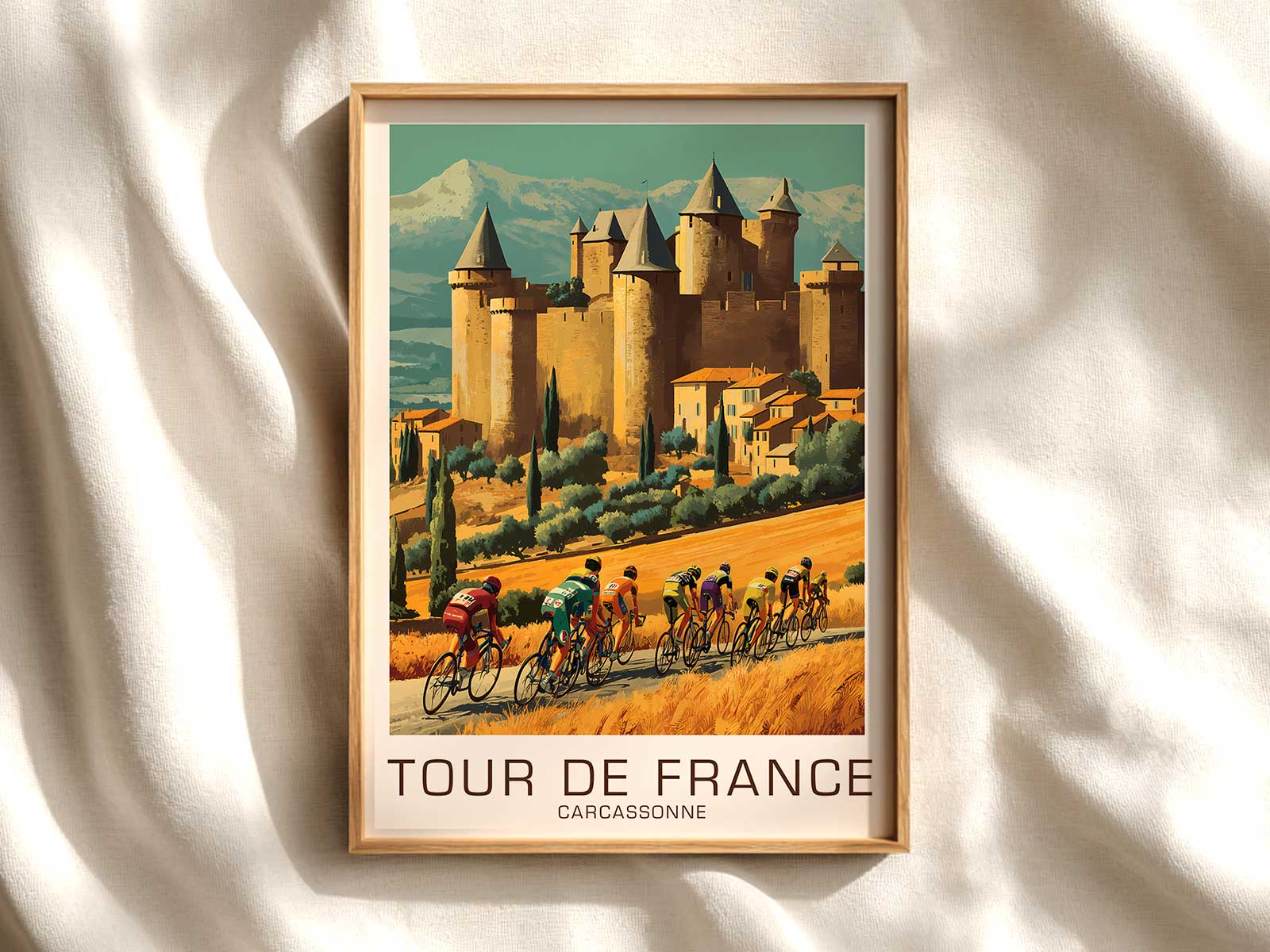
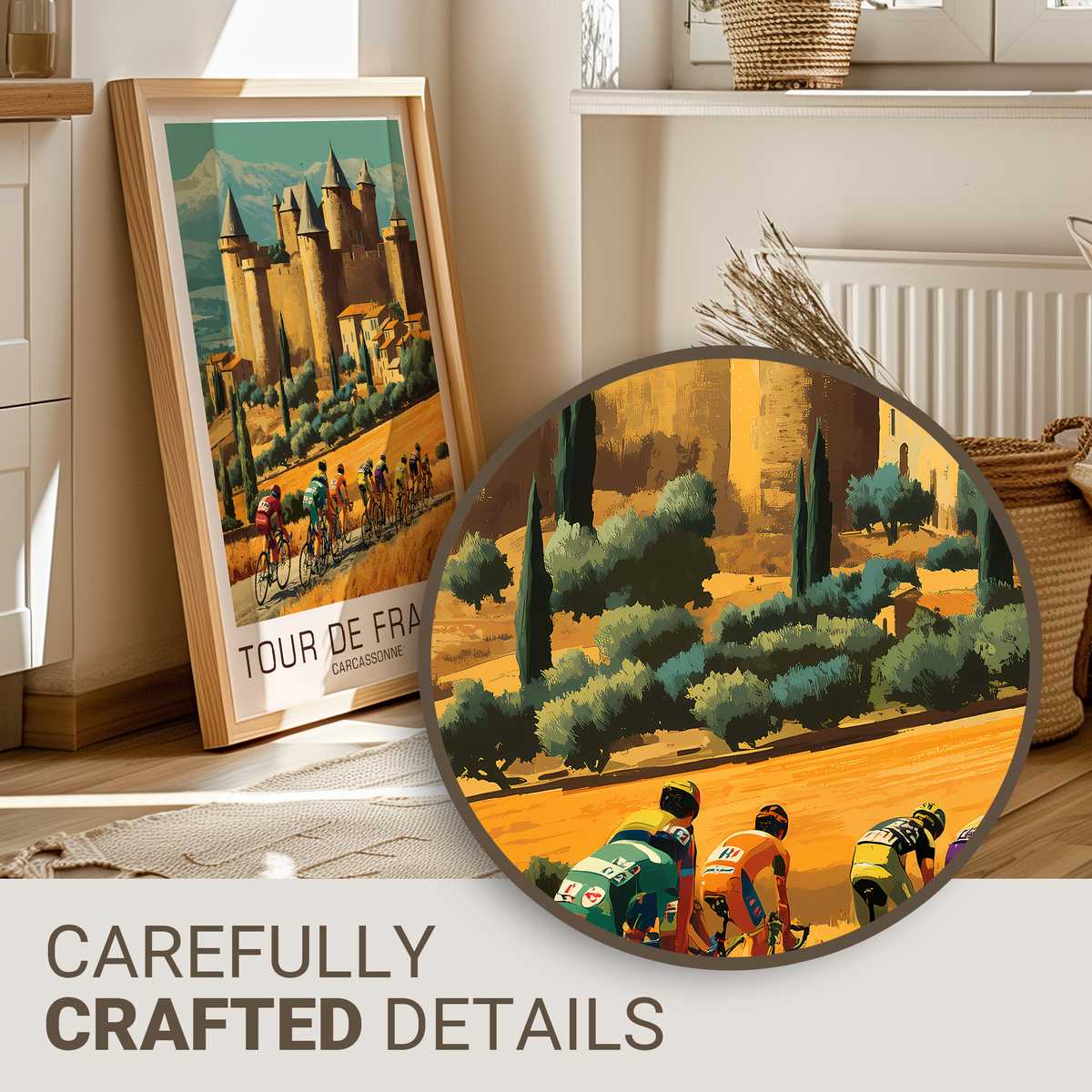
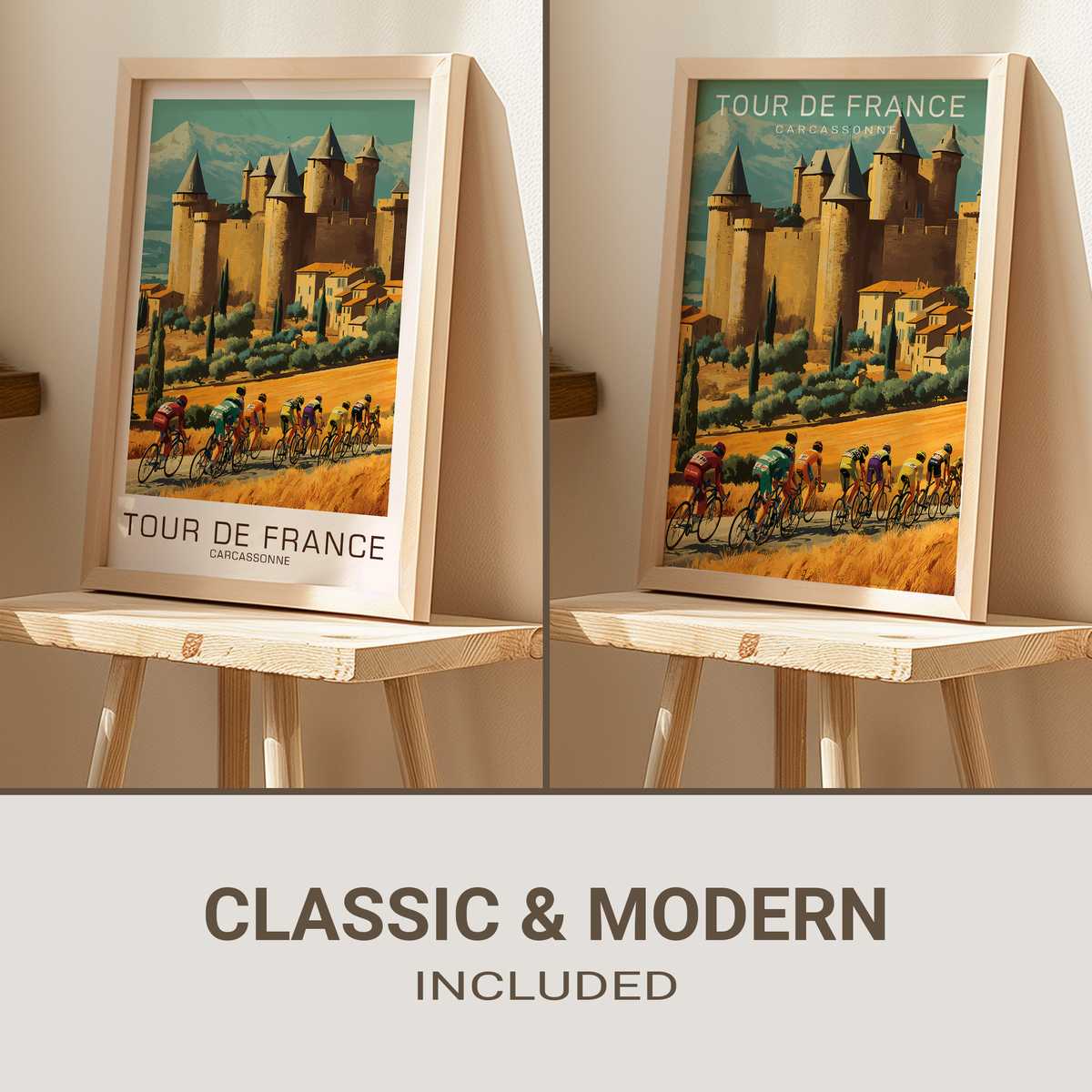
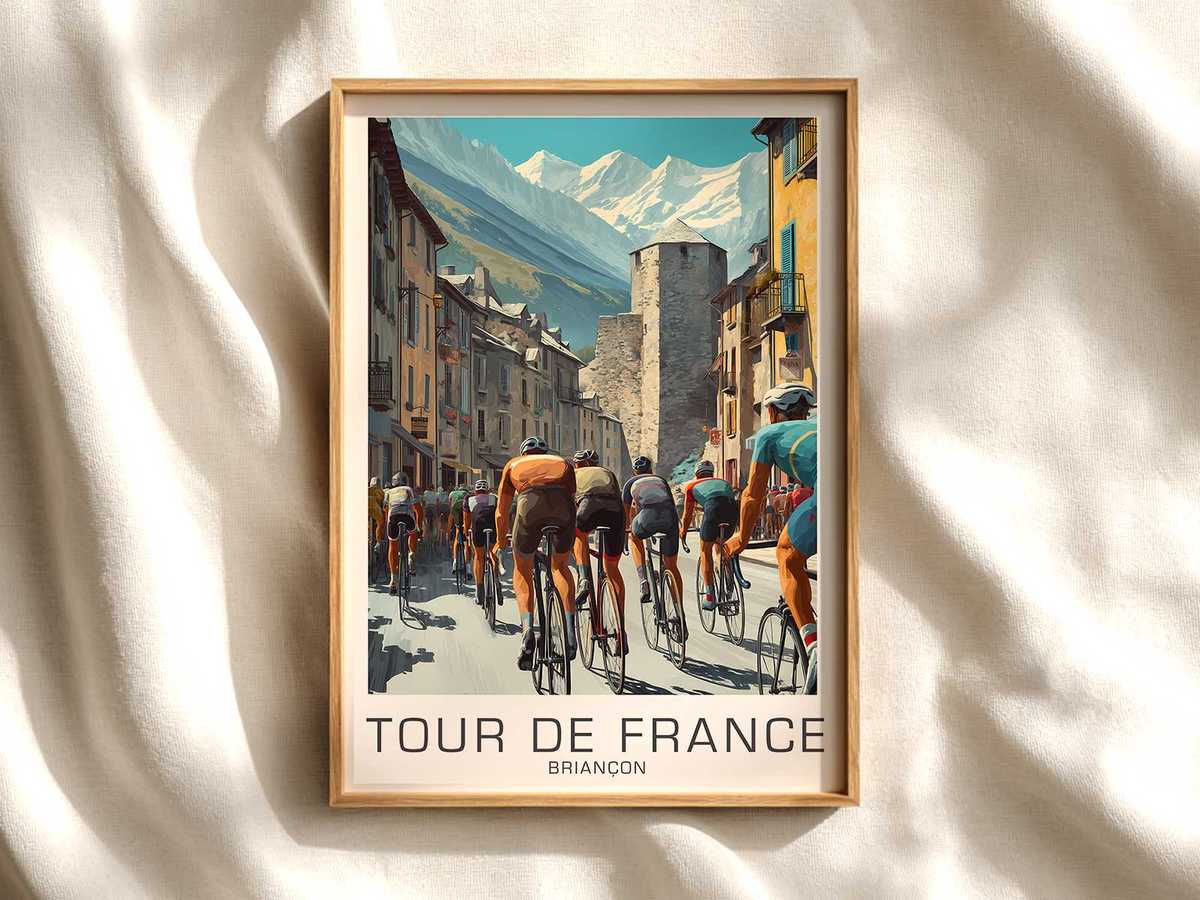
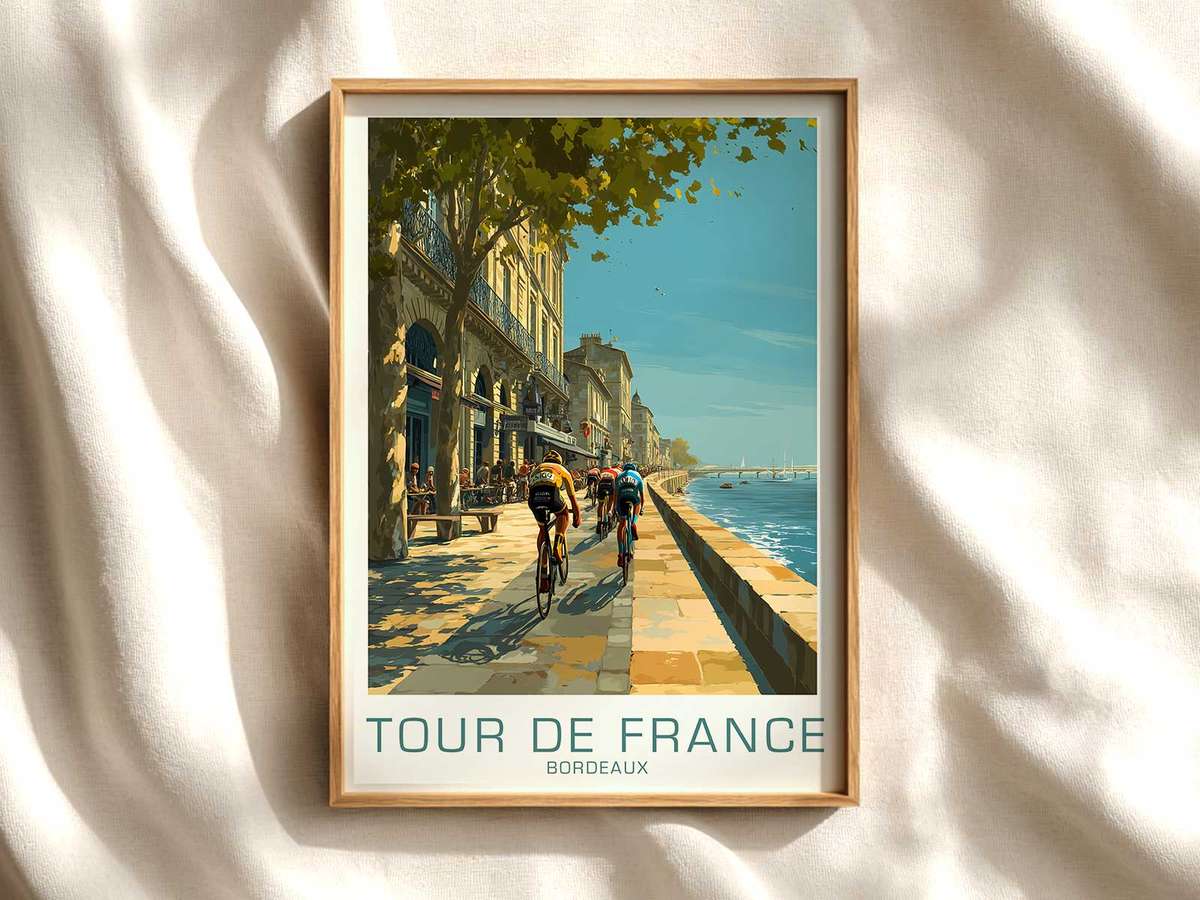
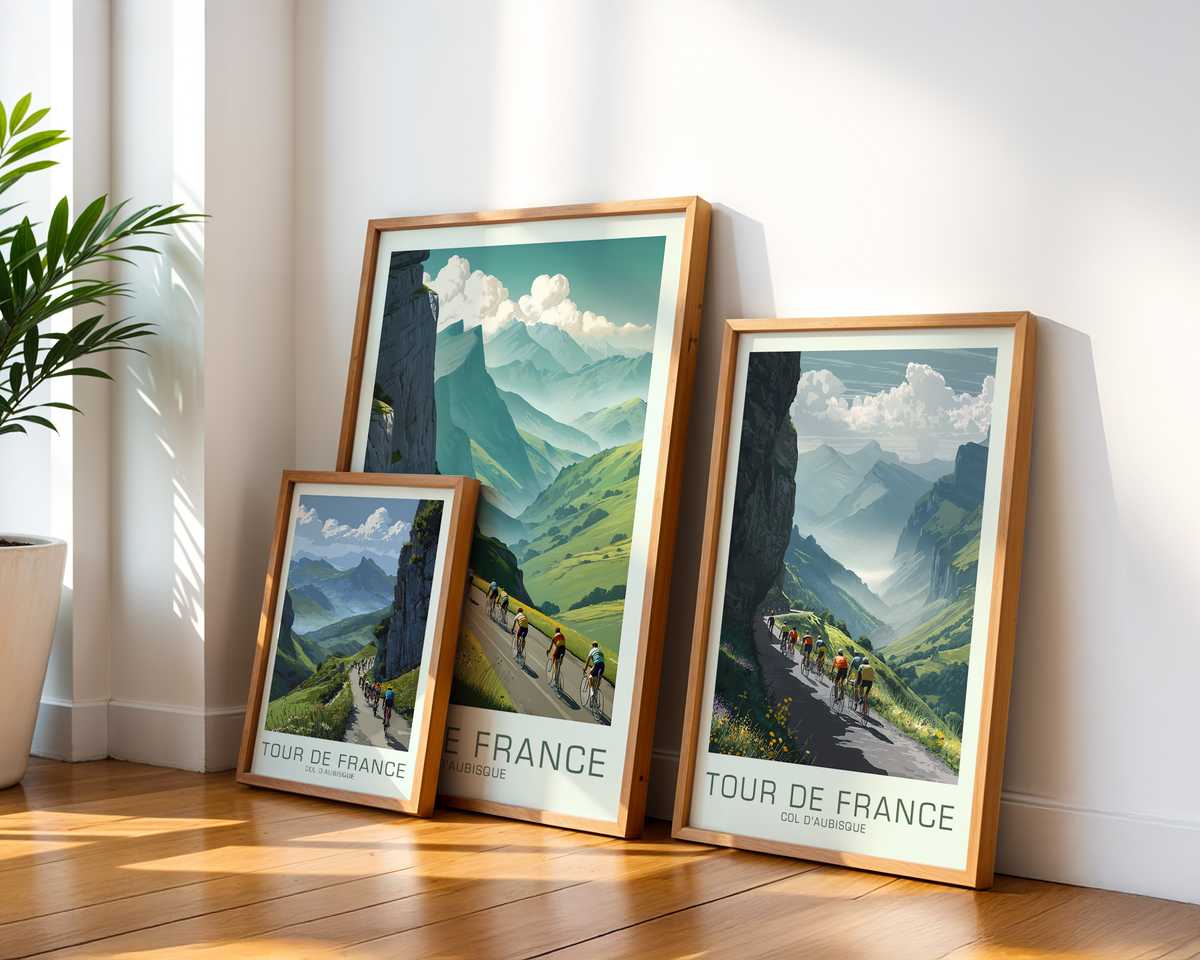
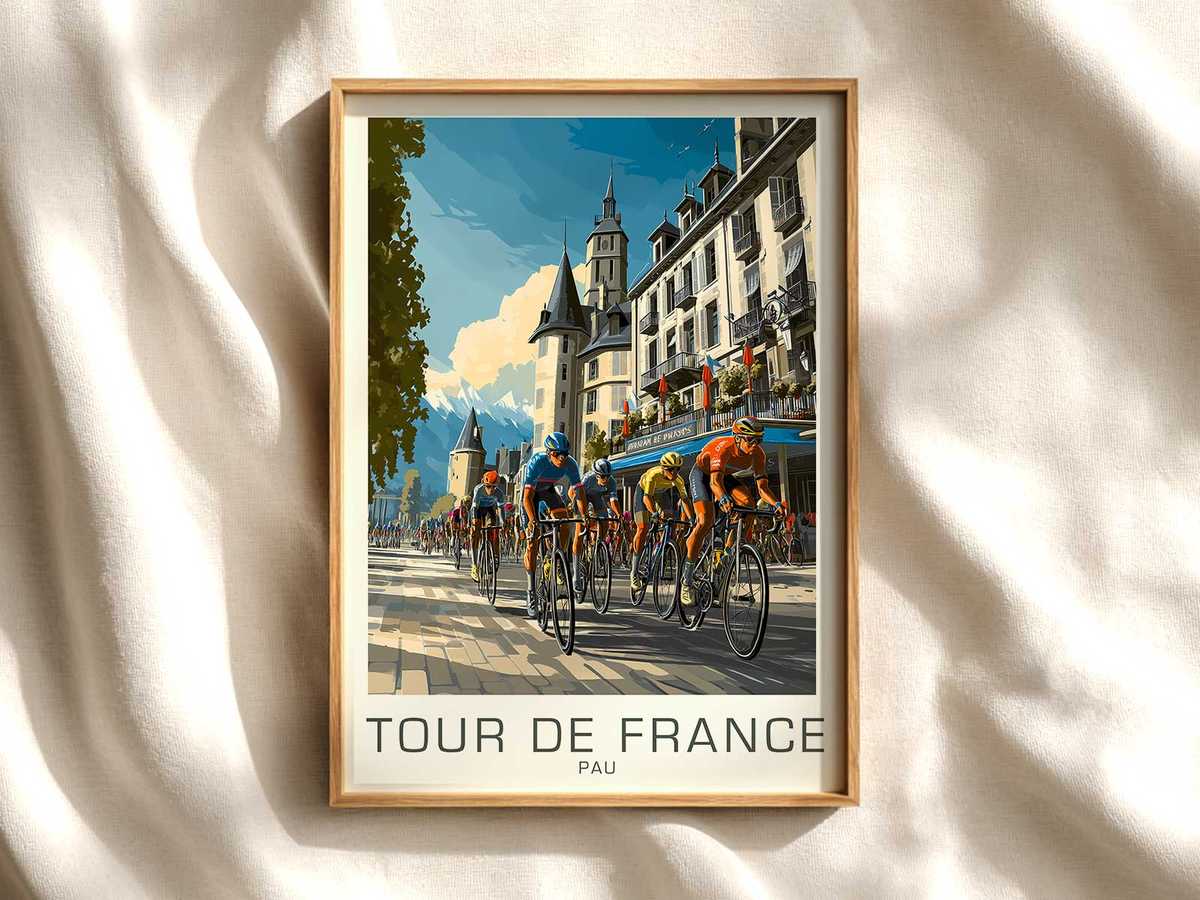
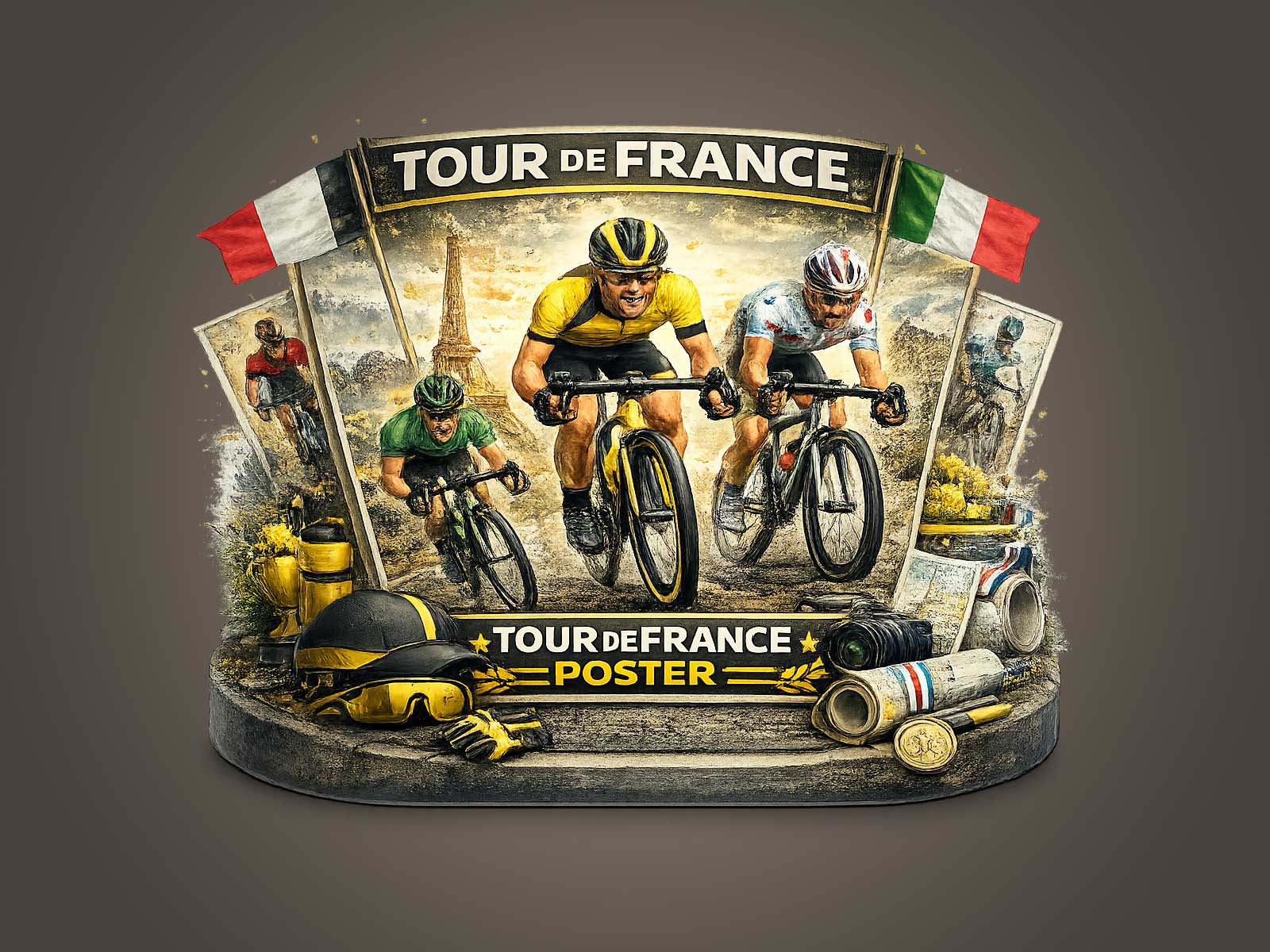
There is a distinct moment when a poster stops being just an image and starts to act like a memory. A classic Tour de France poster that evokes Carcassonne does this by layering place, period and cycling culture into a single object: the ramparts and stone silhouettes become more than background; they read as a civic claim on the race, while the racers, their jerseys and the line of bicycles register continuity with a larger cycling past.
Look closely and you read an era. The paper tone—faded creams, printed halftone dots, the soft abrasion where colour has thinned—speaks of past print processes and long display. Classic jerseys, often rendered in simplified blocks of colour, tell visual stories of teams and handheld pride without needing captions. The bikes are quiet actors: lugged steel frames, down-tube shifters hinted at by small graphic cues, narrow tyres that whisper of different speeds and different roads. These elements together create an archival mood, an atmosphere of lived history that modern photography rarely captures with the same analogue warmth.
What makes this reading of heritage valuable for interior display is its layered intelligibility. At first glance the poster functions as decor—a period palette that complements leather, wood and brick. Pull back and it becomes narrative: a region’s architecture, a community’s connection to the race, the culture of cycling as ritual. In homes, studies and creative studios this dual role matters. A pure sporting print might celebrate a team or stage; a heritage-led image invites storytelling. It prompts conversations about place, about how local streets were once part of a national spectacle, and about the material culture of cycling—jerseys, frames, helmets—through time.
Collectors respond to this depth because the visual cues act like provenance. Wear and print character suggest an object that has passed through hands and walls, accumulating value beyond the image subject. The modest scuffs or the gentle sun-fade around the edges are not damage so much as evidence: this is a poster that has been lived with, that has witnessed seasons of display. That sensibility elevates a piece from novelty to heirloom; it becomes a choice that signals taste and an appreciation for stories that persist.
There is also a cultural resonance in choosing Tour de France heritage as wall art. The race is not merely a sporting calendar but a narrative thread through French regional identity. When Carcassonne’s ramparts are part of that thread, the poster anchors national mythology to a particular local texture—stonework, narrow avenues, the weight of history that the race momentarily crosses. For interiors, this affords an image that reads as both cosmopolitan and intimate: a conversation between the grandeur of the Tour and the tactile specificity of place.
Stylistically, these posters often favour reductive composition and generous negative space, allowing the printed surface to breathe on a wall. That calm is valuable in rooms intended for reading or reflection. The poster doesn’t compete with the bookshelf or the writing desk; it complements them, offering an elegiac counterpoint to modern brightness. In offices and libraries, the piece can function as an emblem of continuity—sport as archive, movement as memory.
Finally, the emotional weight comes from recognition. Even for those who did not witness the original moment, the image acts as a mnemonic device: it triggers associations with summer roads, the smell of dust, the hum of crowds, the precision of shifting gears. That associative power is what makes heritage-led cycling art display-worthy. It is not only about nostalgia; it is about anchoring present spaces in a layered history that rewards both the eye and the imagination.
Whether you are a collector seeking depth or a decorator looking for a singular focal piece, a classic Tour de France poster tied to Carcassonne offers more than a sporting motif: it offers a fragment of cultural memory, printed with the tactile language of another time and ready to bring that archive into your daily life.