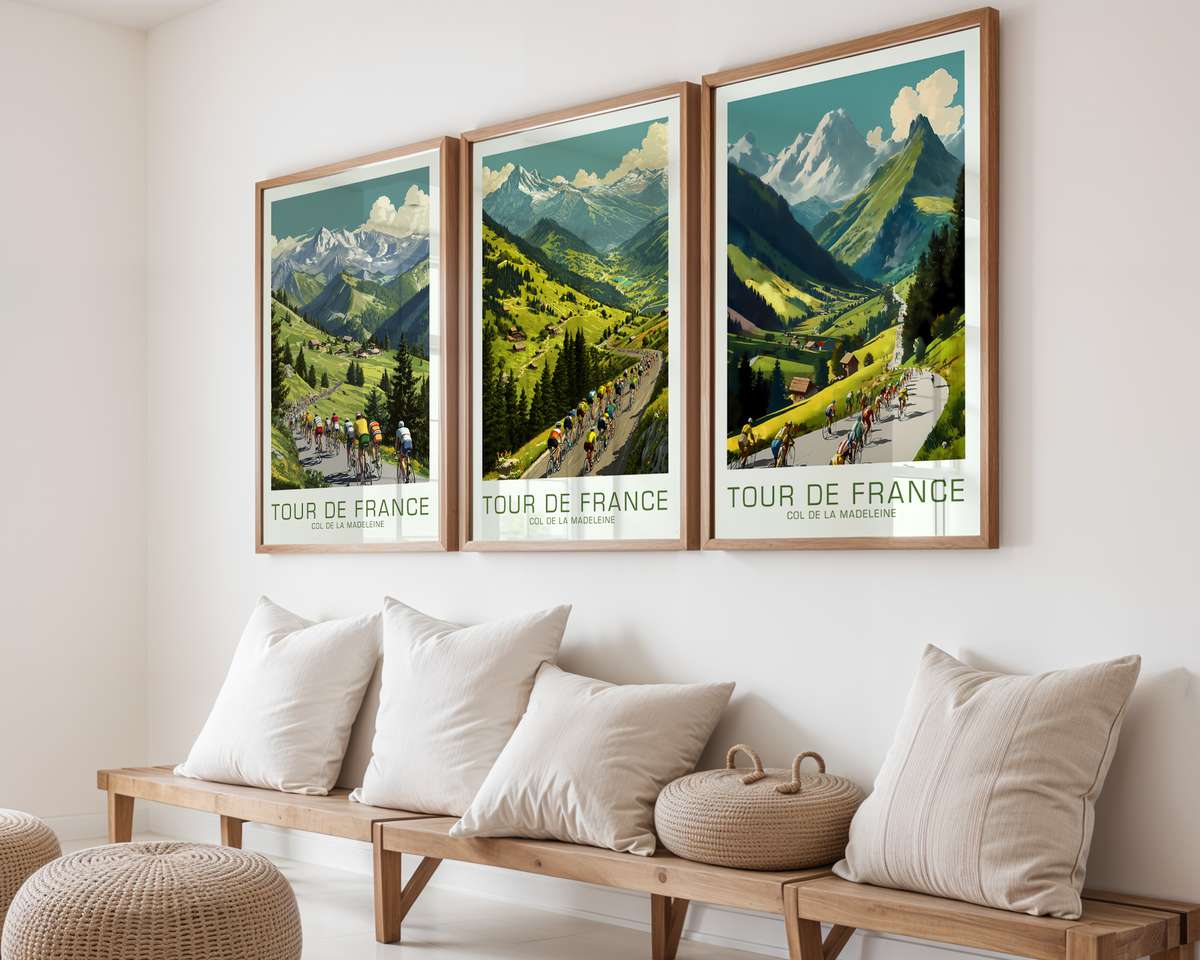
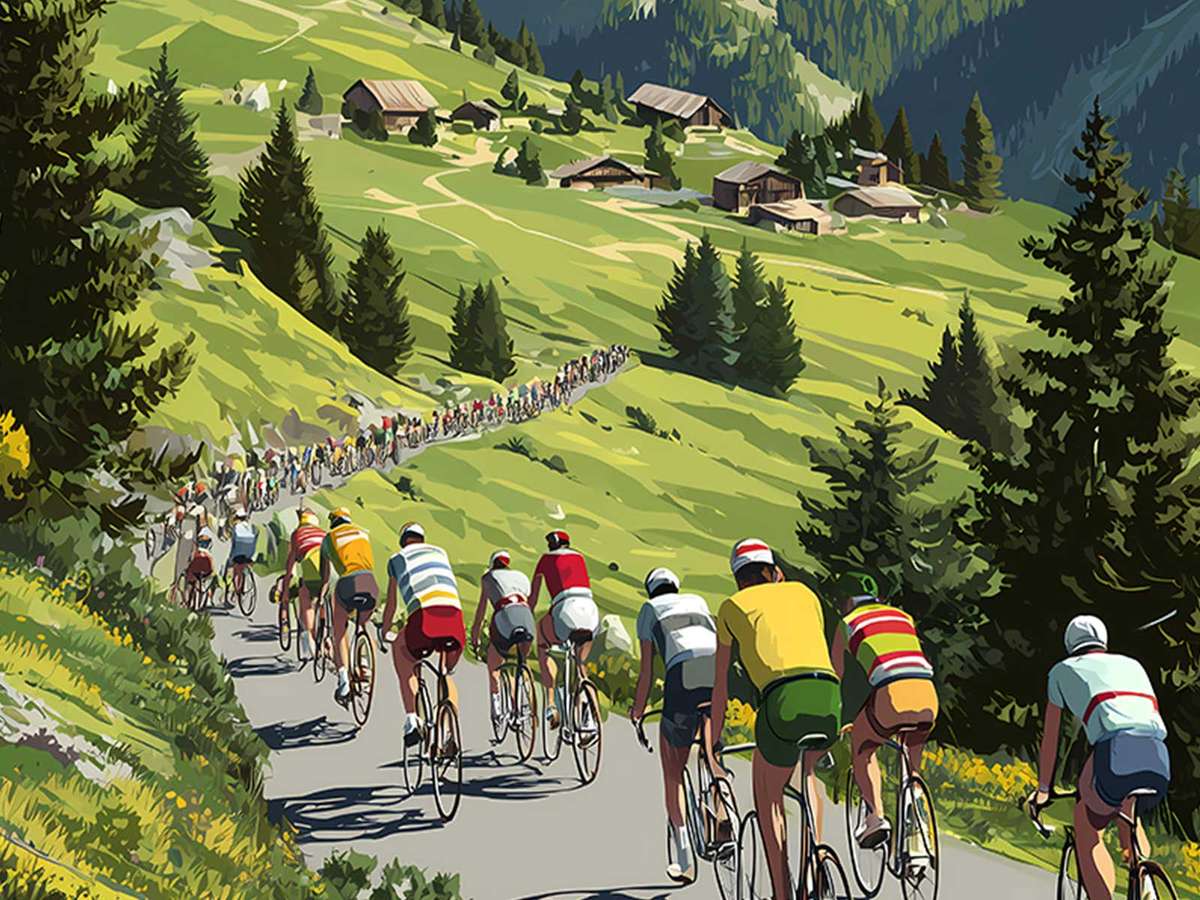
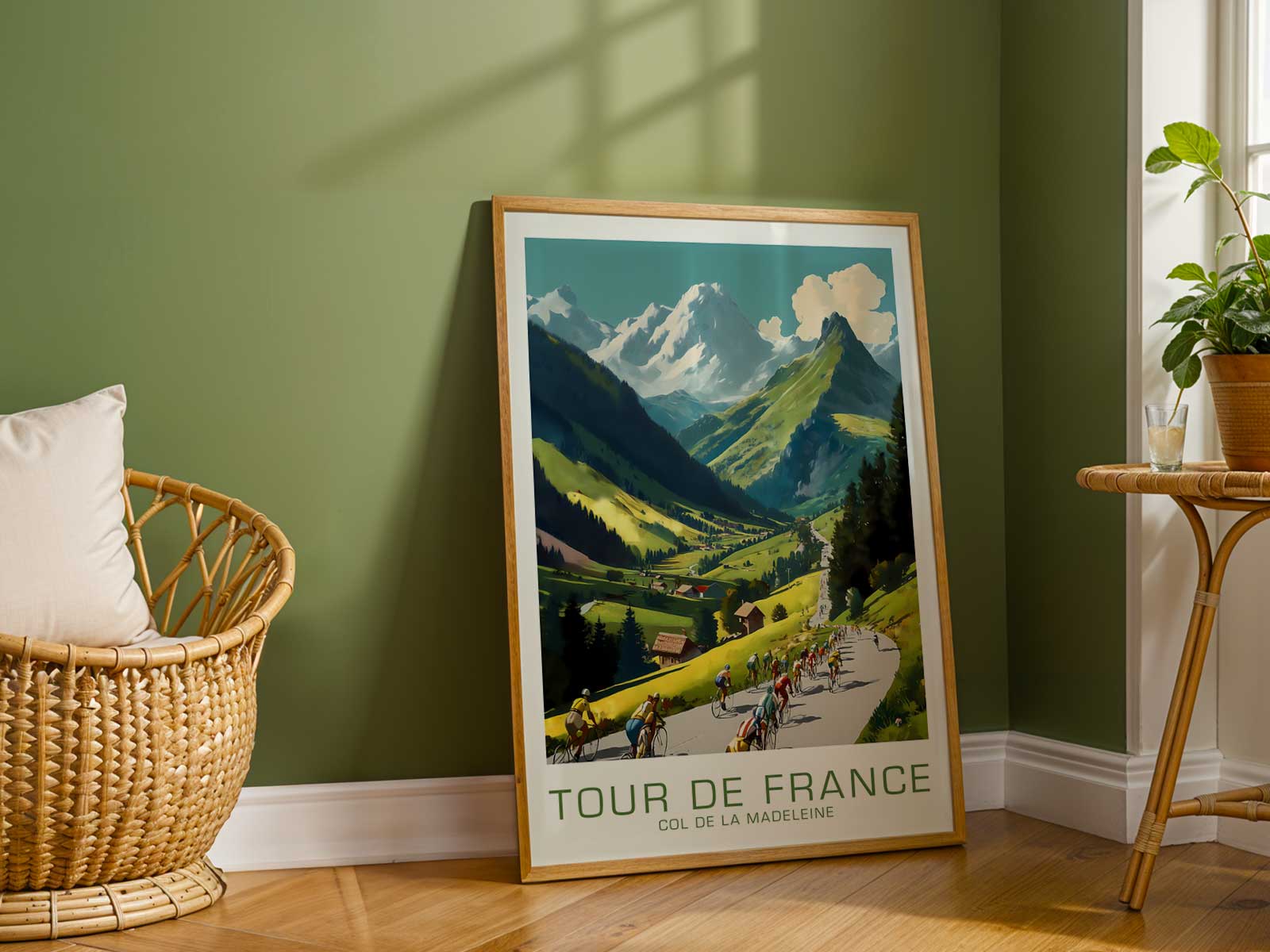
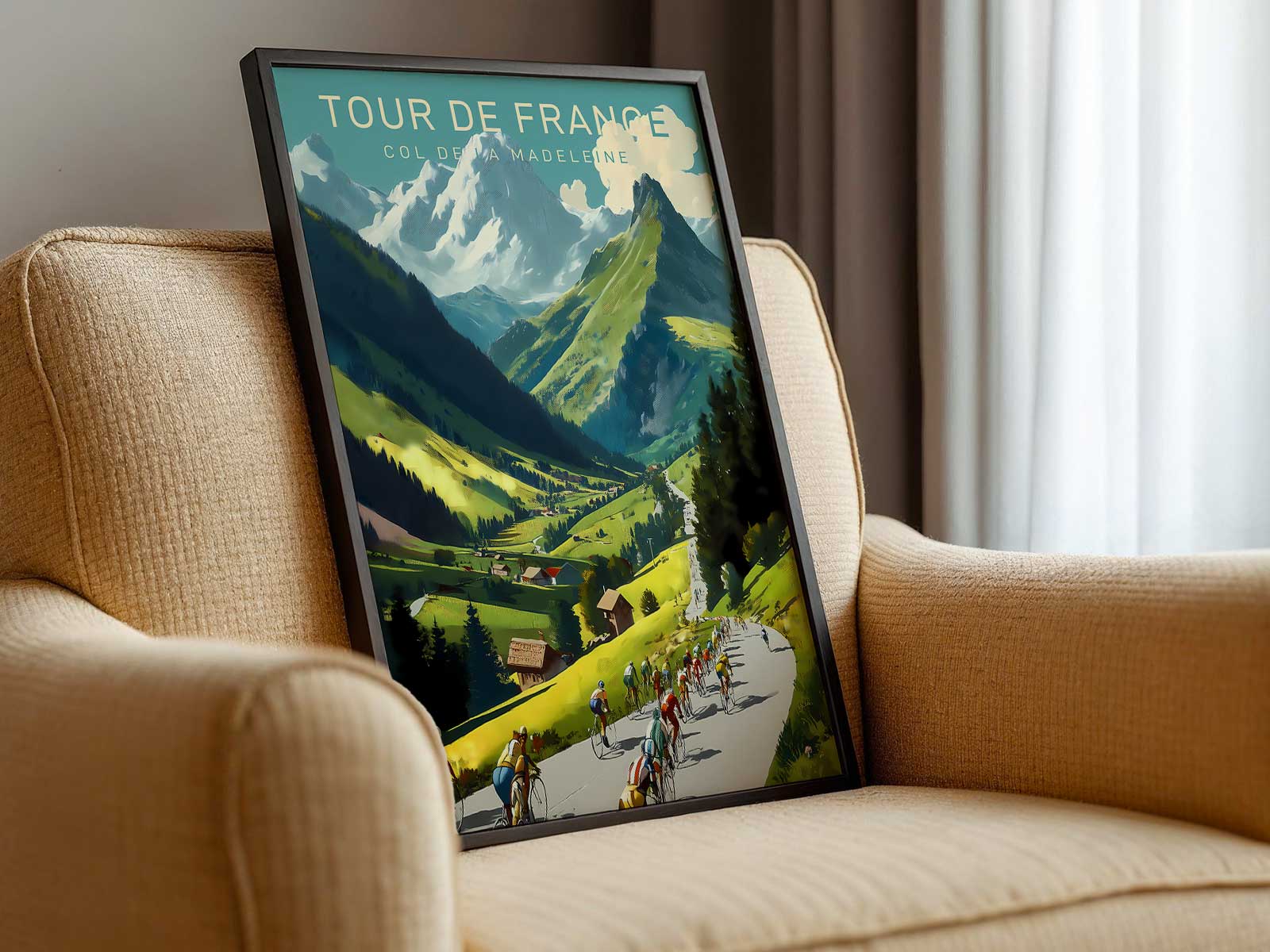
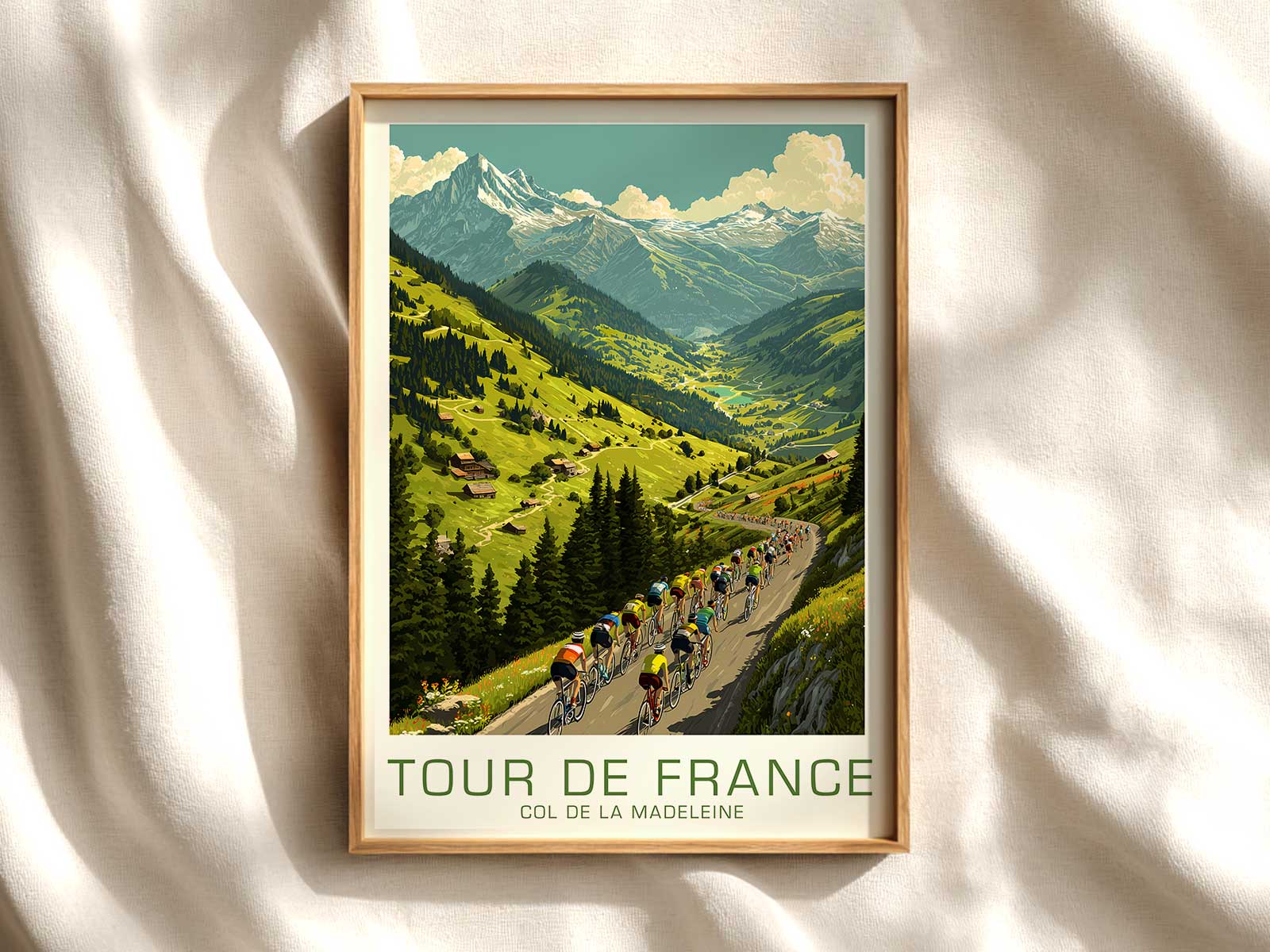
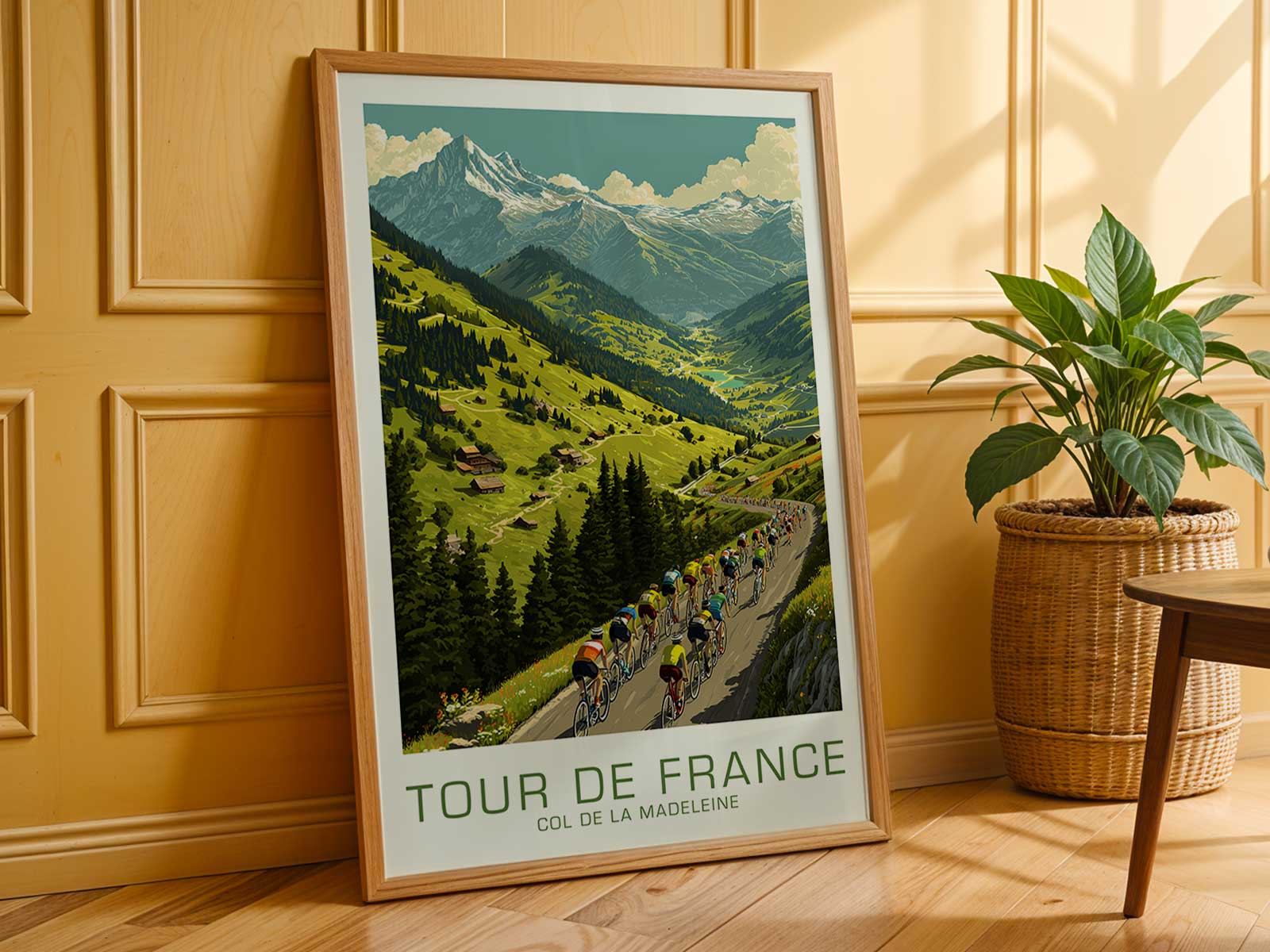
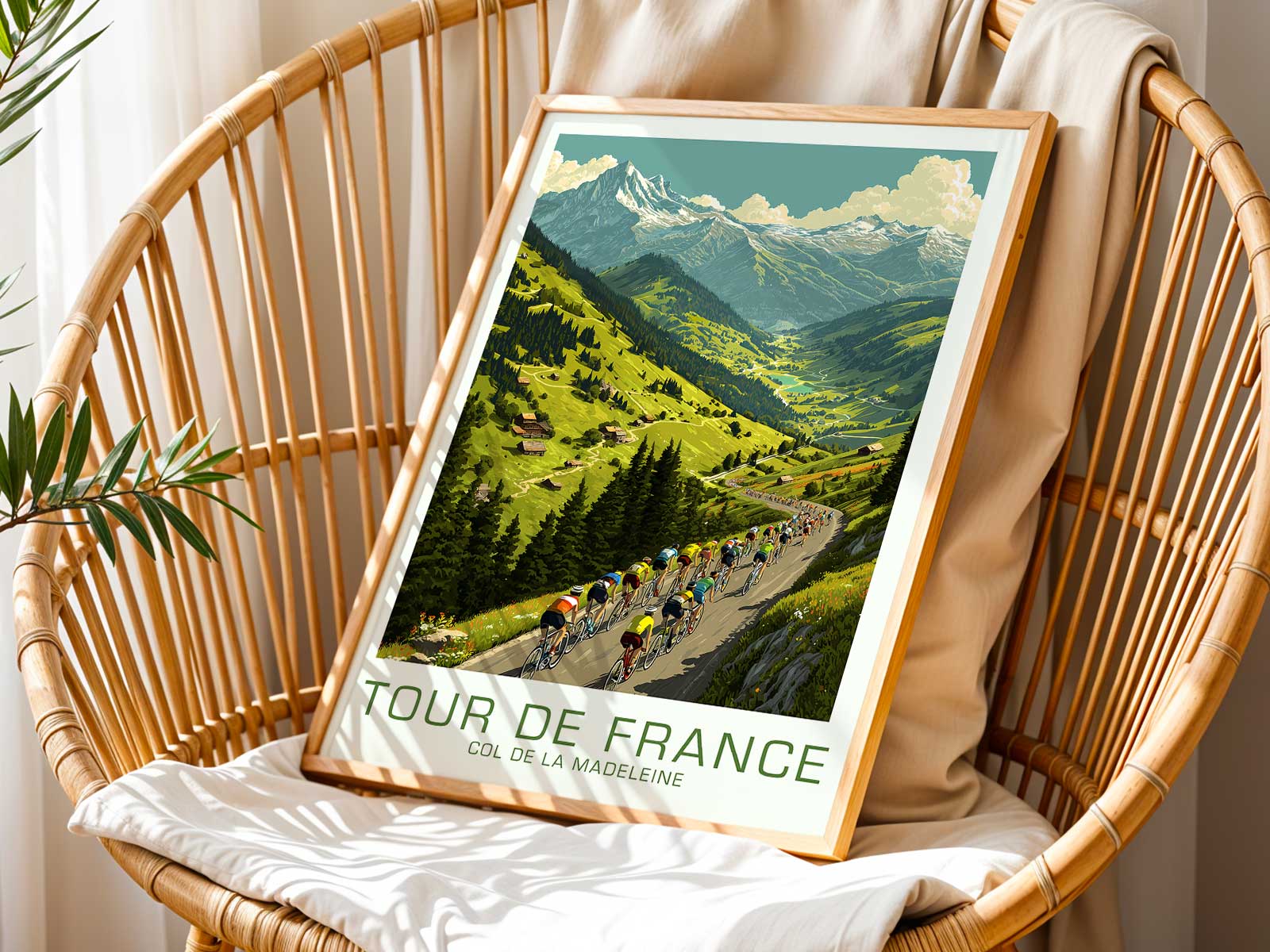
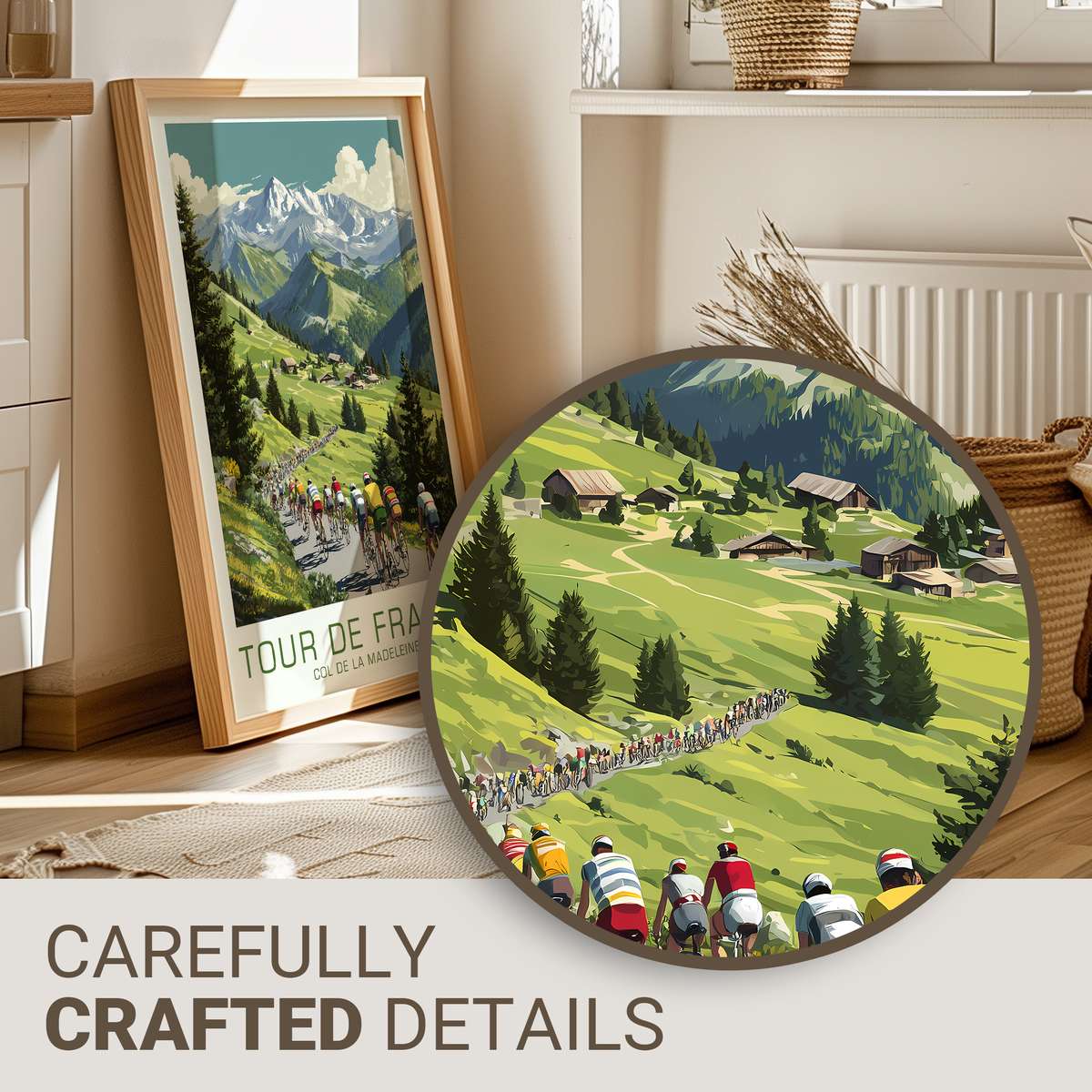
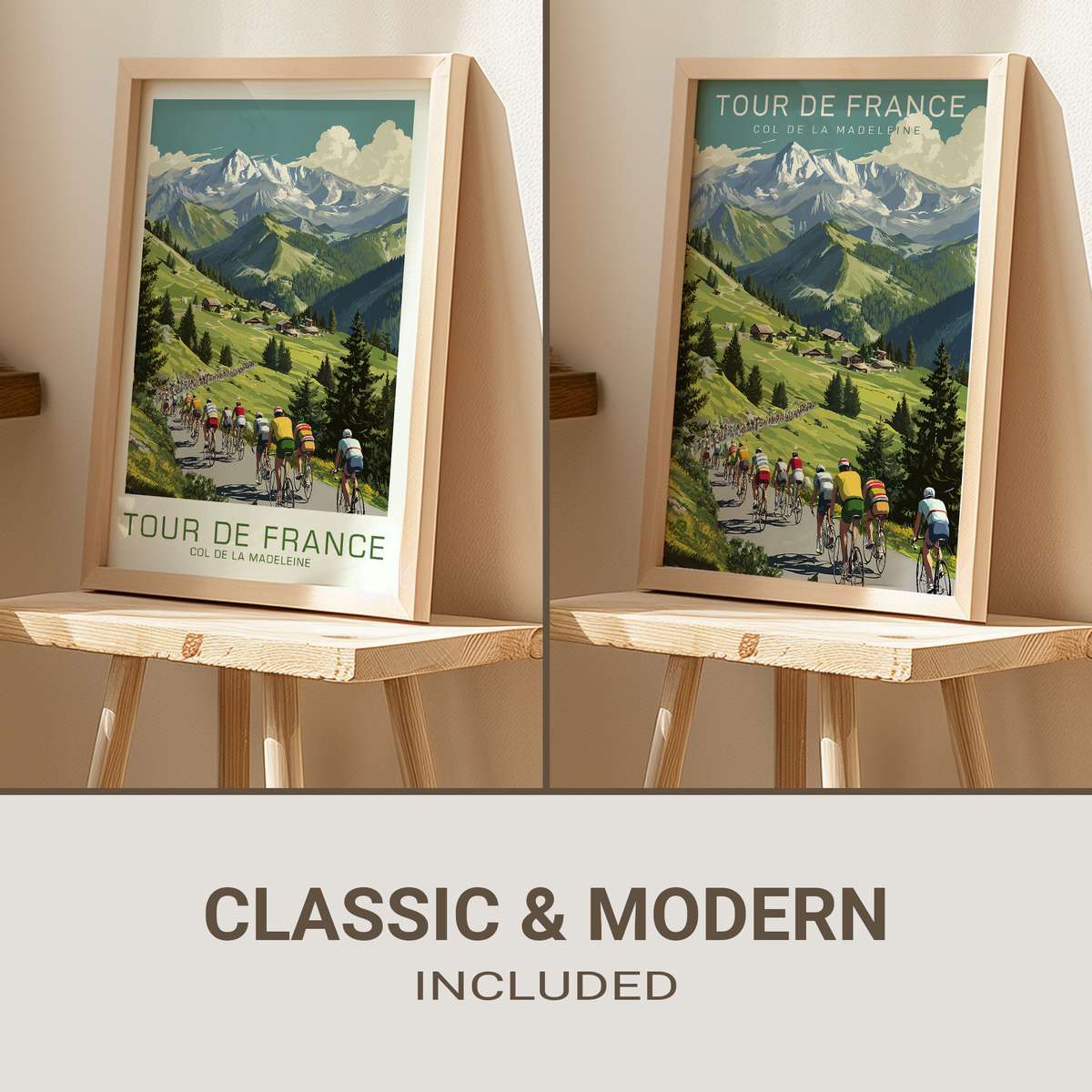
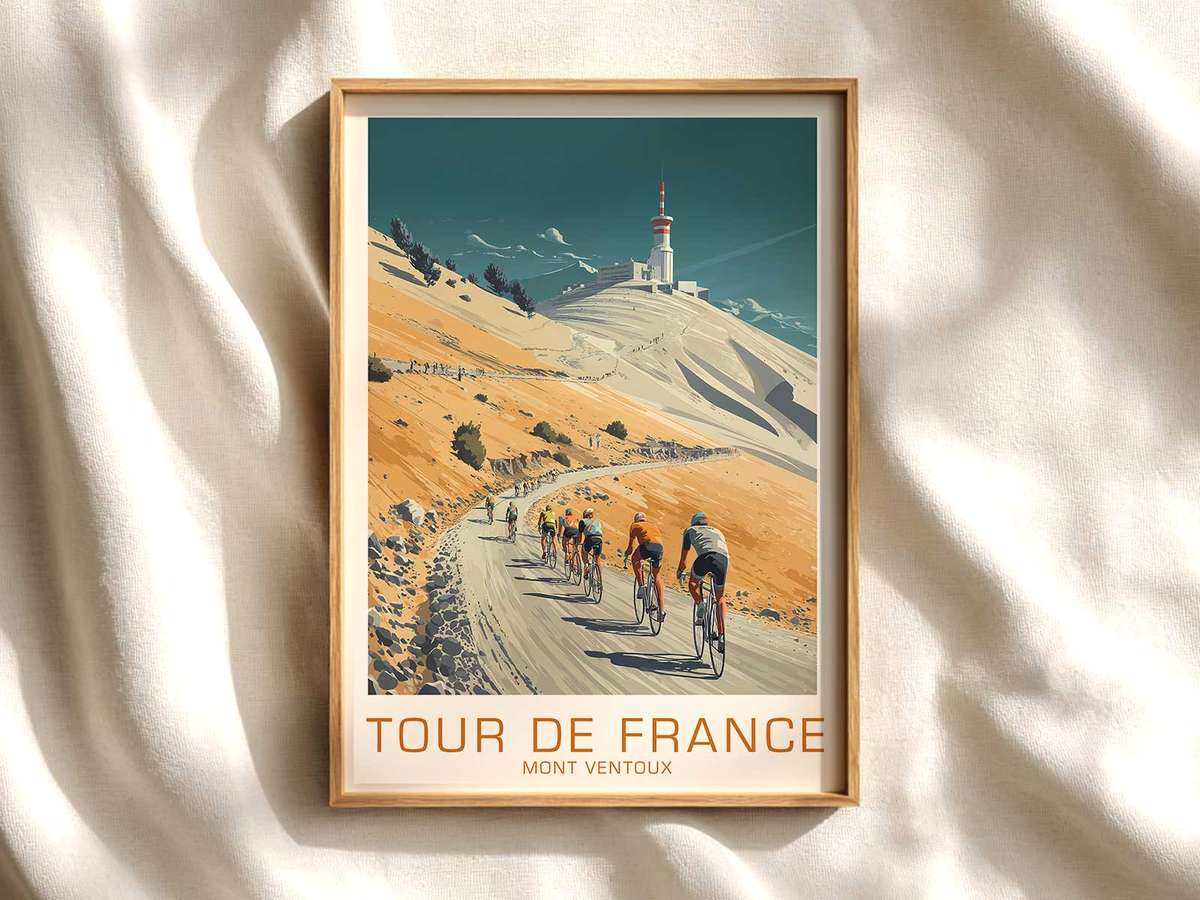
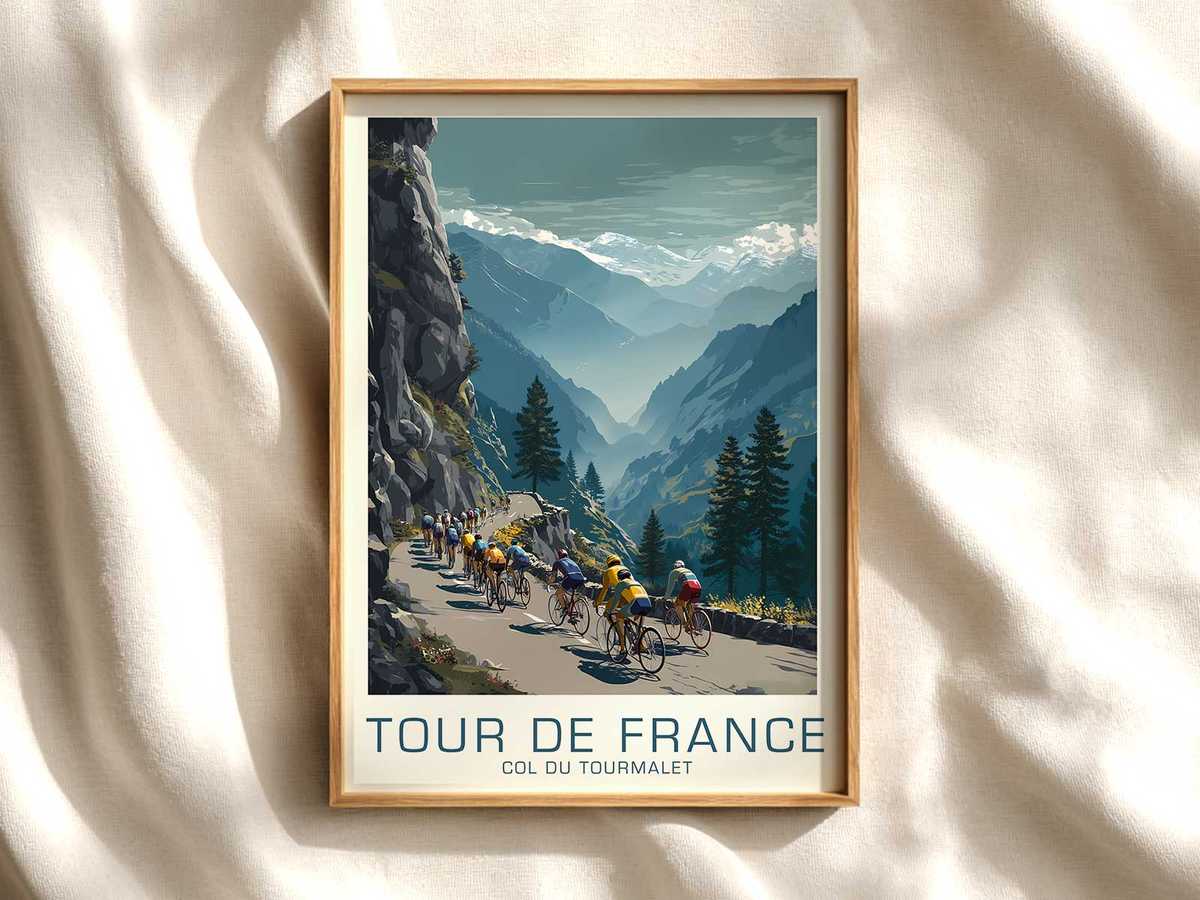
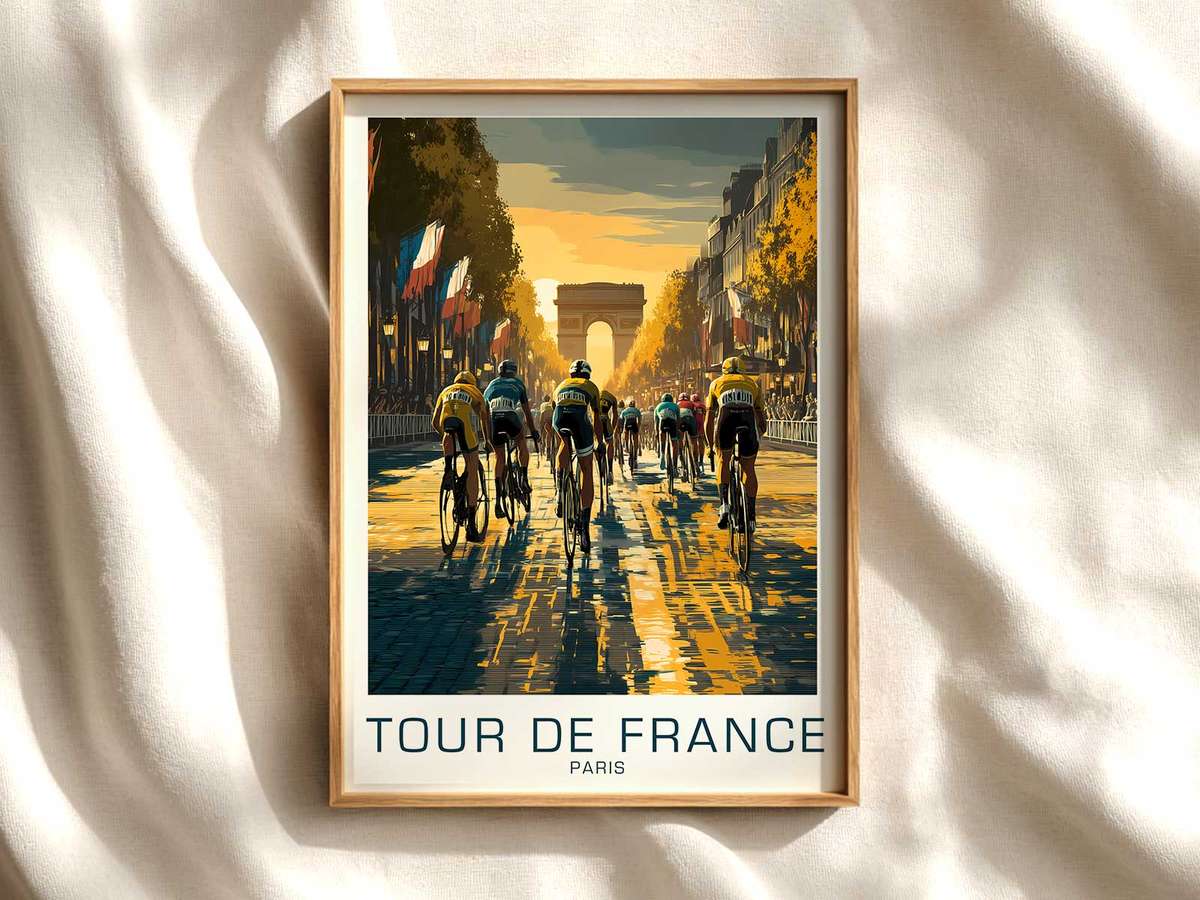
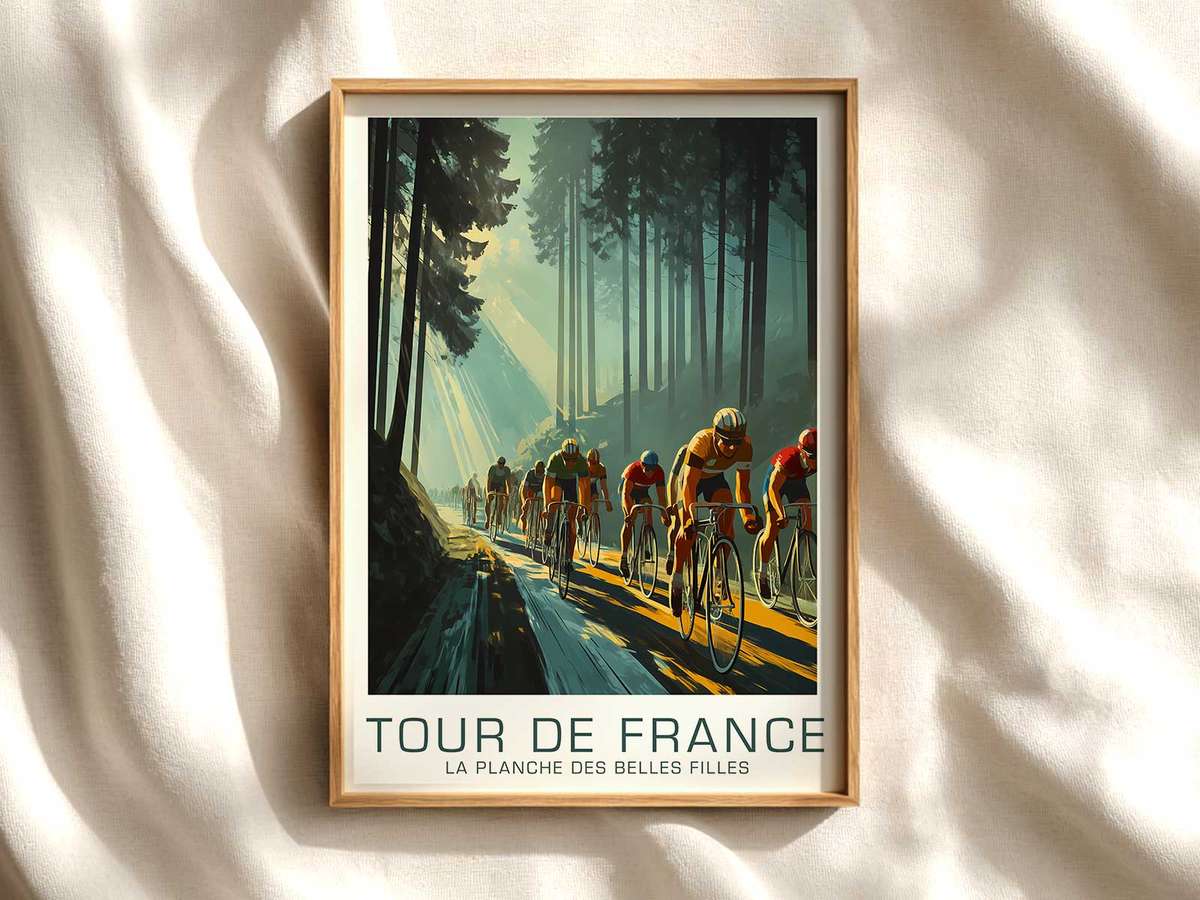
A watercolor of the Col de la Madeleine is never merely a pretty cycling scene; it reads like a fragment of graphic history. The soft washes of color, the feathered edges where sky meets rock, the way light is suggested rather than described—all these qualities turn a poster into a recall of roads once ridden and jerseys once worn. This kind of Tour de France wall art trades the instant spectacle of modern photography for a slower, tactile conversation with memory: the paper grain, the deliberate bleed of pigment, and the faint abrasion that suggests repeated handling and long acquaintance.
The image works because it privileges texture and patina as carriers of meaning. A faded yellow jersey in the distance reads less as a contemporary marketing symbol and more as an heirloom: an object that has lived. Subtle imperfections—an uneven wash across a mountain flank, a carefully scorched edge—become narrative cues. They are the visual equivalents of an old postcard folded into a guidebook or the thumb-mark on an atlas: evidence that the route has been loved, traced, and remembered. When viewers encounter this poster, they register not only the climb’s geometry but also the lived surface that surrounds it.
There is also a specific atmospheric achievement in watercolor: its ability to render air, light, and distance with a softness that photographic sharpness rarely matches. A layered wash can suggest dawn mist slipping from a valley, or a late-afternoon haze that compresses distance and tucks a range into a single, melancholic plane. In such a poster, the road itself becomes an actor defined by negative space—an implied line leading the eye and the imagination. The painterly suggestion of depth invites the viewer to supply memory—of a soundless descent, the chirp of a cassette, or the rustle of an old wool jersey—making the image feel personal and collectively familiar at once.
[IMAGE_INSERT_ARTICLE_01]
Beyond technique, the cultural weight of older Tour imagery is what elevates it from decoration to heirloom. Historic cycling iconography—the simple geometry of a steel frame, the silhouette of classic handlebars, the blocky typography of race posters—carries a continuity that anchors interiors. In a study, a library, or a studio, a watercolor scene of the Madeleine transmits a quiet narrative: continuity of place, the ritual of ascent, and a long lineage of riders who have passed that way. It’s the difference between an accessory and an artifact. The former fills a space; the latter furnishes it with story and provenance.
Collectors understand this instinctively. They look for authenticity in the hand—visible brushwork, a respected compositional restraint, or a color palette that anticipates fading in an elegant way. These are the markers of print character: a print that behaves like a page pulled from a sporting archive. Such prints harmonize with wood, leather, and paper interiors because they share an aesthetic vocabulary of wear, repair, and reverence. A watercolor poster of the Madeleine doesn’t shout; it converses, and its voice suits rooms where attention and memory are valued.
Finally, heritage-led Tour wall art resists the fleetingness of trend. It appeals to a sensibility that prizes continuity: the knowledge that the great climbs of this race have been lived across generations and rendered again and again by different hands. This repetition is not redundancy but accumulation—each new rendering adding a patina of cultural meaning. Framed on a wall, a Col de la Madeleine watercolor becomes a mnemonic device, reminding us that design can keep history alive, and that the quietest images often carry the deepest echoes.
Author: