Reading Tour de France stages: start with the road — a Carcassonne-inspired…
The quickest, most reliable way to understand any Tour de France stage is to read the road first. The map and elevation profile — where climbs sit, how steep they are, whether the finish is uphill or flat, and how exposed the route is — determine who will be active, who must control, and where the race can genuinely open. Framing that lesson against the distinctive visual identity of Carcassonne — its ramparts, narrow medieval streets and recurring presence in recent Tours — helps underline how organisers use place and profile together to shape a day's story.
Stage identity: types and what they ask
Tour de France stages fall into clear categories: flat, rolling (hilly), mountain and time trial. Each category carries predictable effects on tempo, tactics and the size of time gaps. Mountain stages and summit finishes have the greatest selection power: they produce the largest time differences between riders. Flat stages, by contrast, tend to compress gaps and favour bunch sprints unless crosswinds or technical approaches intervene. Reading the stage type at a glance gives a first-order expectation of whether teams will race for the bunch finish, shepherd a breakaway, or fight for general classification (GC) advantage.
FIRST READING OF THE STAGE
Begin with the route map and elevation profile. Note where the categorized climbs lie, the finish type, and the length of flat approaches or urban circuits. These visible elements form the stage's DNA and immediately indicate likely scripts: a stage with late categorized climbs points toward GC action or a reduced sprint; a long flat run-in signals sprinter teams will control; an exposed plateau or long rolling section invites crosswind splits.
RHYTHM, SEQUENCE, AND ENERGY FLOW
Sequence matters as much as individual features. A day that alternates short, sharp climbs with flat recovery sections forces repeated accelerations that erode endurance — ideal for punchy Classics riders and breakaways with strong riders. Conversely, long steady climbs concentrate energy expenditure into sustained efforts that favour pure climbers. Where climbs are placed relative to feed zones and technical urban sections influences how teams distribute energy across the day: early high intensity can leave squads short-handed in the finale, while a steady tempo preserves options for late moves.
CLIMBS, GRADIENTS, AND SELECTION POINTS
Not all climbs are equal. Category and placement determine a climb’s selection power. High-category climbs and summit finishes create the biggest gaps because they demand sustained power and punish positional mistakes. Multiple medium climbs in sequence can be just as decisive as a single hard ascent: repeated efforts accumulate fatigue and sap domestique support. Read the profile to identify where the field will likely be sorted — that is the single most actionable insight for teams planning who defends, who attacks, and who protects the leader.
DESCENTS, TECHNICAL ROADS, AND ROAD FEEL
Technical sections and descents change the race dynamic immediately. A technical finale or narrow medieval streets in a host city like Carcassonne can neutralise a long lead-out or expose riders to crashes and splits. Smooth wide roads favour high-speed control; twisty, cobbled or narrow finishes reward opportunists and require precise bike handling and positioning. Reading where technical sections appear on the profile alerts teams to where positional battles will happen and where a small moment can translate into a big time gap.
WIND, EXPOSURE, AND PELOTON FRAGILITY
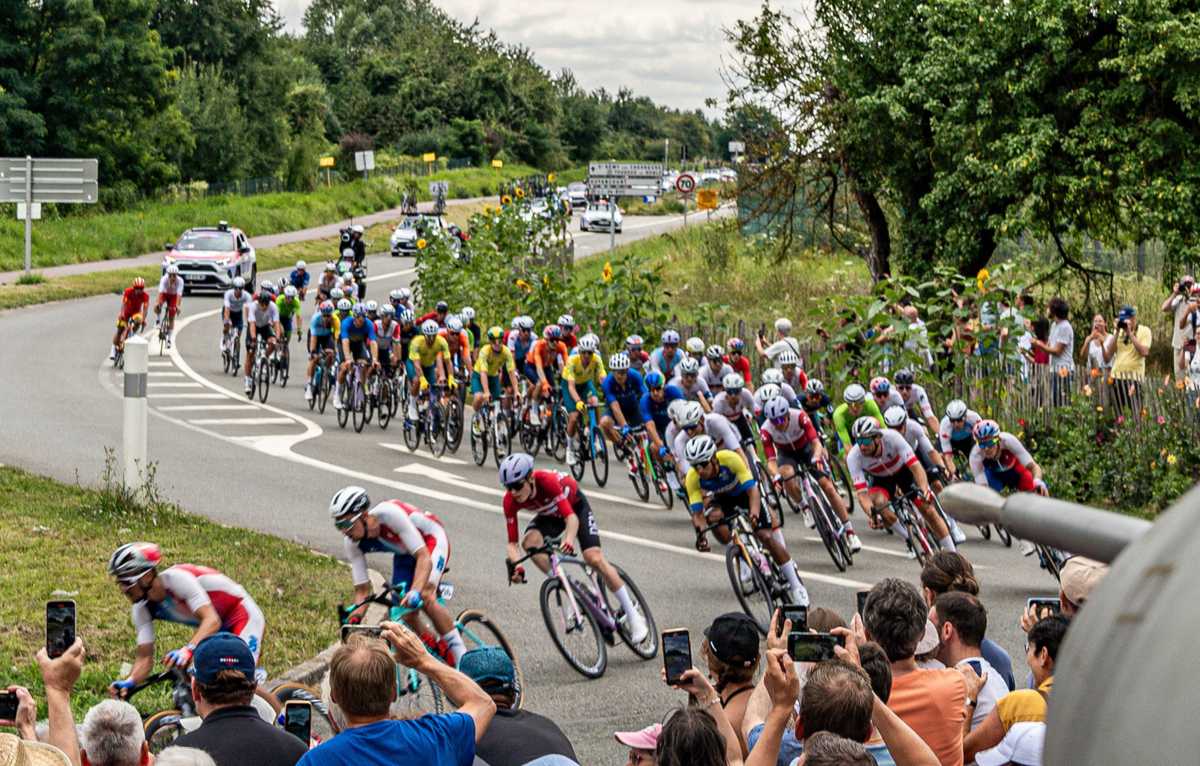
Open, exposed terrain can split a peloton without a single significant climb. Crosswinds on plateaus or coastal approaches create echelons: a sequence of short accelerations that make the race hard to control and give opportunistic teams the chance to distance rivals. Even on otherwise 'flat' days, the combination of wind exposure and the route’s sequence can transform the stage from a sprinter’s procession into a day of attrition. Include wind-prone sections when you read the route — they are one of the common hidden causes of selection.
BREAKAWAY, GC, OR SPRINT?
A stage’s profile determines the likely script. Long flat approaches, a predictable finish and limited technicality favour a controlled sprint and therefore collectivity in the peloton. Mountain stages and summit finishes favour GC action. Rolling stages with scattered climbs invite breakaways and reduced bunch sprints. The placement of decisive features — late climbs, technical circuits, or exposed plateaus — decides whether the breakaway's odds rise or whether strong teams will work relentlessly to set up a fast finish.
HISTORY, MEMORY, AND STAGE LEGACY
Place shapes narrative. Carcassonne’s fortified citadel is a vivid visual that organisers and media use to frame a stage’s story — when the Tour starts or finishes near its ramparts, the imagery creates a memorable context for whatever race drama unfolds. The city’s recurring appearances in recent Tours make it part of the race’s living geography, reminding us that route design blends spectacle with sporting purpose: heritage enriches the way a stage is read and replayed in memory.
WHY THIS STAGE MATTERS
Every meaningful reading of a Tour de France stage begins at the road: map, profile, climbs, technical sections and exposure. Those elements dictate rhythm, where energy will be spent, and where selection can occur. Using Carcassonne as a visual anchor shows how place and profile collaborate to create both spectacle and strategy. For teams and fans alike, the lesson is simple and enduring — read the road first, and the race’s likely stories follow.
Author: {Cynthia D.}