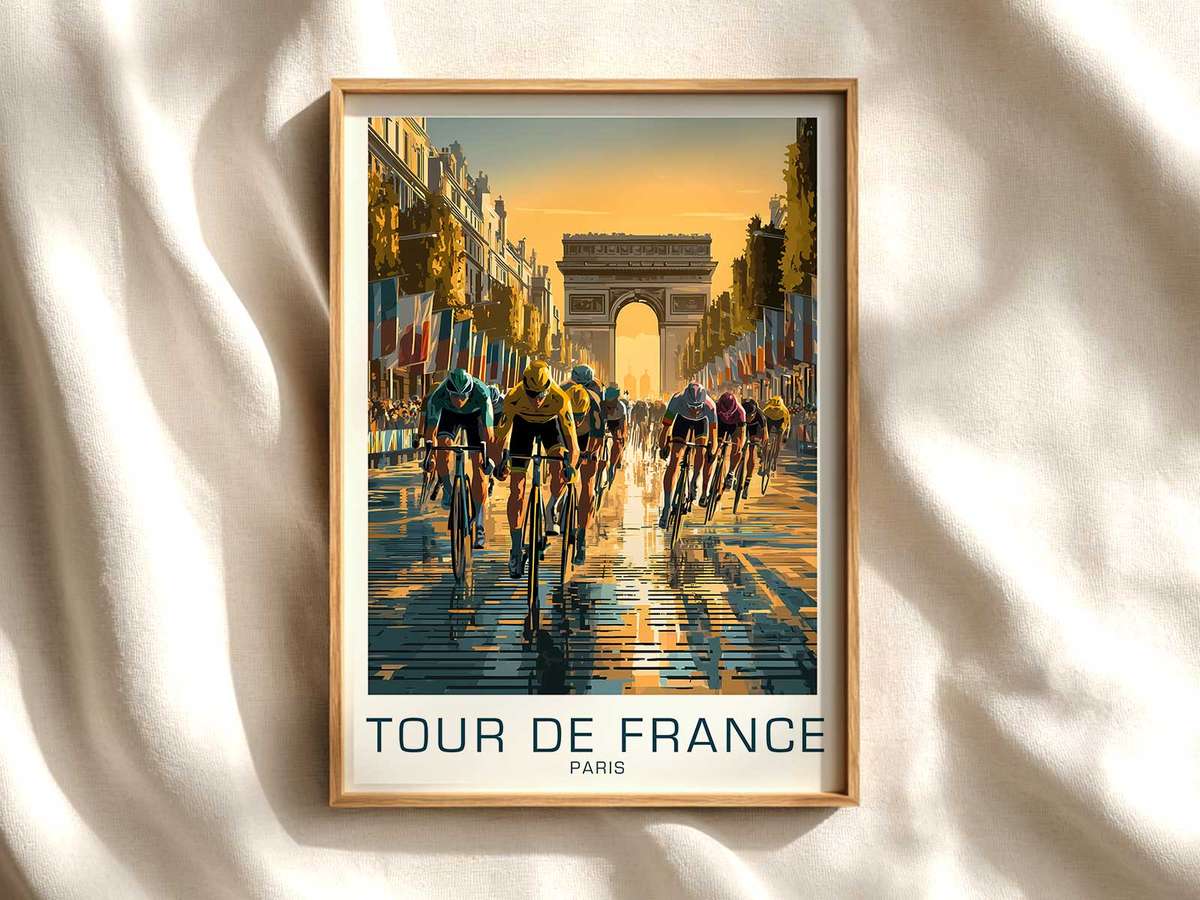
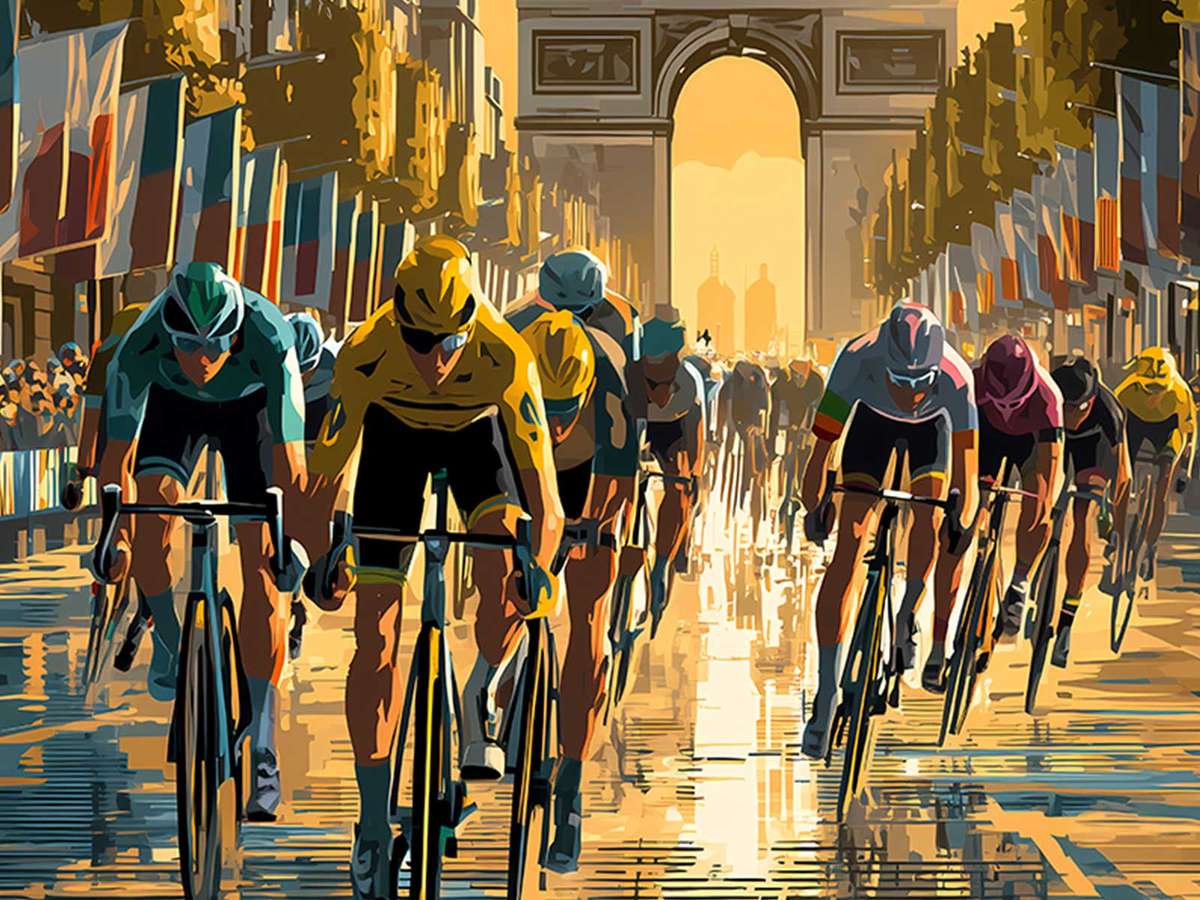
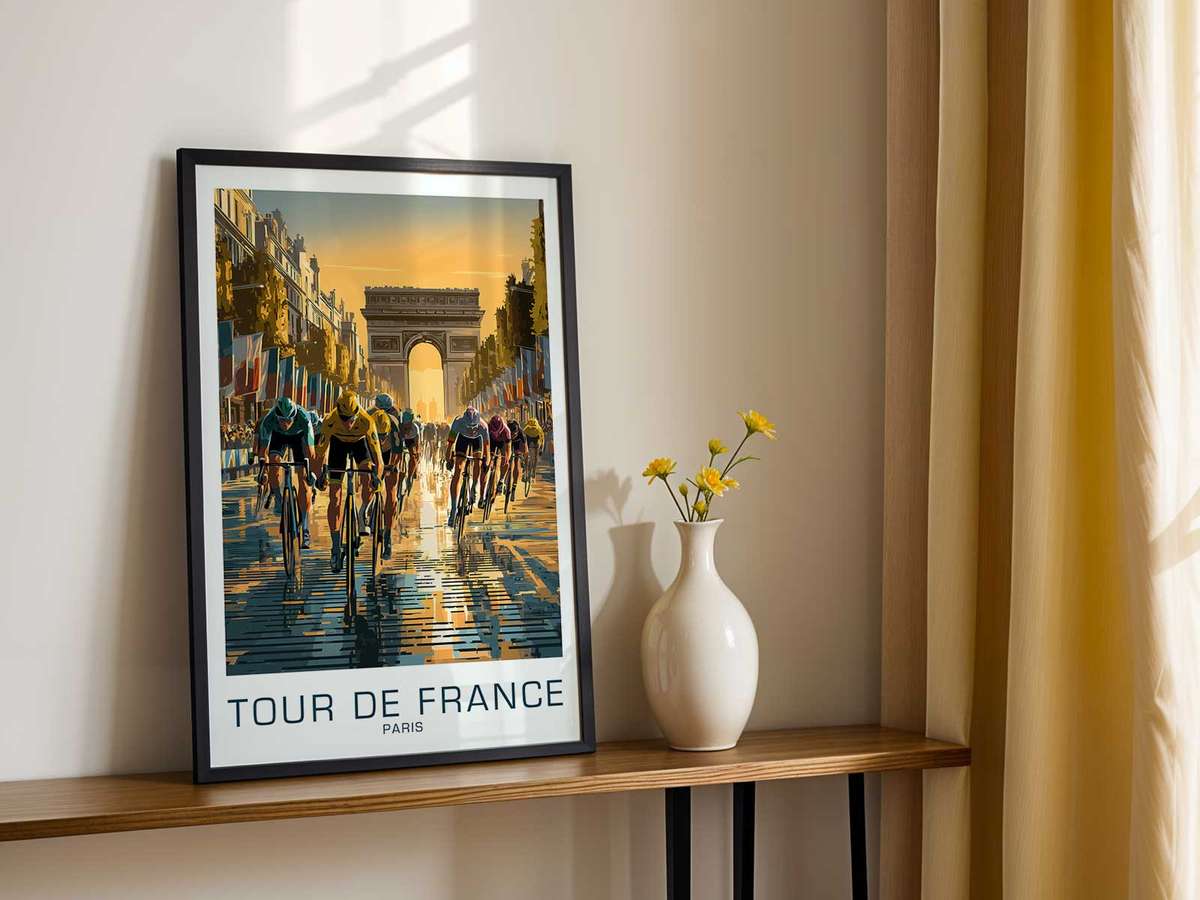
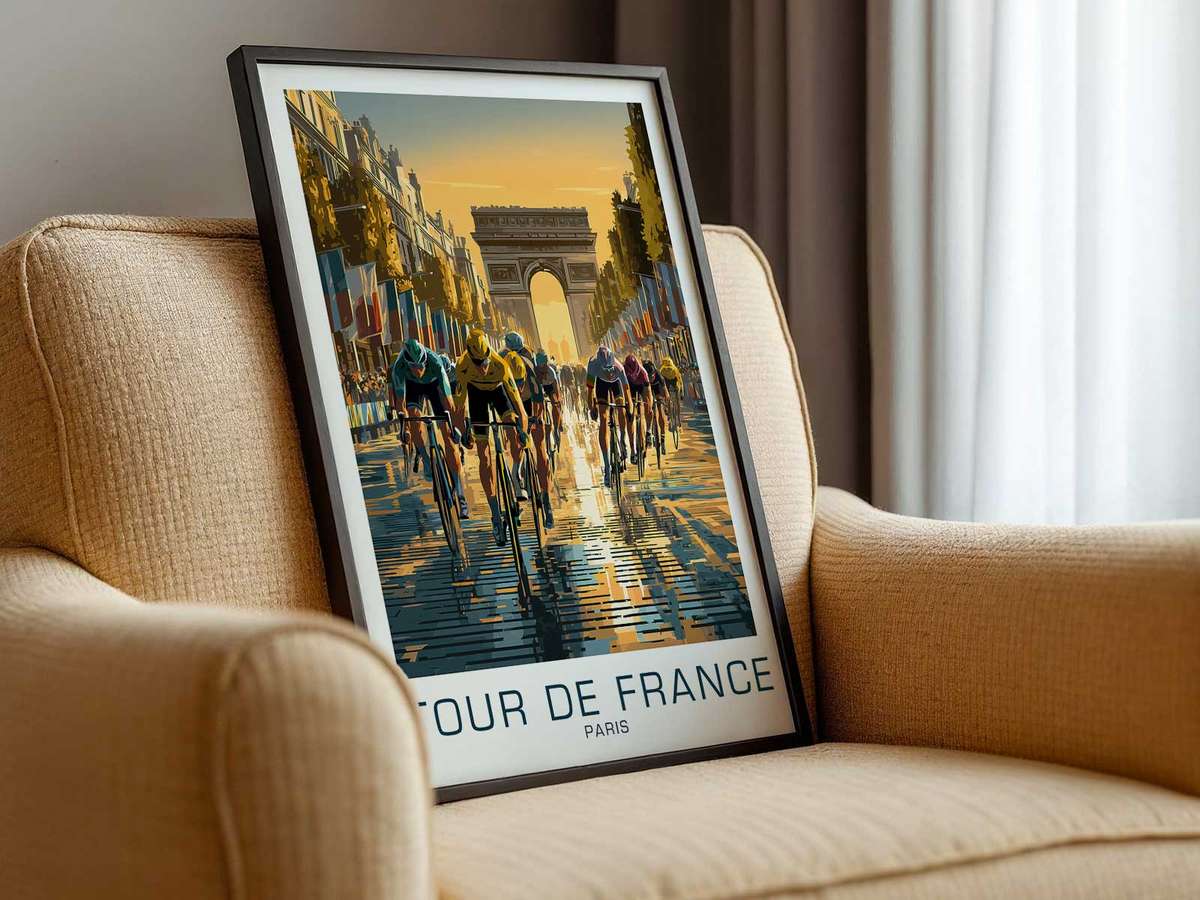
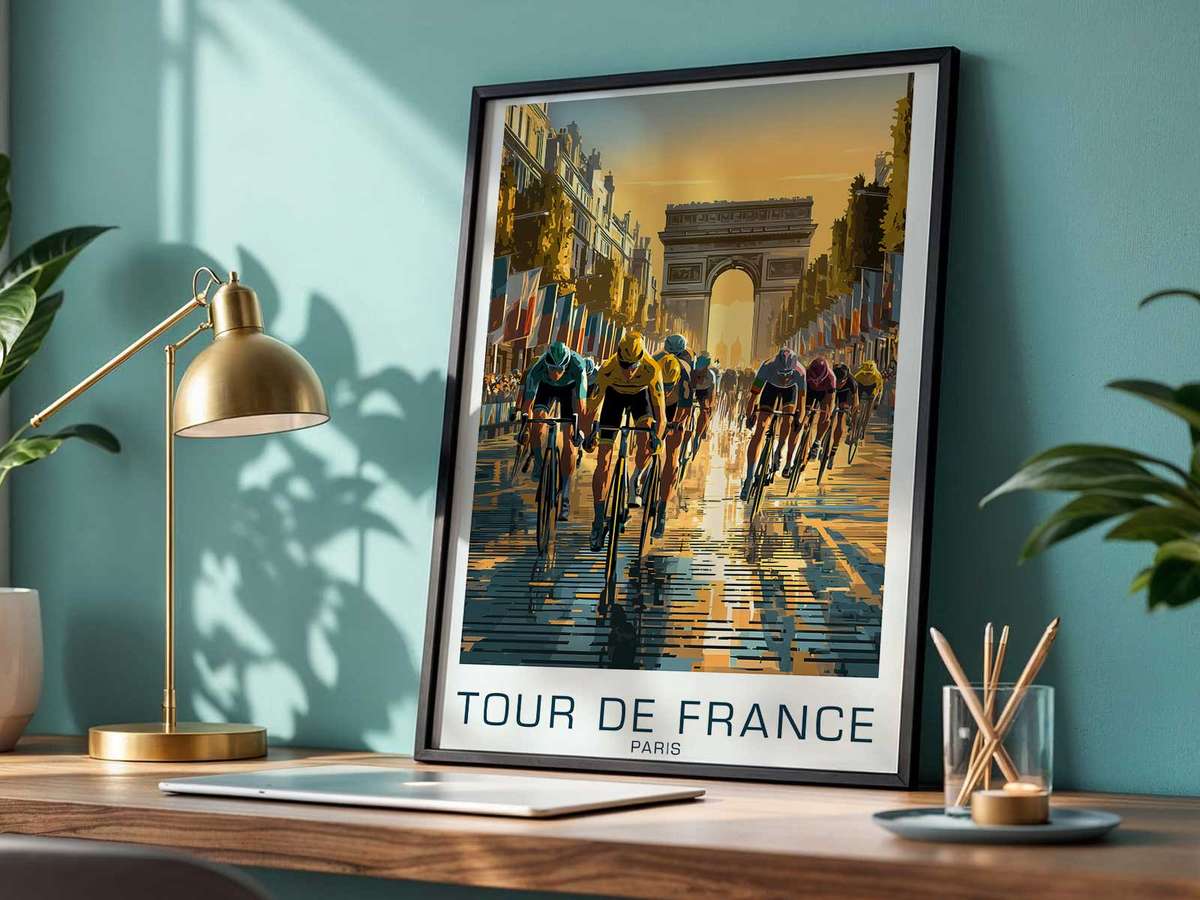
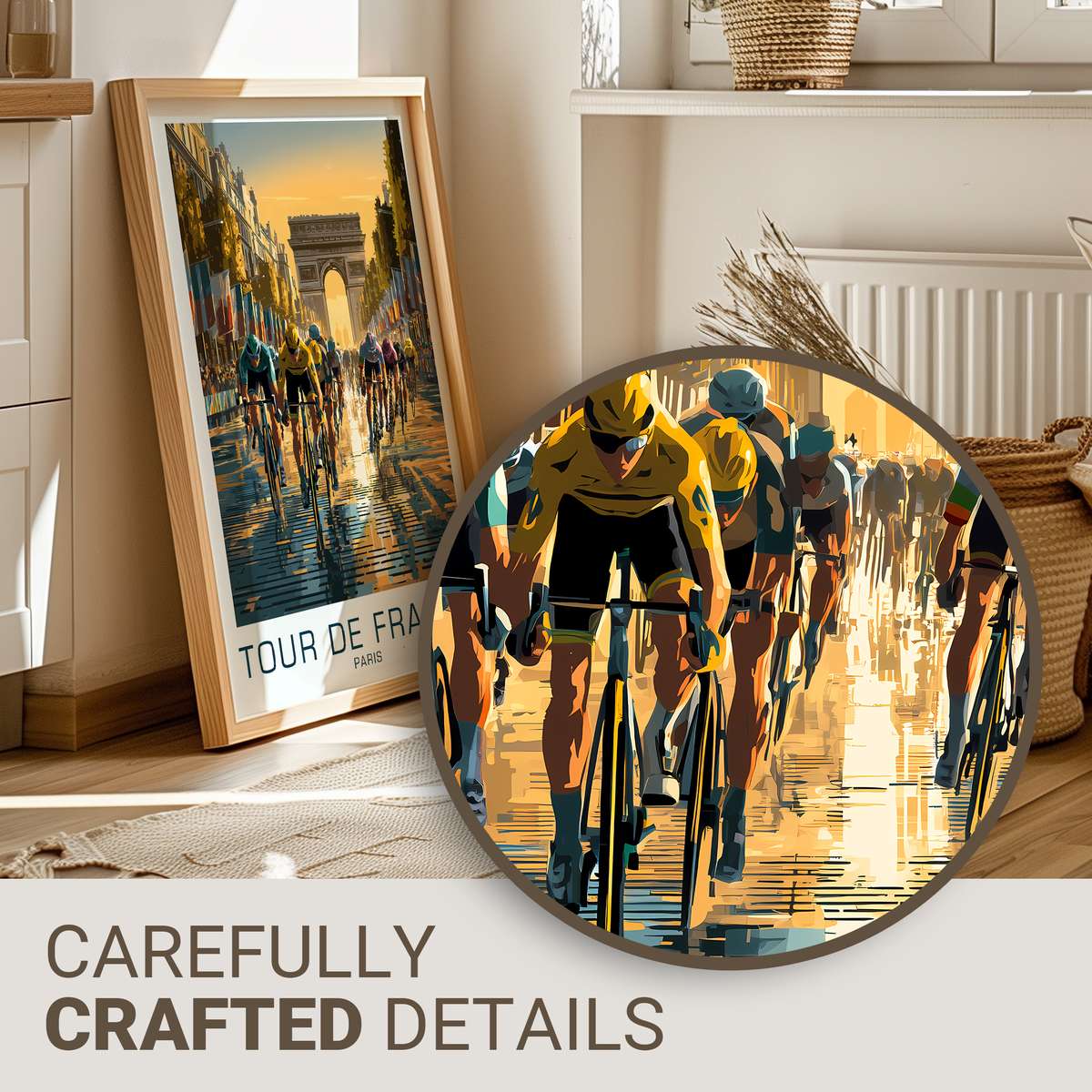
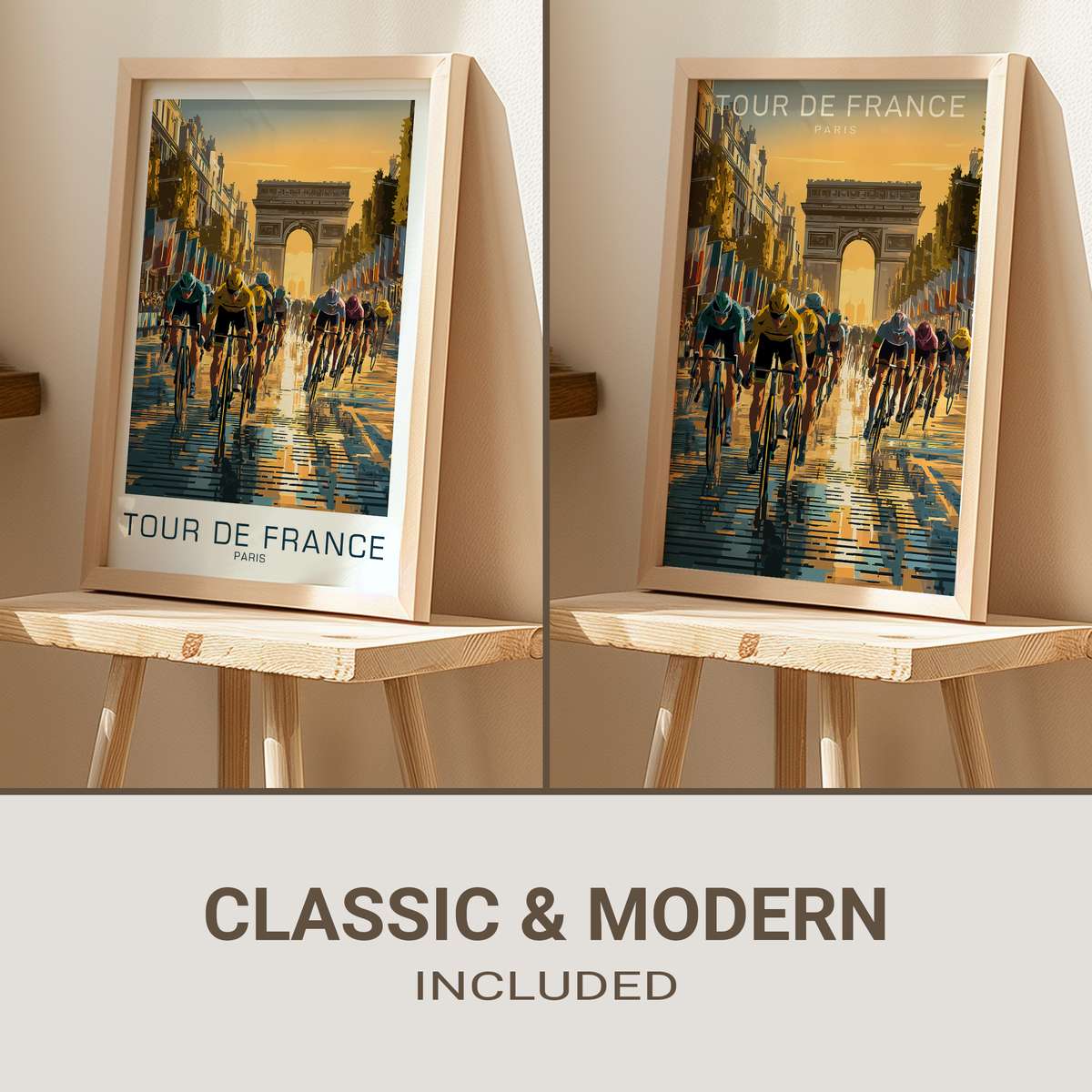
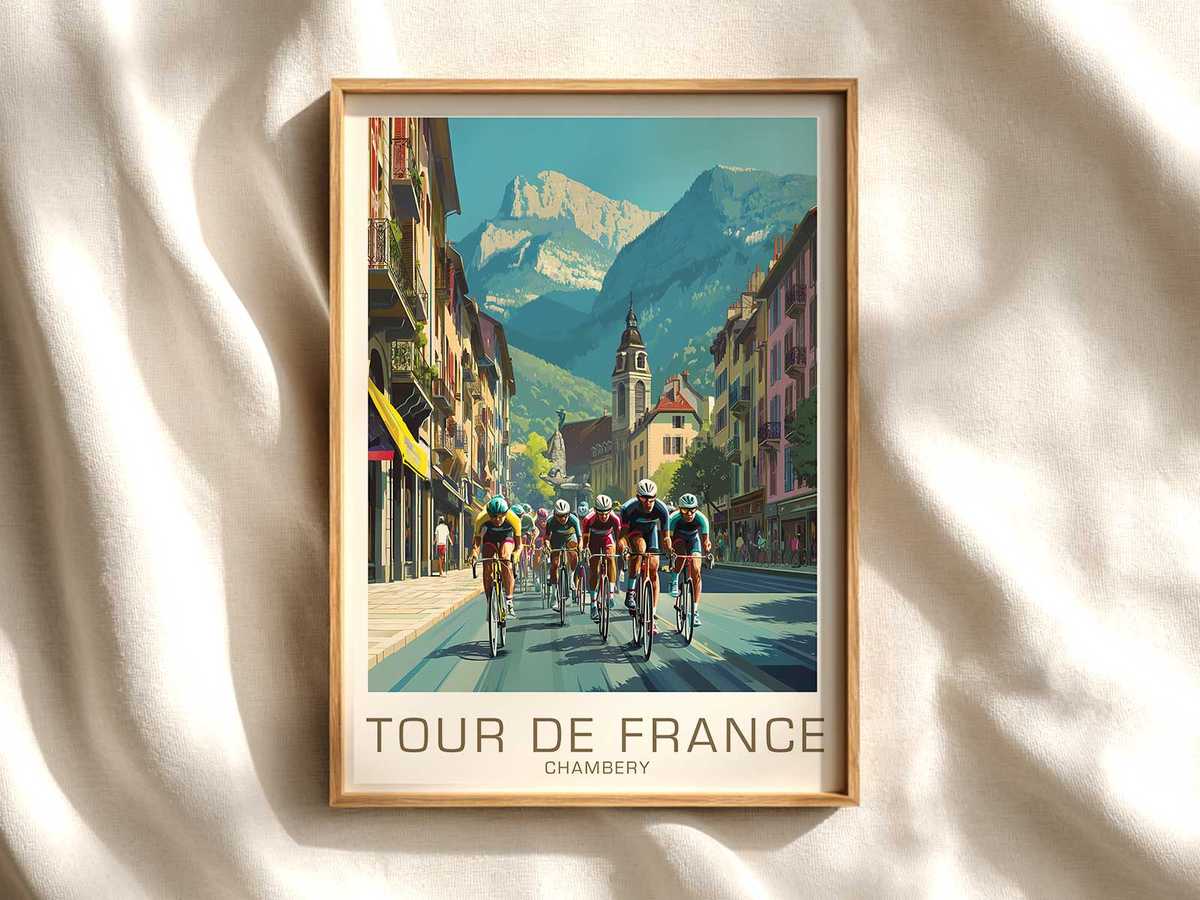
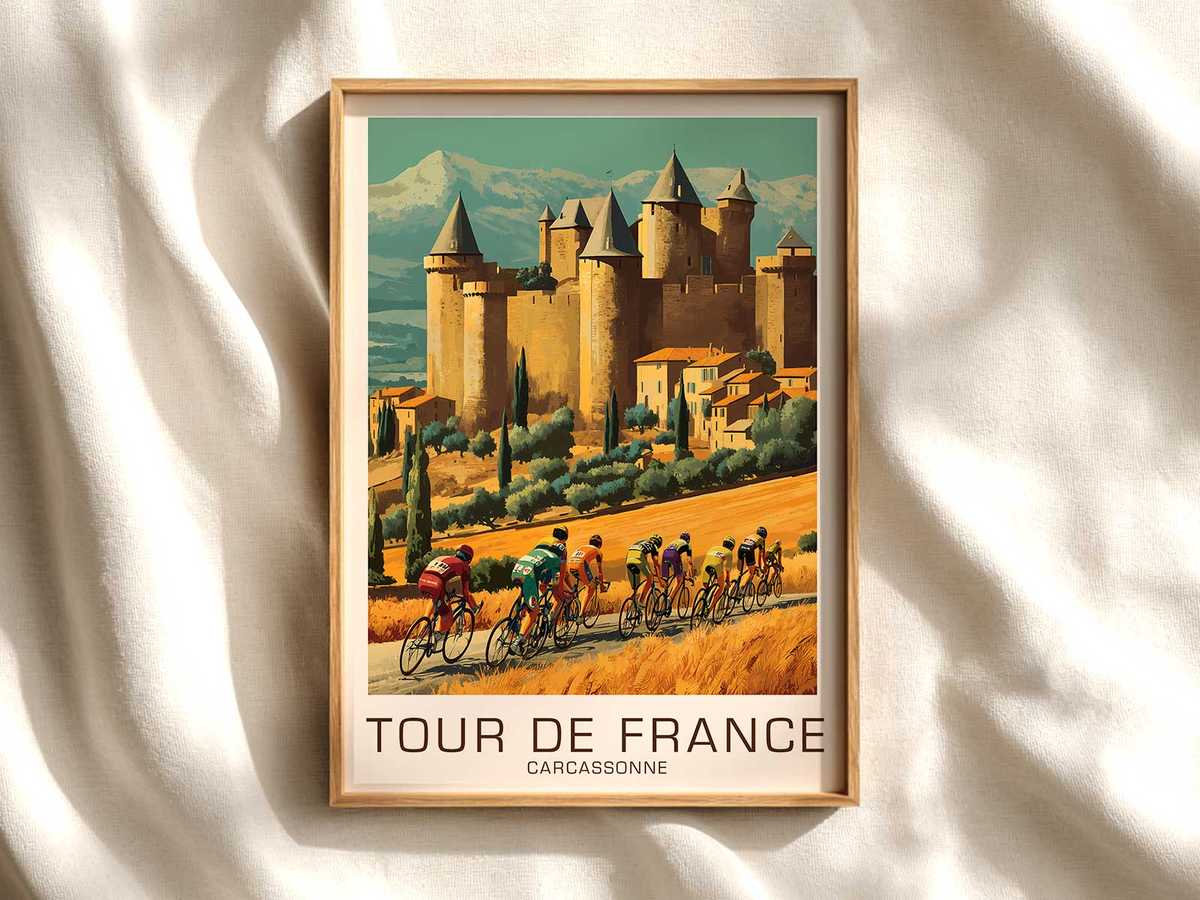
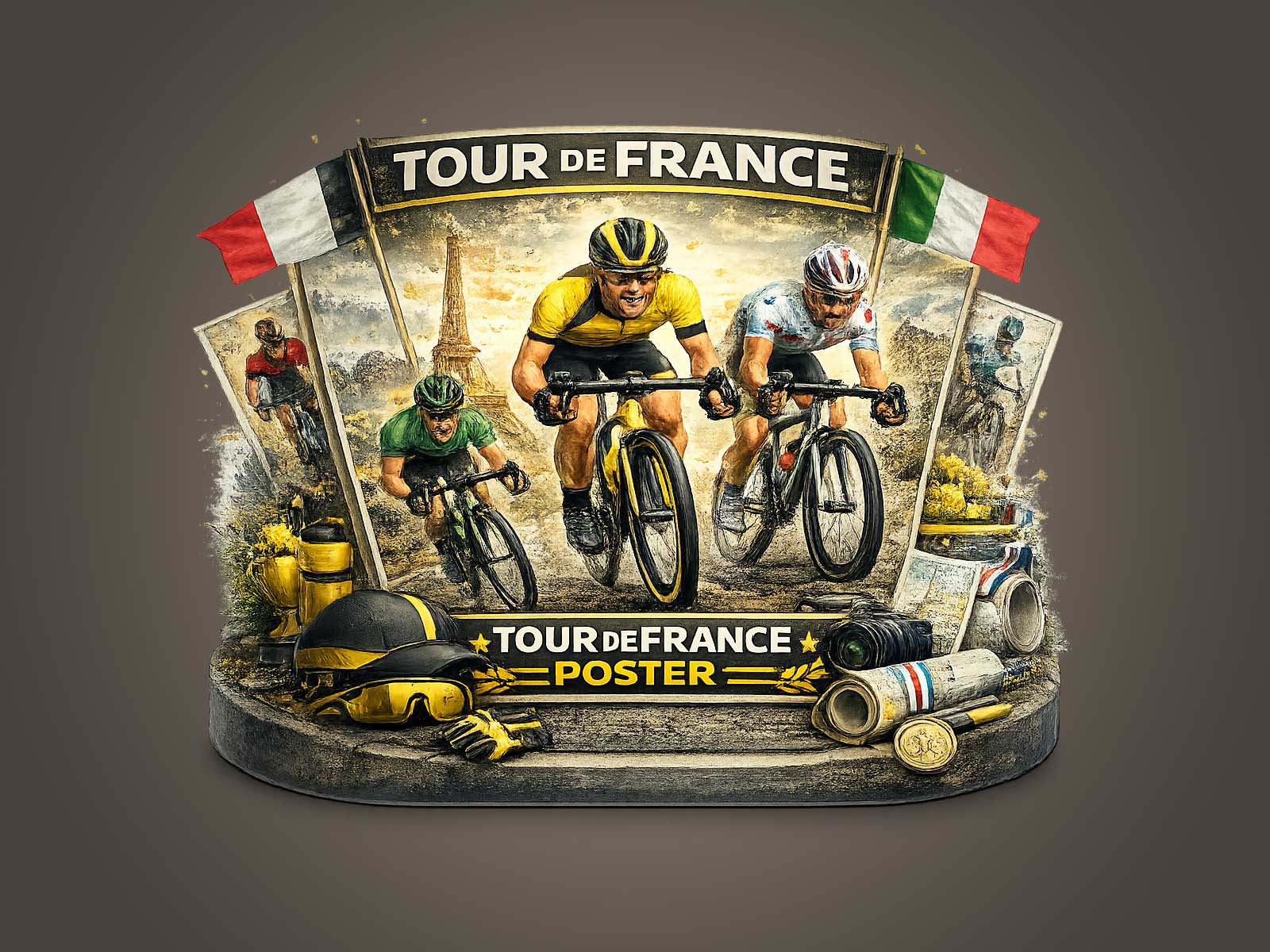
The Champs-Élysées is less a single street than an idea of celebration, and a poster that chooses this finish as its subject must translate ceremony rather than recount results. In this image the avenue becomes a stage where lines of architecture, a ribbon of asphalt and a river of spectators join to compress a whole race into a single moment. The visual language is about rhythm: the horizontal sweep of façades, the repeated verticals of lamp posts and trees, and the low, urgent posture of sprinters pushing cadence into speed. Those elements give the artwork a structured, cinematic feel that reads well on a wall.
Light plays a decisive role. Evening or late-afternoon glow flattens the façades into warm planes while long shadows across the road dramatize wheel motion and wheel gaps. A restrained palette—ash greys for road, honeyed limestone for buildings, flashes of team kit—keeps the scene elegant and avoids visual noise. The crowd is present as texture rather than detail: masses of color and gestural shapes that frame the roadway and amplify scale, making the finish feel both public ritual and sporting climax. This approach preserves the dignity of place while conveying the electric closeness of the finish line.
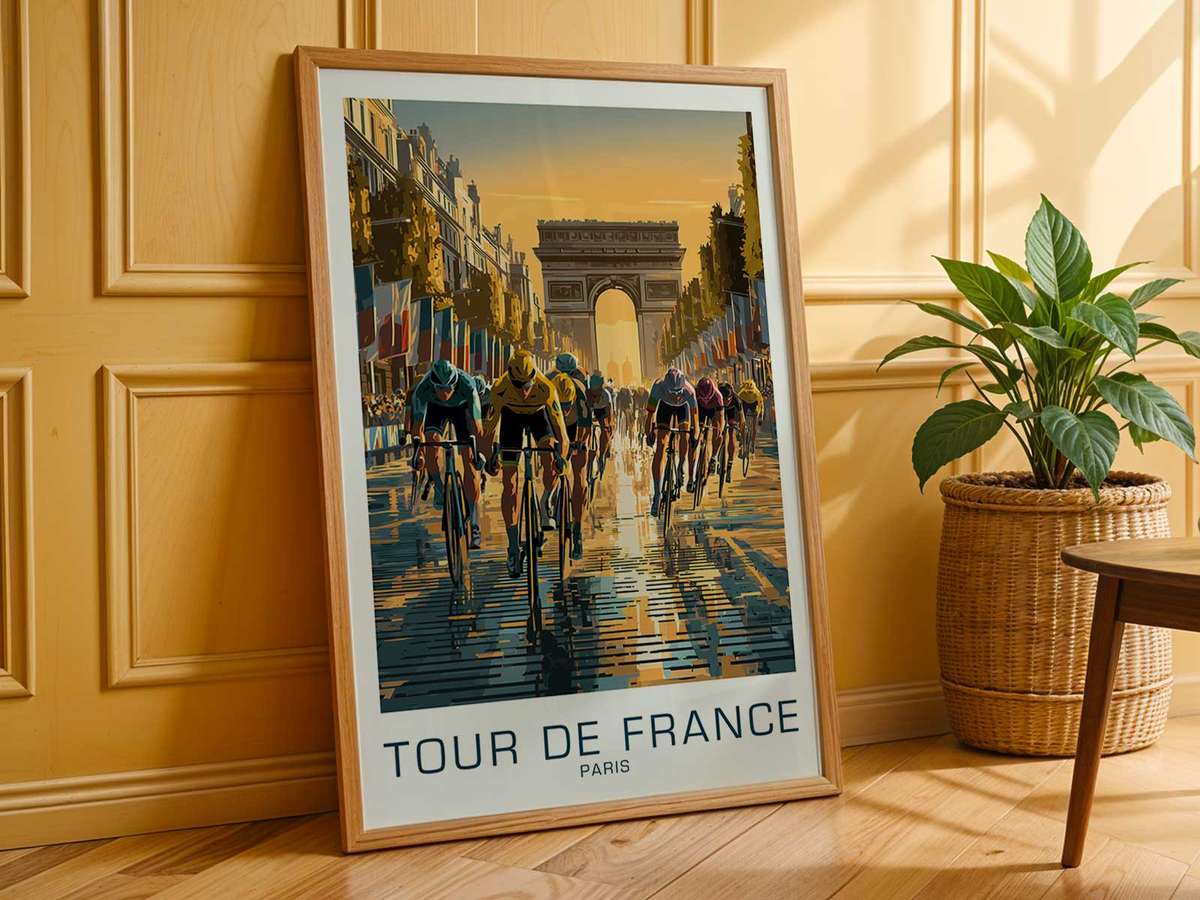
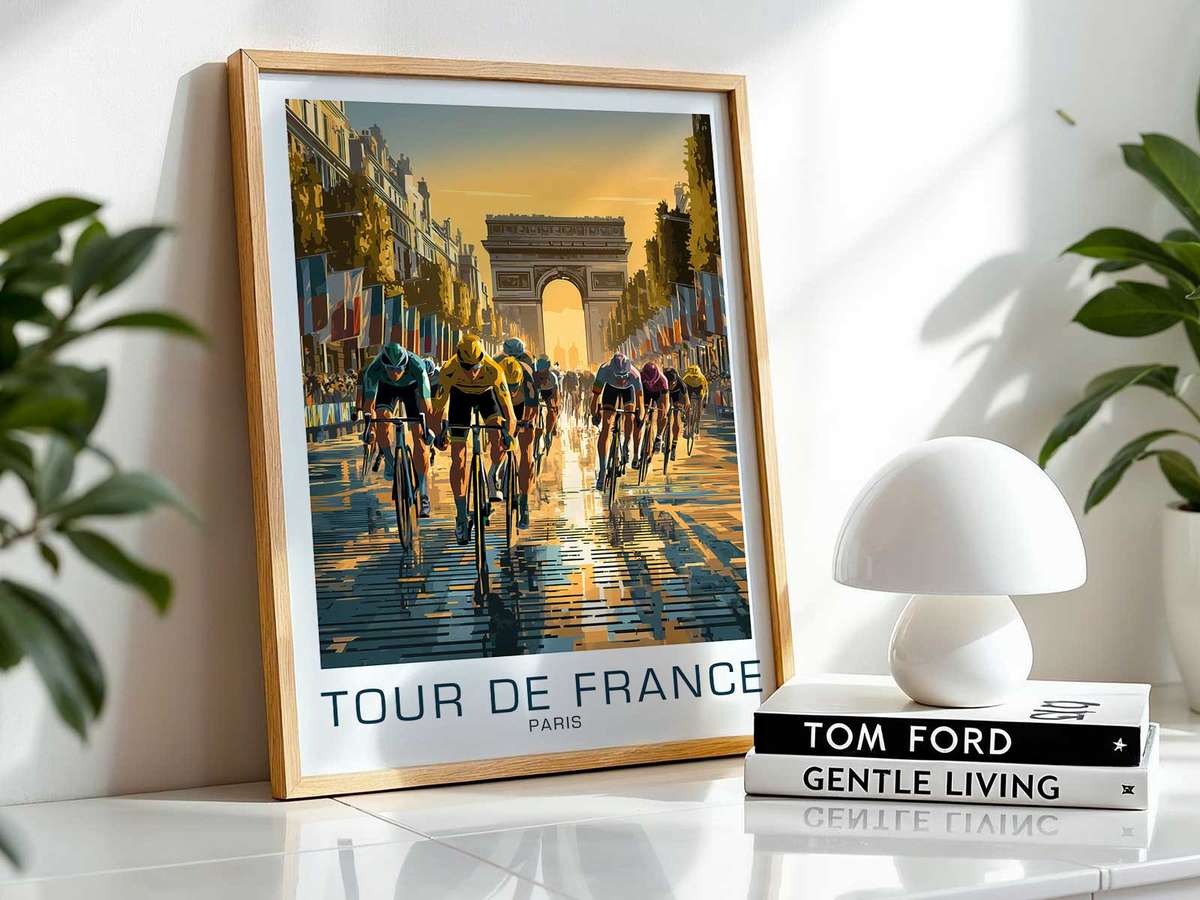
The poster reads as much about place as about performance. The Champs-Élysées is a civic room, its architecture giving the sprint a backdrop of modern urban grandeur. That sense of place explains why this image feels at home in a living room or study—its balance of monumental structure and human movement echoes interiors where calm formality meets lived energy. A well-composed print will place the road slightly off-center, letting the avenue’s perspective draw the eye and create the illusion of depth on a flat wall, inviting the viewer into the scene rather than presenting a static photograph.
[IMAGE_INSERT_ARTICLE_01]
Atmosphere is everything: the murmur of the crowd, the clack of cassette and chain, the hush before the final surge. A poster that emphasizes these sensory cues—blurred wheel spokes, a trailing plume of dust, banners held taut—transforms the image from a record of outcome into a memory of event. Rooms furnished with natural woods, leather chairs or minimalist shelving will find the piece complements rather than competes, adding an urban yet human narrative that can anchor a space without shouting for attention.
Another strength of the Champs-Élysées motif is its compositional clarity. The avenue’s straightness allows a designer to play with repetition and vanishing point while the crowd and finish infrastructure provide punctuation—banners, finish gantry, marshals—so the eye travels smoothly across layers of action. This makes the poster readable at a distance and richly detailed up close: from across the room it reads as iconic silhouette and civic sweep; near to it, the textures of fabric, stone and asphalt reward closer inspection.
Finally, the appeal of stage-led imagery is emotional rather than encyclopedic. Collectible cycling art is strongest when it evokes how a place felt during the race—the collective breath held for a sprint, the way late light softened hard edges, the sense of congregation along a celebrated route. A Champs-Élysées poster that privileges atmosphere captures that communal pulse while preserving the architectural grace that makes the avenue unique. It becomes more than a souvenir: it is a scene you return to, a quiet celebration of speed, structure and the people who make the finish a ceremony worth remembering.