Laurent Fignon: tracing the trajectory of a Tour de France personality
Laurent Fignon remains one of the most recognisable figures of 1980s cycling: a rider whose aggressive style, strong personality and striking results fixed him in the culture of the Tour de France. This piece tracks his pathway from early emergence to the pivotal moments that defined his place in Grand Tour history.
Quick answer
Laurent Fignon rose rapidly in the early 1980s, won the Tour de France in 1983 and 1984 with Renault, later won the 1989 Giro d'Italia and finished a famously narrow second in the 1989 Tour.
What this article explains
- How Fignon moved from promising young rider to two-time Tour de France champion.
- The Renault era that shaped his early victories and public image.
- Key later career turning points, including the 1989 season and his post-racing life.
EARLY ROOTS AND FIRST RACING STEPS
Laurent Patrick Fignon was born on 12 August 1960 in Montreuil, Seine-Saint-Denis, France. His rise to prominence was rapid: by the early 1980s he had moved into the professional ranks and into contention for cycling’s biggest prizes. Contemporary reporting of his breakthrough emphasised the surprise of a young rider taking the sport’s most prestigious event soon after turning professional.
THE MOVE TOWARD THE HIGHEST LEVEL
Fignon established himself at the highest level with the Renault–Elf team, managed in that era by Cyrille Guimard. That environment — a dominant French setup in the early 1980s — provided the platform for his first major successes and shaped both his race opportunities and public profile.
THE ERA THAT CHANGED EVERYTHING
The defining phase of Fignon’s career came in 1983 and 1984. He won the Tour de France in 1983 on his first participation, becoming at the time one of the youngest winners of the race. He followed that with a second consecutive Tour victory in 1984. Those back-to-back wins fixed his status among the era’s elite and marked him as a rider capable of dominating multi-week races.
RIDER TYPE AND RACE IDENTITY
Fignon was widely described as an aggressive, resilient rider with a pronounced personality. Observers of the time and later obituaries noted his attacking instincts and charisma. His racing identity combined physical capacity in stage races with an inclination to race on the front foot, traits that helped him win Grand Tours and shape his public reputation.
TOUR DE FRANCE MOMENTS THAT DEFINED THE STORY
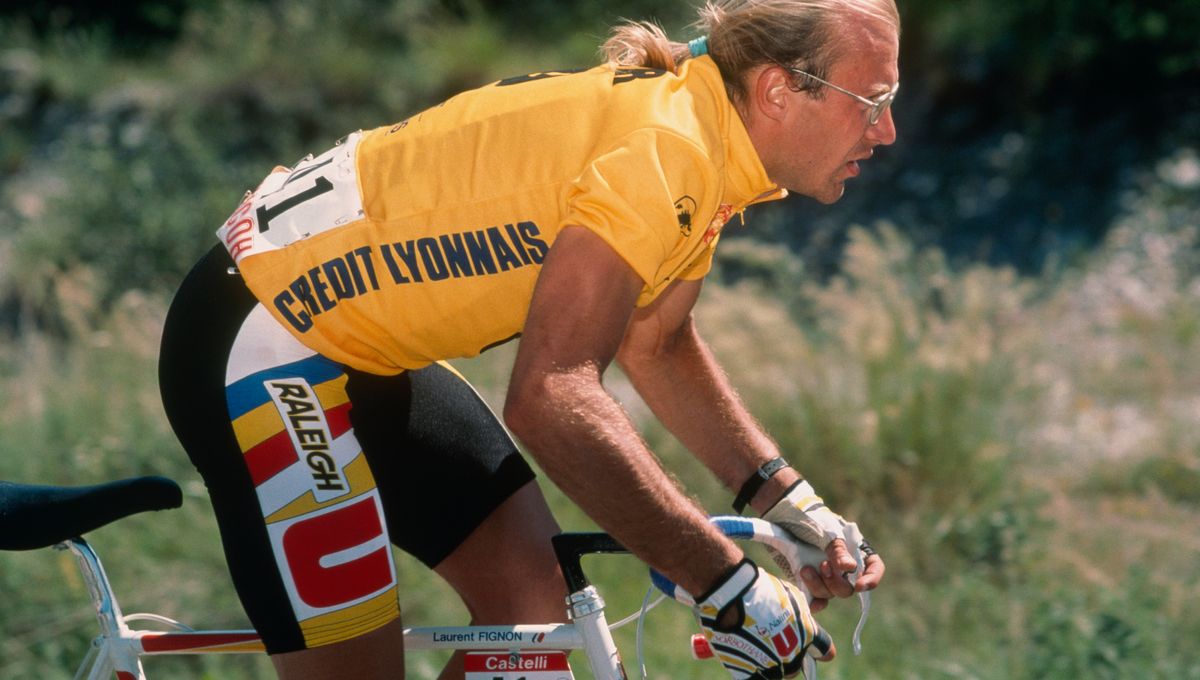
Two Tour de France victories — 1983 and 1984 — are central milestones in Fignon’s career. The 1983 win stood out because it came on his first Tour participation and at a young age, immediately signalling a new force in French cycling. Beyond victories, his later career contained one of the most talked-about Grand Tour moments: the 1989 season, when he won the Giro d'Italia and then finished second in the Tour de France, losing the title by eight seconds — the smallest margin in Tour history.
LATER LIFE, MEDIA WORK AND HOW HE IS SEEN TODAY
After retiring from professional racing, Fignon worked as a cycling analyst for French television and authored or contributed to books on the sport. He remained a visible figure in cycling commentary. In 2009 he disclosed that he was undergoing chemotherapy for metastatic cancer; he died on 31 August 2010 at the age of 50. Obituaries and remembrances emphasise both his sporting achievements — the two Tours and 1989 Giro among them — and his frank, outspoken personality.
WHAT THE CAREER ARC REVEALS
Fignon’s trajectory illustrates how a rider can be rapidly elevated by the right team environment and early success, and how public image and race identity become intertwined. The Renault period provided structure and opportunity; his early Tour wins cemented a reputation that later victories and narrow defeats only sharpened. Today he is remembered for a blend of results and character: a two-time Tour champion, a Giro winner, and one of the figures whose career narratives remain central to how the Tour de France is culturally understood.
Author: Cynthia D.