Marco Pantani: Reading a palmarès built on mountains, the 1998 double and Tour…
Marco Pantani's record is inseparable from high mountains and singular climbing days. His palmarès reads less as a long ledger of varied wins than as a sequence of explosive mountain performances, capped by the 1998 Giro–Tour double that fixed his place in modern Grand Tour history.
Quick answer
Pantani's palmarès is defined by mountain-stage victories and the 1998 overall wins at both the Giro d'Italia and the Tour de France, with Plateau de Beille and Alpe d'Huez performances central to his Tour legacy.
What you will learn here
- Which results shaped Pantani's Tour de France reputation.
- How the 1998 season consolidated his palmarès via the Giro–Tour double.
- Why individual mountain stages matter more than volume in his record.
The palmarès at a glance
The core facts are straightforward and well documented: Marco Pantani won the 1998 Giro d'Italia and the 1998 Tour de France, completing a Giro–Tour double in the same season. His record includes notable mountain-stage victories that established him as one of the purest climbers of his era, with a famous Alpe d'Huez stage win in 1997 and the decisive Plateau de Beille victory during the 1998 Tour.
The first results that mattered
Pantani's reputation grew through standout mountain days rather than a long list of different-type wins. Early in his career he became known for his ability to produce steep, sustained accelerations on summit finishes; by 1997 his Alpe d'Huez stage win provided a clear template for how he could seize attention in the Tour's high mountains.
The years of real ascent
Pantani's rise consolidated around Grand Tour mountain performances. Rather than gradual accumulation of podiums across many race types, his palmarès shows a concentrated ascent: spectacular climbs, selective stage wins and an escalation toward the 1998 season, when those capacities translated into overall victories at the Giro and then the Tour.
Tour de France impact and big-race weight
Pantani's Tour legacy rests on a small number of high-impact performances. The 1998 stage to Plateau de Beille was decisive: his victory there gave him the yellow jersey and the time advantage that carried him to the overall win. Earlier, his Alpe d'Huez success in 1997 became part of his public image as a climber who could turn a mountain stage into a defining theatrical moment.
Peak seasons and defining runs
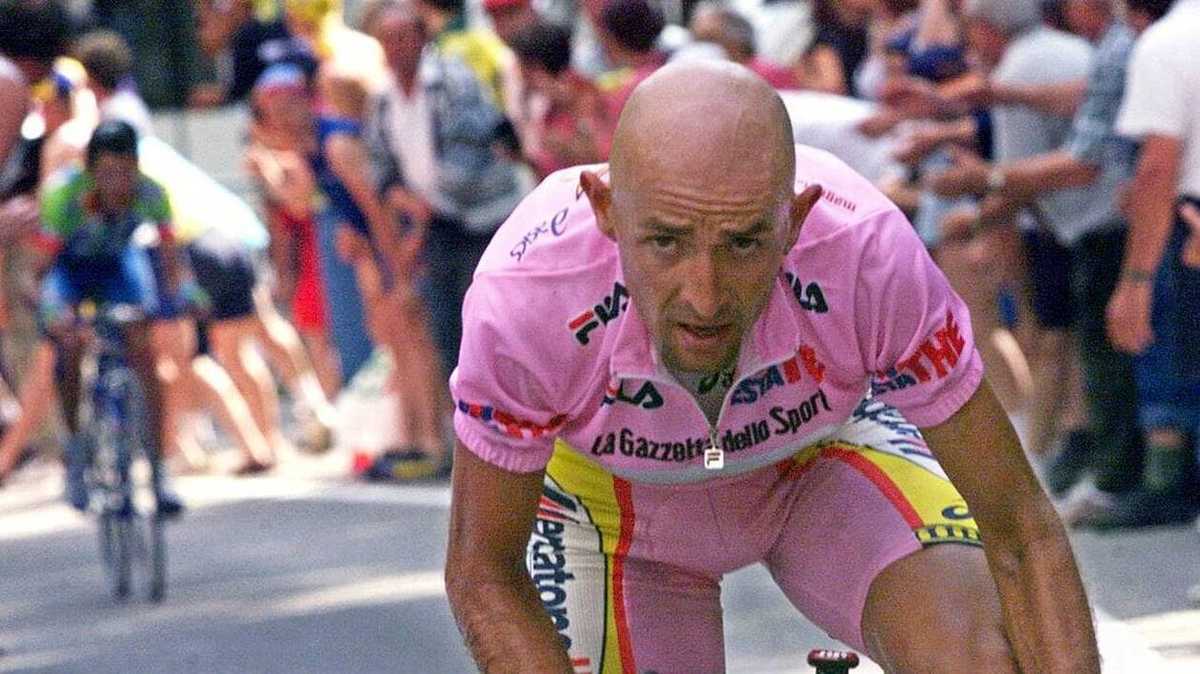
1998 is the unquestioned peak: winning the Giro d'Italia and then the Tour de France in the same year is the core milestone in Pantani's palmarès. Those victories were not the result of accumulated sprint points or week-long consistency across flat terrain, but of mountain excellence—taking time where it mattered on climbs such as the Stelvio, Mortirolo in Giro context and Plateau de Beille in the Tour.
Records, jerseys and numerical clues
The most telling numbers in Pantani's record are season-defining rather than cumulative. The Giro–Tour double is the principal numerical milestone. His stage wins on storied climbs—Alpe d'Huez and Plateau de Beille among them—are the specific results that explain why he stands as a climber first in historical summaries and databases.
Consistency versus explosive peaks
Pantani's career reads as explosive peaks rather than long-term, broad-spectrum consistency. His palmarès contains fewer general-classification campaigns across multiple years; instead the pattern is of seasons where climbing form produced singular, narrative-defining wins. The 1998 double exemplifies this model: concentrated excellence over a single season rather than a prolonged run of varied victories.
How the record lives in cycling memory
Pantani's place in cycling memory depends on those mountain images and the 1998 double. Stage wins on iconic climbs and the yellow jersey gained on Plateau de Beille give his palmarès theatrical moments that persist in how fans and historians recall the era. Contemporary coverage and later statistical records keep the 1998 Tour title and the Giro victory as the clearest anchors of his legacy.
What the palmarès says about the rider
Read strictly from results recorded in contemporary sources, Marco Pantani's palmarès describes a specialist: a pure climber whose most consequential achievements came in Grand Tours and whose signature performances—Alpe d'Huez, Plateau de Beille and the 1998 Giro–Tour double—define his sporting footprint. Those results explain both his status in the record books and the particular way his career is discussed in Tour de France history.
Author: William L.